Explained Investment Sources: documented gifts and traceable salary savings supported deletion of additions for property and mutual-fund SIP investmen...
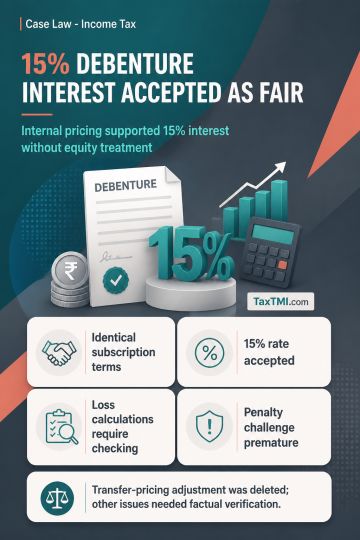
Internal comparable pricing supports arm's-length interest on compulsorily convertible debentures, preventing their recharacterisation as equity for t...
Nominee director protection shields independent financial-institution appointees from criminal liability where they lack involvement in deposit defaul...
HC held that the notice u/s 148 was time-barred under Section 149(1), rendering it invalid. The Assessing Officer (AO) exceeded statutory limitations by issuing a notice beyond the prescribed time period. The court emphasized that procedural timelines are mandatory and cannot be circumvented. The impugned notice was liable to be set aside solely on the ground of limitation, irrespective of other substantive challenges. The decision underscores the critical importance of adhering to statutory time constraints in tax reassessment proceedings, affirming that procedural compliance is essential for maintaining the integrity of tax assessment processes.
HC held that the notice u/s 148 was time-barred under Section 149(1), rendering it invalid. The Assessing Officer (AO) exceeded statutory limitations by issuing a notice beyond the prescribed time period. The court emphasized that procedural timelines are mandatory and cannot be circumvented. The impugned notice was liable to be set aside solely on the ground of limitation, irrespective of other substantive challenges. The decision underscores the critical importance of adhering to statutory time constraints in tax reassessment proceedings, affirming that procedural compliance is essential for maintaining the integrity of tax assessment processes.
Note: It is a system-generated summary and is for quick reference only.
 TaxTMI
  TaxTMI
 of 4888