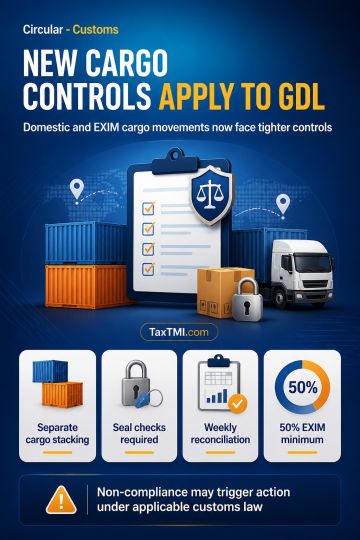
Customs-controlled cargo movement now includes GDL, subject to EXIM prioritisation, segregation, verification, reconciliation and enforcement safeguar...
HC held that the expenditure incurred by the appellant to clear title of a disputed property constitutes a cost directly connected with the asset transfer under Section 48. The payment was deemed 'wholly and exclusively' incurred in connection with the property transfer, as the title was initially clouded and litigation existed between original vendors and their sisters. The court found that without such payment, the property transfer could not have been executed, effectively treating the amount as integral to the sale consideration. The expenditure was therefore allowable as part of the cost of acquisition for long-term capital gains computation, ultimately deciding in favor of the assessee.
HC held that the expenditure incurred by the appellant to clear title of a disputed property constitutes a cost directly connected with the asset transfer under Section 48. The payment was deemed 'wholly and exclusively' incurred in connection with the property transfer, as the title was initially clouded and litigation existed between original vendors and their sisters. The court found that without such payment, the property transfer could not have been executed, effectively treating the amount as integral to the sale consideration. The expenditure was therefore allowable as part of the cost of acquisition for long-term capital gains computation, ultimately deciding in favor of the assessee.
Note: It is a system-generated summary and is for quick reference only.
 TaxTMI
  TaxTMI
 of 4881