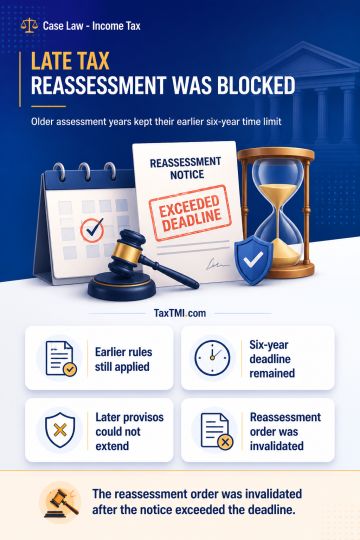
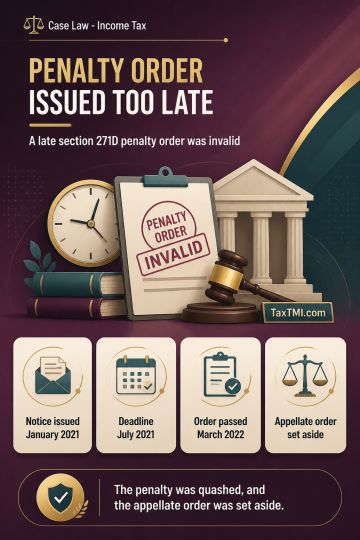
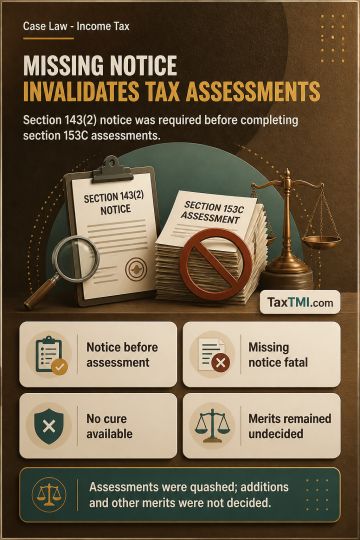
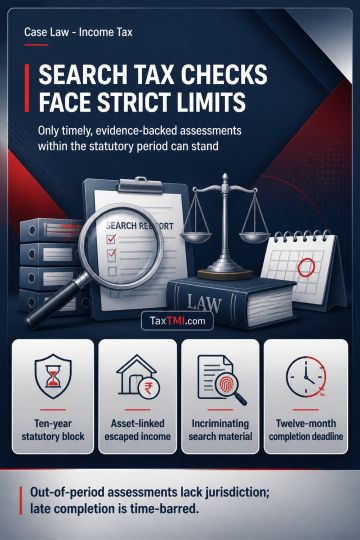
Pre-amendment reassessment limitation bars late notices under the preserved regime, invalidating consequential reassessment for affected earlier asses...
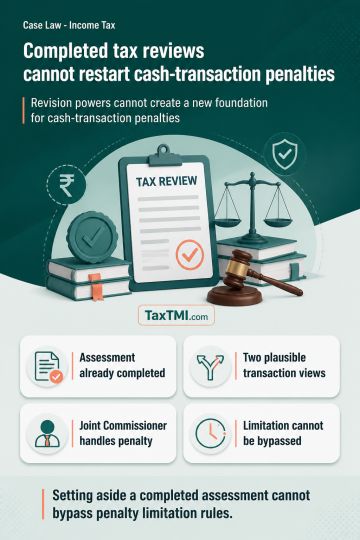
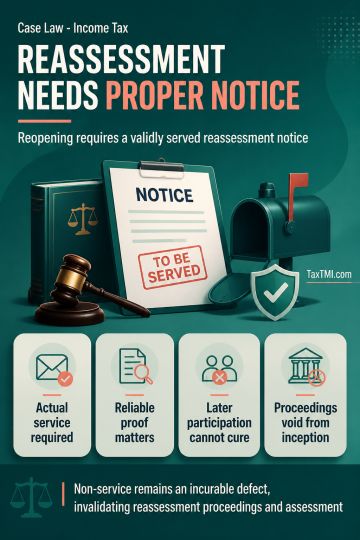
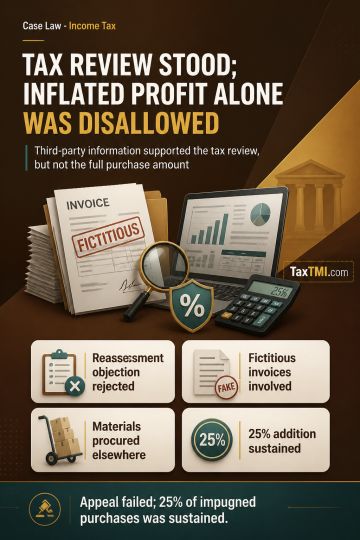
Cash-sales explanations for bank deposits require documentary reconciliation; reassessment notice survived where effective response time was available...
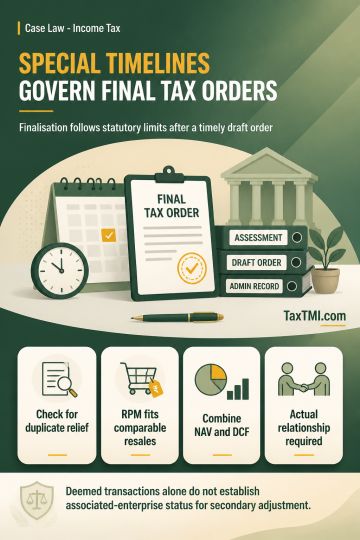
Functional comparability in transfer pricing prevents ad hoc arm's length adjustments where functions, assets, risks and reliable comparables are unes...
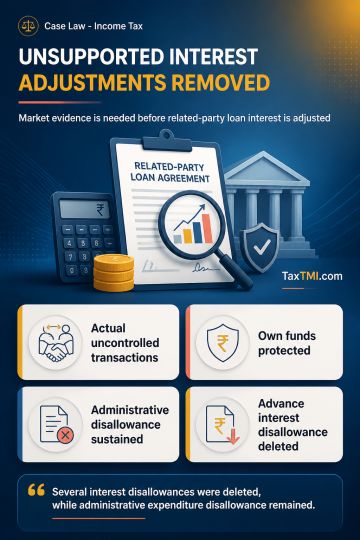
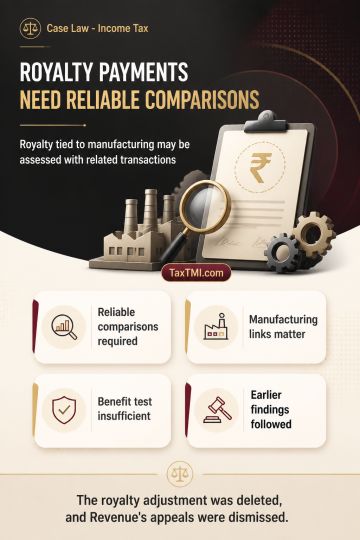
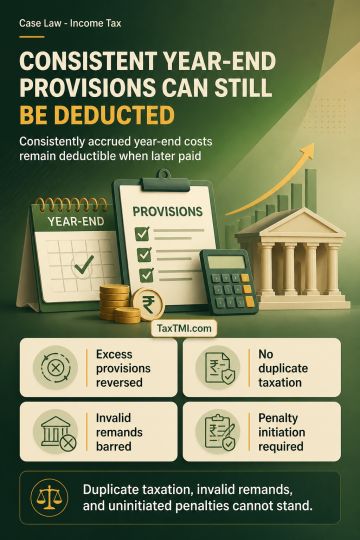
Contingency expenses, exempt-income disallowance, and royalty benchmarking: unsupported adjustments were deleted under consistent accounting and trans...
HC held that GST registration license cancellation was improper due to procedural irregularities. The visit note by the CGST Superintendent lacked corroborative evidence, as no additional witnesses were present during the physical verification. The officer failed to record statements from nearby shop owners and obtain their signatures, rendering the verification process fundamentally flawed. The subsequent administrative orders at different levels were found unsustainable, primarily because the initial verification was conducted without proper protocol. The court emphasized the importance of following Rule 25 of GST Rules 2017, which mandates comprehensive documentation and witness verification during business premise inspections. Consequently, the petitioner's license cancellation was quashed, and the administrative orders were set aside.
HC held that GST registration license cancellation was improper due to procedural irregularities. The visit note by the CGST Superintendent lacked corroborative evidence, as no additional witnesses were present during the physical verification. The officer failed to record statements from nearby shop owners and obtain their signatures, rendering the verification process fundamentally flawed. The subsequent administrative orders at different levels were found unsustainable, primarily because the initial verification was conducted without proper protocol. The court emphasized the importance of following Rule 25 of GST Rules 2017, which mandates comprehensive documentation and witness verification during business premise inspections. Consequently, the petitioner's license cancellation was quashed, and the administrative orders were set aside.
Note: It is a system-generated summary and is for quick reference only.
 TaxTMI
  TaxTMI
 of 4918