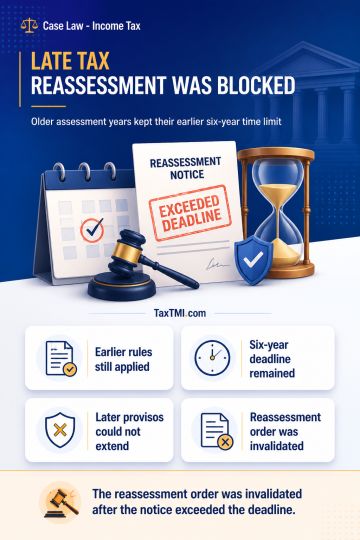
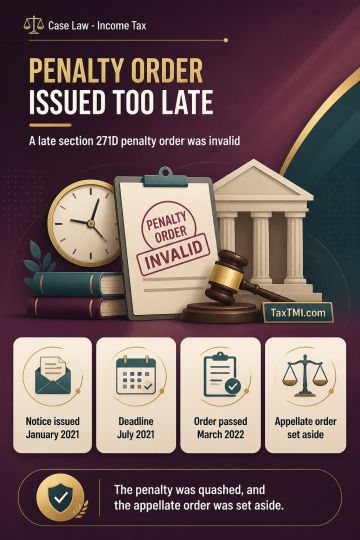
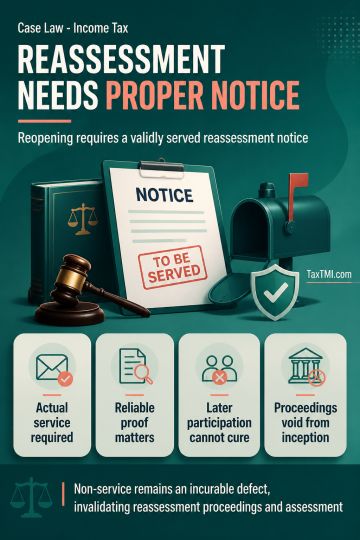
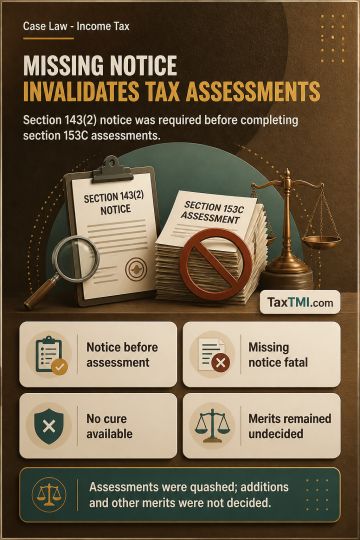
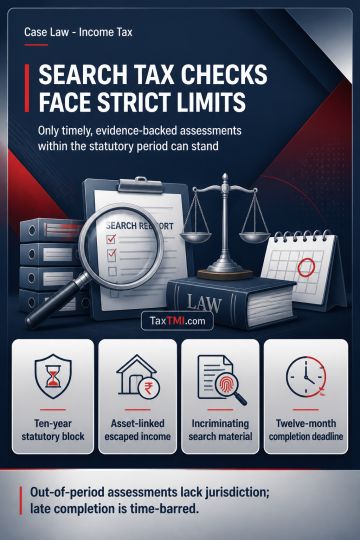
Pre-amendment reassessment limitation bars late notices under the preserved regime, invalidating consequential reassessment for affected earlier asses...
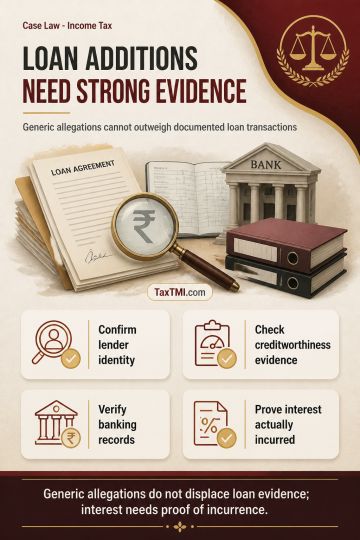
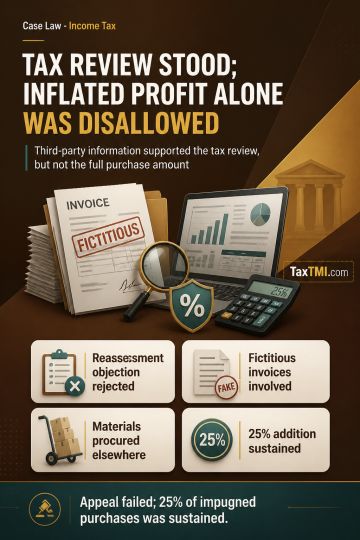
Cash-sales explanations for bank deposits require documentary reconciliation; reassessment notice survived where effective response time was available...
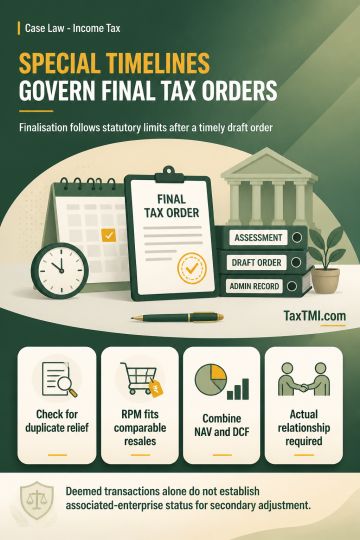
Functional comparability in transfer pricing prevents ad hoc arm's length adjustments where functions, assets, risks and reliable comparables are unes...
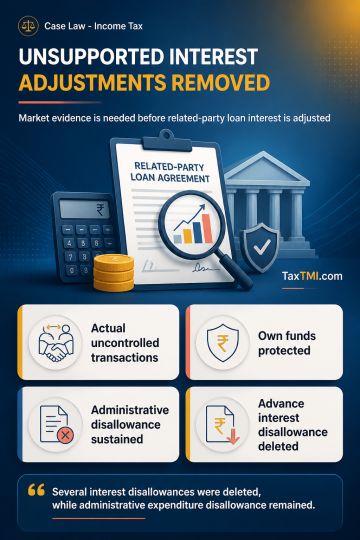
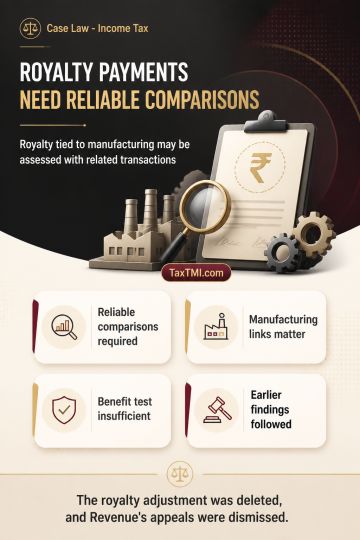
Contingency expenses, exempt-income disallowance, and royalty benchmarking: unsupported adjustments were deleted under consistent accounting and trans...
Page of 4920
Press 'Enter' after typing page number.
61 to 80 of 98394 Results
❮
❯
❯❯
0 / 200
Expand Note
Add to Folder
No Folders have been created
+
Are you sure you want to delete "My most important" ?
HC determined that salary paid to a related party was reasonable and commensurate with qualifications and services rendered. The court interpreted Section 13(1)(c) to mean that if compensation is objectively reasonable for services performed, it cannot be deemed as improper diversion of trust income to a prohibited person. Payments meeting standard market rates for legitimate services do not automatically trigger tax liability or disqualify charitable trust exemptions. The court rejected Revenue's argument that any payment to a related party inherently constitutes income diversion, instead focusing on the substantive reasonableness of compensation. Consequently, the ruling favored the assessee, maintaining the trust's tax-exempt status.
HC determined that salary paid to a related party was reasonable and commensurate with qualifications and services rendered. The court interpreted Section 13(1)(c) to mean that if compensation is objectively reasonable for services performed, it cannot be deemed as improper diversion of trust income to a prohibited person. Payments meeting standard market rates for legitimate services do not automatically trigger tax liability or disqualify charitable trust exemptions. The court rejected Revenue's argument that any payment to a related party inherently constitutes income diversion, instead focusing on the substantive reasonableness of compensation. Consequently, the ruling favored the assessee, maintaining the trust's tax-exempt status.
Note: It is a system-generated summary and is for quick reference only.
 TaxTMI
 TaxTMI

 of 4920