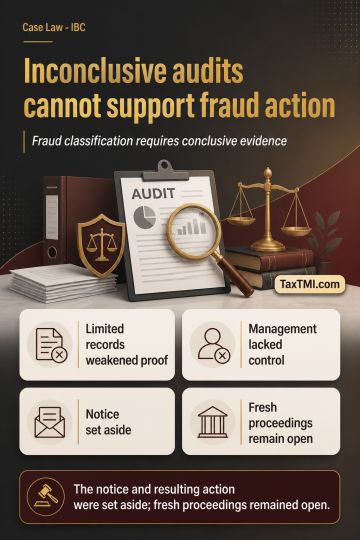
Fraud classification show-cause notices founded on inconclusive forensic audit material cannot sustain action, permitting fresh proceedings on conclus...
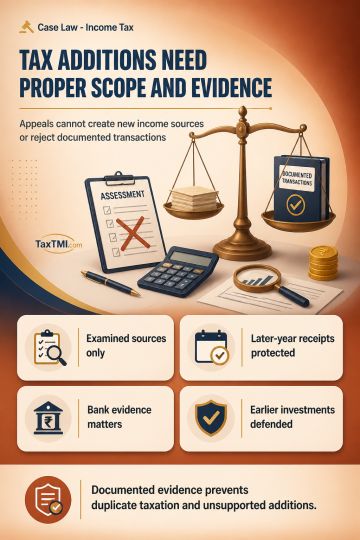
Appellate enhancement limits protect against new income sources, while documented credits and prior-year investments resist unexplained-income additio...
HC held that under Sections 74(1), (2), and (10), each assessment year must be proceeded separately by the proper officer. The statutory time limit for issuing orders is distinct for each financial year. The court mandates independent show cause notices for different assessment years, recognizing that taxpayers can raise separate defenses for each year. The composite notice challenging jurisdictional propriety was partially set aside, with the notice for 2017-2018 sustained and notices for 2018-2019, 2019-2020, 2020-2021, and 2021-2022 quashed. The appellate court found the single judge's interpretation erroneous and allowed the appeal, emphasizing the need for precise, year-specific tax assessment procedures.
HC held that under Sections 74(1), (2), and (10), each assessment year must be proceeded separately by the proper officer. The statutory time limit for issuing orders is distinct for each financial year. The court mandates independent show cause notices for different assessment years, recognizing that taxpayers can raise separate defenses for each year. The composite notice challenging jurisdictional propriety was partially set aside, with the notice for 2017-2018 sustained and notices for 2018-2019, 2019-2020, 2020-2021, and 2021-2022 quashed. The appellate court found the single judge's interpretation erroneous and allowed the appeal, emphasizing the need for precise, year-specific tax assessment procedures.
Note: It is a system-generated summary and is for quick reference only.
 TaxTMI
  TaxTMI
 of 4884