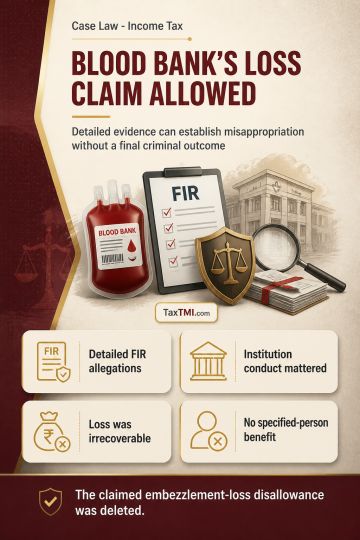
Embezzlement losses in charitable institutions remain allowable when misappropriation is established, irrecoverable, and not a specified-person benefi...
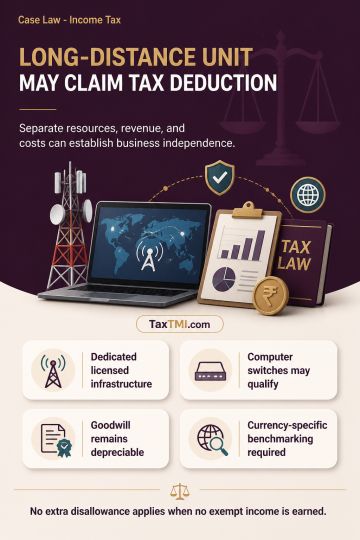
National long-distance undertaking status supports deduction where separately licensed infrastructure, resources, revenue, and expenditure establish c...
Agency reimbursement income follows contractual deposit-liability computation, while pending deposit collections do not constitute deemed-dividend loa...
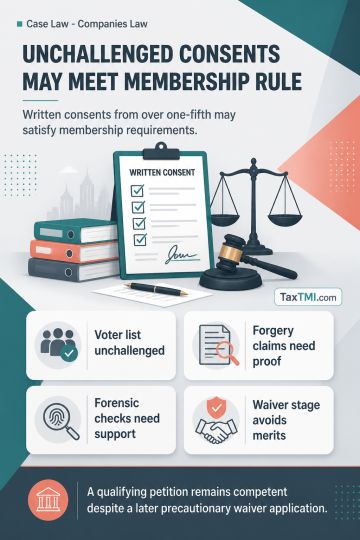
Membership-consent thresholds for oppression petitions are satisfied by unchallenged voter-list consents, while unsupported forgery claims require pro...
NCLAT dismissed the Section 7 application filed by the Appellant-Debenture Trustee against the Corporate Debtor. The Tribunal found no valid debt due or payable during the moratorium period until September 2023. The court determined that the Appellant's intent was not genuine insolvency resolution but a malafide attempt to coerce the Corporate Debtor into insolvency proceedings. The Appellant's conduct, including releasing property charges and funds under a restructuring proposal, demonstrated prior agreement to a moratorium. Consequently, the Tribunal upheld the Adjudicating Authority's decision, concluding that the Section 7 application was improperly motivated and therefore not admissible, effectively protecting the Corporate Debtor from unwarranted insolvency proceedings.
NCLAT dismissed the Section 7 application filed by the Appellant-Debenture Trustee against the Corporate Debtor. The Tribunal found no valid debt due or payable during the moratorium period until September 2023. The court determined that the Appellant's intent was not genuine insolvency resolution but a malafide attempt to coerce the Corporate Debtor into insolvency proceedings. The Appellant's conduct, including releasing property charges and funds under a restructuring proposal, demonstrated prior agreement to a moratorium. Consequently, the Tribunal upheld the Adjudicating Authority's decision, concluding that the Section 7 application was improperly motivated and therefore not admissible, effectively protecting the Corporate Debtor from unwarranted insolvency proceedings.
Note: It is a system-generated summary and is for quick reference only.
 TaxTMI
  TaxTMI
 of 4881