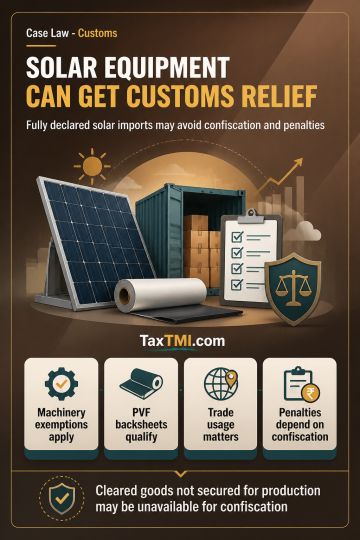
Customs exemptions cover photovoltaic assembly machinery and PVF backsheets, while fully declared cleared imports may avoid confiscation and penalties...
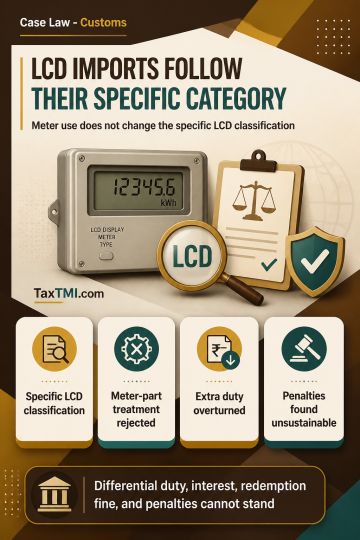
Specific tariff classification for LCD devices overrides treatment as electricity-meter parts, defeating differential duty, extended limitation, and p...
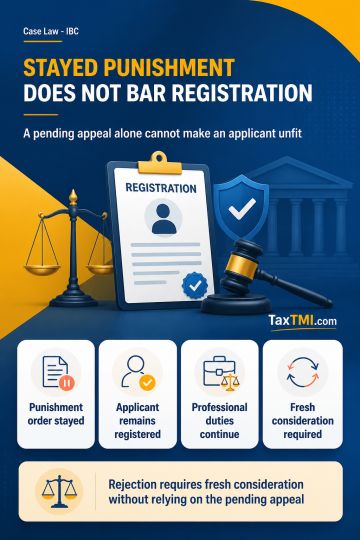
Stayed disciplinary punishment does not establish unfitness for insolvency professional registration; reconsideration must disregard mere pendency of ...
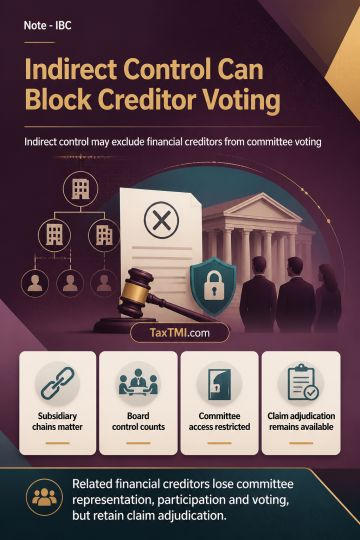
Indirect corporate control can create related-party status, excluding financial creditors from Committee of Creditors representation, participation an...
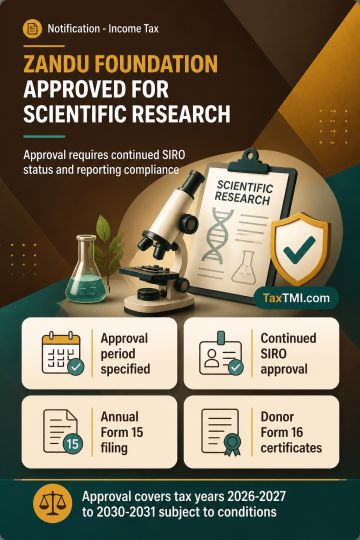
Scientific research association approval requires continuing SIRO status, annual donation reporting, and donor certificates for the approved foundatio...
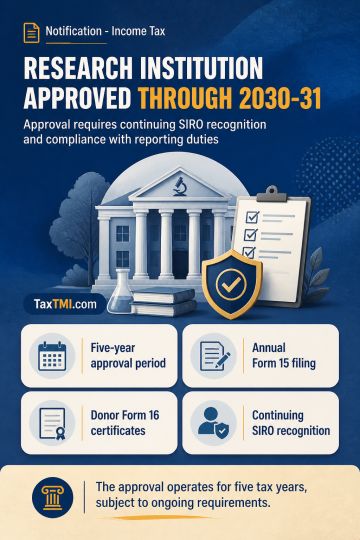
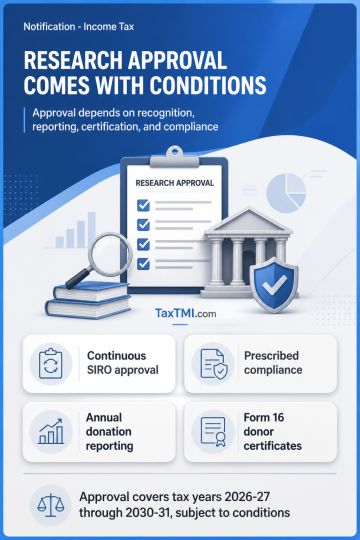
Scientific research institution approval is conditional on SIRO recognition, annual donation reporting, donor certification, and prescribed compliance...
ITAT adjudicated a dispute regarding Fees for Technical Services (FTS) in cross-border logistics services. The tribunal comprehensively analyzed the nature of services, emphasizing that FTS requires specialized knowledge transfer beyond mere service provision. The court distinguished between standard regulatory compliance and genuine technical expertise. Crucially, the tribunal determined that generic operational instructions, customs clearance procedures, and workforce standardization do not constitute FTS. The software development aspect was referenced with precedential principles from Supreme Court jurisprudence. Ultimately, the appellate tribunal allowed the assessee's appeal, rejecting the revenue department's contention of taxable FTS, thereby narrowing the interpretation of technical services under domestic tax regulations and bilateral tax treaty frameworks.
ITAT adjudicated a dispute regarding Fees for Technical Services (FTS) in cross-border logistics services. The tribunal comprehensively analyzed the nature of services, emphasizing that FTS requires specialized knowledge transfer beyond mere service provision. The court distinguished between standard regulatory compliance and genuine technical expertise. Crucially, the tribunal determined that generic operational instructions, customs clearance procedures, and workforce standardization do not constitute FTS. The software development aspect was referenced with precedential principles from Supreme Court jurisprudence. Ultimately, the appellate tribunal allowed the assessee's appeal, rejecting the revenue department's contention of taxable FTS, thereby narrowing the interpretation of technical services under domestic tax regulations and bilateral tax treaty frameworks.
Note: It is a system-generated summary and is for quick reference only.
 TaxTMI
  TaxTMI
 of 4879