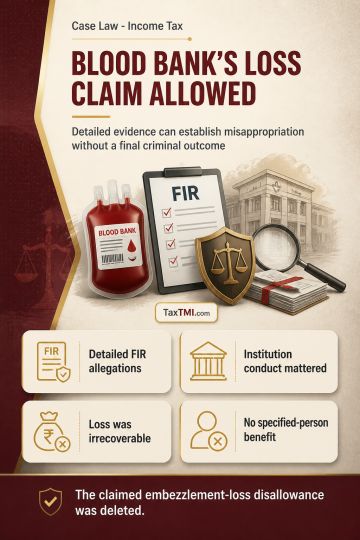
Embezzlement losses in charitable institutions remain allowable when misappropriation is established, irrecoverable, and not a specified-person benefi...
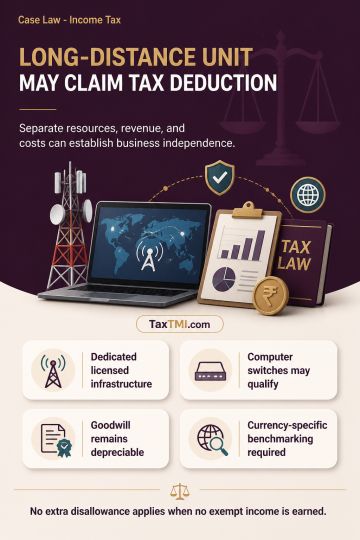
National long-distance undertaking status supports deduction where separately licensed infrastructure, resources, revenue, and expenditure establish c...
Agency reimbursement income follows contractual deposit-liability computation, while pending deposit collections do not constitute deemed-dividend loa...
CESTAT allowed the appeal, setting aside service tax demands predicated solely on Form 26AS without substantive evidence of service provision. The tribunal consistently held that mere third-party financial data cannot constitute sufficient grounds for tax recovery. The department failed to demonstrate actual service rendering, nature of services, or recipient details. Accordingly, the tax demand was invalidated, emphasizing the procedural requirement of establishing concrete service delivery before imposing tax liability. The ruling reinforces judicial precedent requiring comprehensive evidentiary substantiation for tax assessments beyond documentary financial records.
CESTAT allowed the appeal, setting aside service tax demands predicated solely on Form 26AS without substantive evidence of service provision. The tribunal consistently held that mere third-party financial data cannot constitute sufficient grounds for tax recovery. The department failed to demonstrate actual service rendering, nature of services, or recipient details. Accordingly, the tax demand was invalidated, emphasizing the procedural requirement of establishing concrete service delivery before imposing tax liability. The ruling reinforces judicial precedent requiring comprehensive evidentiary substantiation for tax assessments beyond documentary financial records.
Note: It is a system-generated summary and is for quick reference only.
 TaxTMI
  TaxTMI
 of 4891