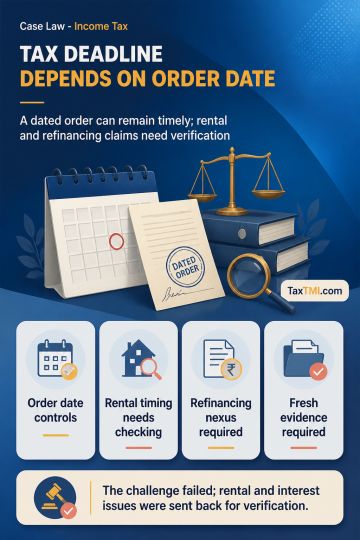
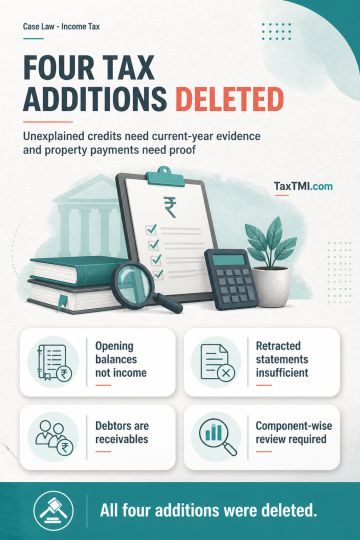
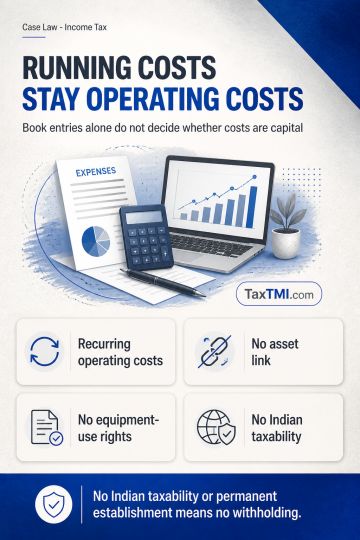
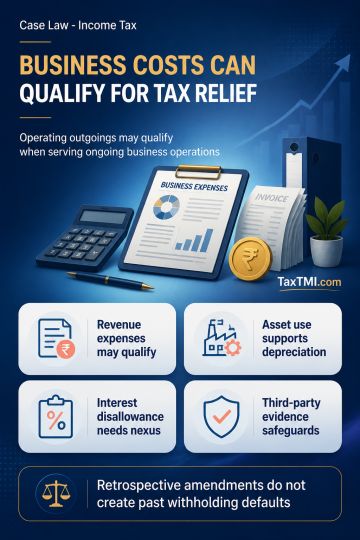
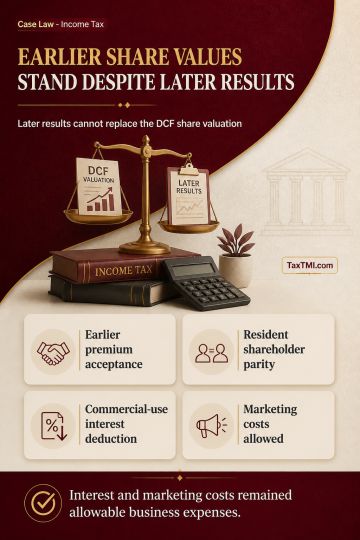
Business expenditure and depreciation rules allow operational outgoings while limiting disallowances for personal elements and unsupported third-party...
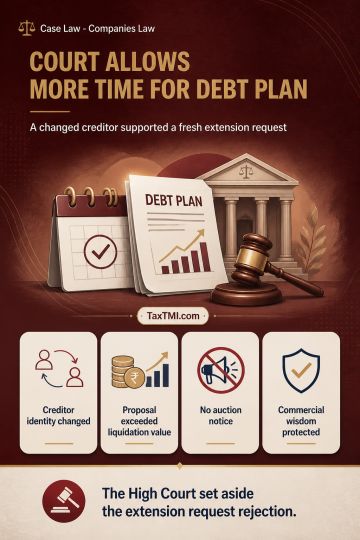
Compromise-and-arrangement extensions may accommodate debt assignment where creditor commercial judgment supports value maximisation and avoids proced...
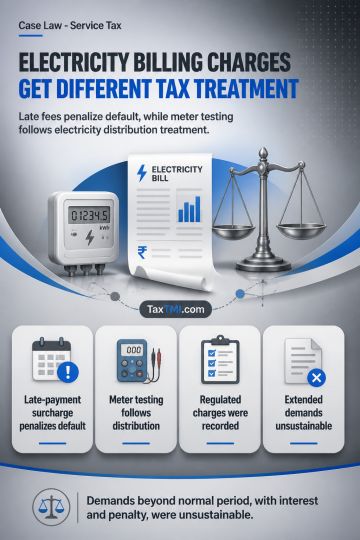
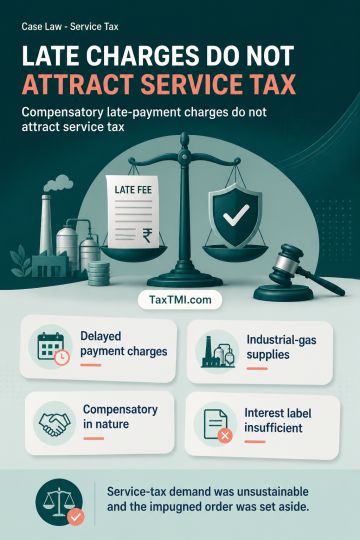
Delayed-payment surcharge is not taxable tolerance consideration where it penalises default, while meter testing follows electricity distribution trea...
Sufficient cause for delayed revenue income-tax appeals requires bona fides, due diligence and a credible explanation; otherwise limitation bars appea...
Page of 4897
Press 'Enter' after typing page number.
1081 to 1100 of 97923 Results
❮
❯
❯❯
0 / 200
Expand Note
Add to Folder
No Folders have been created
+
Are you sure you want to delete "My most important" ?
CESTAT adjudicated a service tax dispute involving compensation for lost drilling equipment. The tribunal held that compensation for "Lost-in-Hole" items constitutes accidental damages not relatable to service provisions and therefore cannot be included in taxable service value. The Additional Director General's attempt to invoke extended limitation period was rejected, as there was no willful suppression or intent to evade tax. The audit records demonstrated transparency, and mere procedural oversight did not justify extended limitation. Consequently, the tribunal allowed the appeal, setting aside the tax demand for both the standard and extended periods based on the absence of fraudulent intent and improper valuation of taxable services.
CESTAT adjudicated a service tax dispute involving compensation for lost drilling equipment. The tribunal held that compensation for "Lost-in-Hole" items constitutes accidental damages not relatable to service provisions and therefore cannot be included in taxable service value. The Additional Director General's attempt to invoke extended limitation period was rejected, as there was no willful suppression or intent to evade tax. The audit records demonstrated transparency, and mere procedural oversight did not justify extended limitation. Consequently, the tribunal allowed the appeal, setting aside the tax demand for both the standard and extended periods based on the absence of fraudulent intent and improper valuation of taxable services.
Note: It is a system-generated summary and is for quick reference only.
 TaxTMI
  TaxTMI
 of 4897