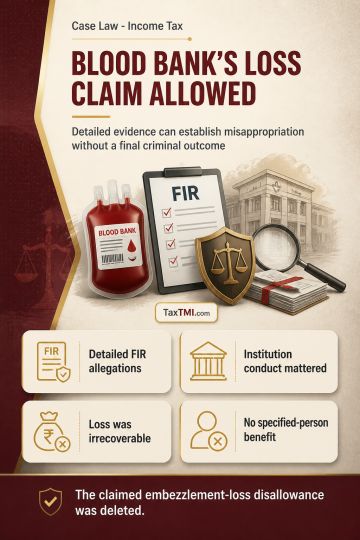
Embezzlement losses in charitable institutions remain allowable when misappropriation is established, irrecoverable, and not a specified-person benefi...
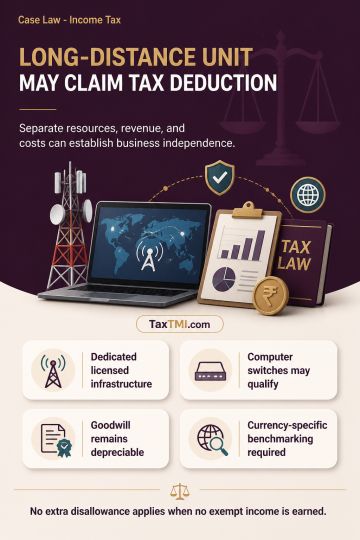
National long-distance undertaking status supports deduction where separately licensed infrastructure, resources, revenue, and expenditure establish c...
Agency reimbursement income follows contractual deposit-liability computation, while pending deposit collections do not constitute deemed-dividend loa...
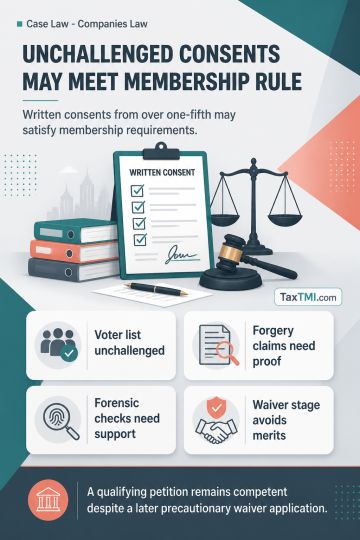
Membership-consent thresholds for oppression petitions are satisfied by unchallenged voter-list consents, while unsupported forgery claims require pro...
The AAR ruled that goods supplied by the applicant, despite being a victim of fraud without receiving consideration, still constituted a "supply" under GST law. The authority determined that while fraud may vitiate a contract, it does not negate the statutory definition of "supply" under section 7 of the CGST Act. The facts established that goods were physically removed and received at the destination, as confirmed by the FIR. The AAR concluded that the transaction qualified as supply of goods under section 20 of the IGST Act read with sections 12 and 7 of the CGST Act, regardless of the fraudulent nature of the order.
The AAR ruled that goods supplied by the applicant, despite being a victim of fraud without receiving consideration, still constituted a "supply" under GST law. The authority determined that while fraud may vitiate a contract, it does not negate the statutory definition of "supply" under section 7 of the CGST Act. The facts established that goods were physically removed and received at the destination, as confirmed by the FIR. The AAR concluded that the transaction qualified as supply of goods under section 20 of the IGST Act read with sections 12 and 7 of the CGST Act, regardless of the fraudulent nature of the order.
Note: It is a system-generated summary and is for quick reference only.
 TaxTMI
  TaxTMI
 of 4881