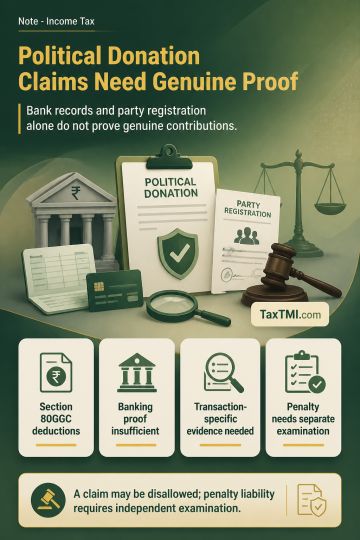
Political contribution deductions require genuine transactions; banking records and party registration alone cannot defeat evidence of accommodation e...
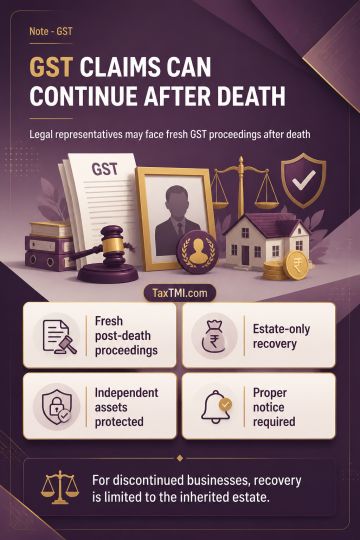
Post-death GST liability permits fresh proceedings against legal representatives, while discontinued-business recovery remains limited to the inherite...
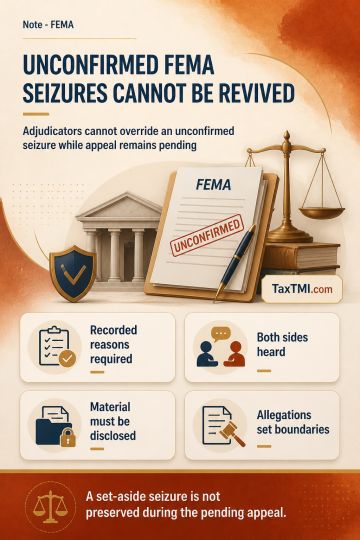
Non-confirmation of FEMA seizure prevents adjudicators from overriding pending appellate findings on recorded reasons and suspected foreign asset hold...
The CESTAT dismissed the appellant's refund claim for service tax paid on 60% of the value of services rendered under reverse charge mechanism. The Tribunal held that refund proceedings are in the nature of execution proceedings, and refunds cannot be sanctioned without first modifying the assessment, following the Supreme Court's decision in ITC Ltd. The adjudicating authority had determined on merits that the appellant was liable to pay service tax on 50% of the total billing amount. The CESTAT confirmed that a self-assessed return constitutes an assessment which, unless properly challenged and modified through appropriate legal channels, cannot be questioned in refund proceedings, consistent with the ruling in Jagdamba Phosphate.
The CESTAT dismissed the appellant's refund claim for service tax paid on 60% of the value of services rendered under reverse charge mechanism. The Tribunal held that refund proceedings are in the nature of execution proceedings, and refunds cannot be sanctioned without first modifying the assessment, following the Supreme Court's decision in ITC Ltd. The adjudicating authority had determined on merits that the appellant was liable to pay service tax on 50% of the total billing amount. The CESTAT confirmed that a self-assessed return constitutes an assessment which, unless properly challenged and modified through appropriate legal channels, cannot be questioned in refund proceedings, consistent with the ruling in Jagdamba Phosphate.
Note: It is a system-generated summary and is for quick reference only.
 TaxTMI
  TaxTMI
 of 4918