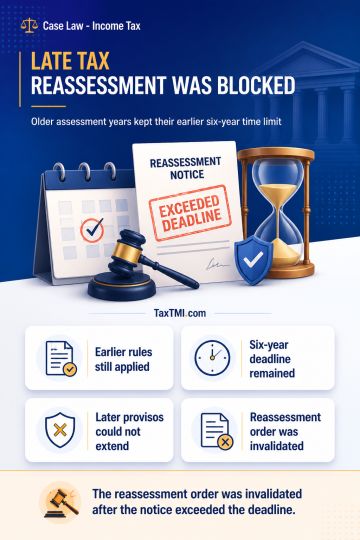
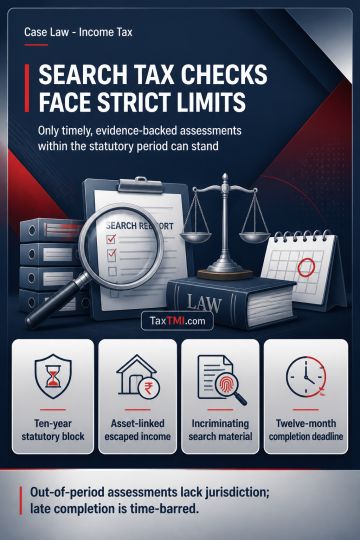
Pre-amendment reassessment limitation bars late notices under the preserved regime, invalidating consequential reassessment for affected earlier asses...
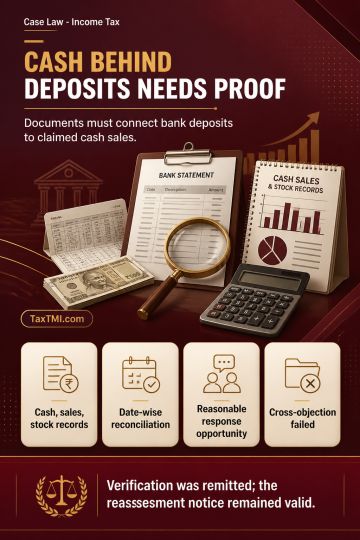
Cash-sales explanations for bank deposits require documentary reconciliation; reassessment notice survived where effective response time was available...
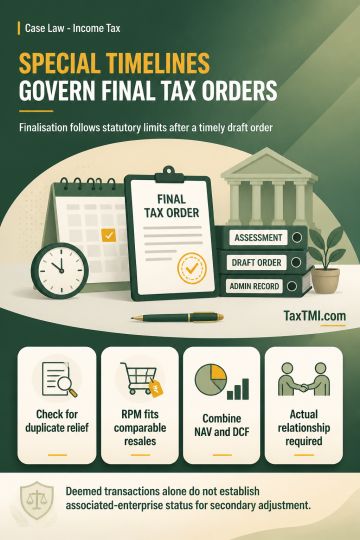
Functional comparability in transfer pricing prevents ad hoc arm's length adjustments where functions, assets, risks and reliable comparables are unes...
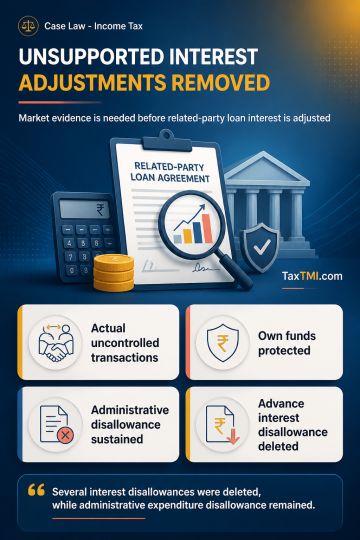
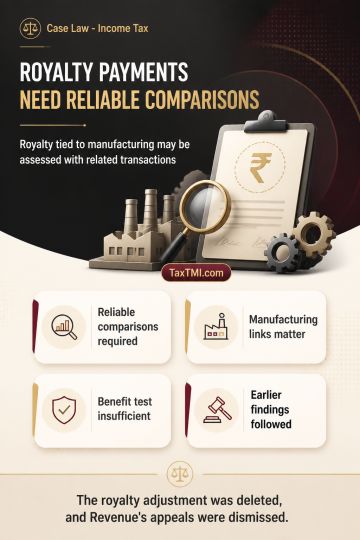
Contingency expenses, exempt-income disallowance, and royalty benchmarking: unsupported adjustments were deleted under consistent accounting and trans...
Page of 4921
Press 'Enter' after typing page number.
81 to 100 of 98414 Results
❮
❯
❯❯
0 / 200
Expand Note
Add to Folder
No Folders have been created
+
Are you sure you want to delete "My most important" ?
ITAT upheld the disallowance of LTCG exemption claimed under section 10(38), determining the transactions constituted a predetermined scheme to introduce unaccounted income. The Tribunal found the assessee's 400% profit in 13 months from penny stock NCL Research was not genuine, noting the suspicious pattern of dormant scrip suddenly appreciating despite poor financial parameters. The synchronized buying and selling, coupled with investigations by Income Tax authorities and SEBI, established the transactions as sham arrangements. The Tribunal emphasized that documentation like contract notes and banking channel evidence alone cannot establish genuineness when market forces don't justify the price increase. The CIT(A)'s findings regarding price manipulation were affirmed.
ITAT upheld the disallowance of LTCG exemption claimed under section 10(38), determining the transactions constituted a predetermined scheme to introduce unaccounted income. The Tribunal found the assessee's 400% profit in 13 months from penny stock NCL Research was not genuine, noting the suspicious pattern of dormant scrip suddenly appreciating despite poor financial parameters. The synchronized buying and selling, coupled with investigations by Income Tax authorities and SEBI, established the transactions as sham arrangements. The Tribunal emphasized that documentation like contract notes and banking channel evidence alone cannot establish genuineness when market forces don't justify the price increase. The CIT(A)'s findings regarding price manipulation were affirmed.
Note: It is a system-generated summary and is for quick reference only.
 TaxTMI
 TaxTMI

 of 4921