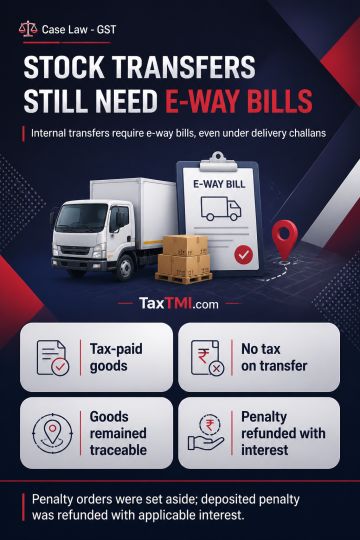
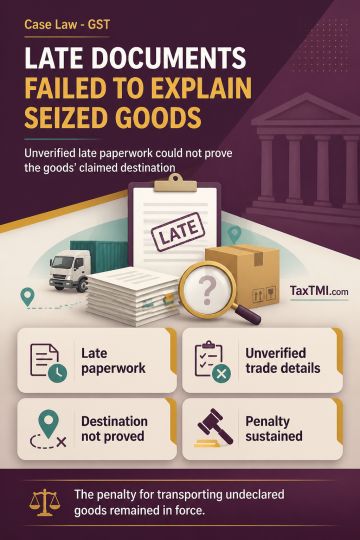
Delayed transport documents failed to validate intercepted goods, sustaining transit-state penalties where the claimed interstate destination remained...
The HC quashed orders rejecting the petitioner's claim for refund of unutilized Input Tax Credit on supplies made to SEZ units without payment of tax. The Court held that once the respondents admitted the petitioner's entitlement to refund, the Court had jurisdiction to direct its grant despite procedural non-compliance with Circular No. 125/44/2019. The Court emphasized that while procedural requirements are important, they cannot extinguish substantive rights of the assessee under tax laws. Allowing the Department to retain excess tax would constitute unjust enrichment contrary to Article 265 of the Constitution. The Court ruled that procedure must remain subservient to substantive justice, particularly in genuine refund cases where the assessee's rights are established.
The HC quashed orders rejecting the petitioner's claim for refund of unutilized Input Tax Credit on supplies made to SEZ units without payment of tax. The Court held that once the respondents admitted the petitioner's entitlement to refund, the Court had jurisdiction to direct its grant despite procedural non-compliance with Circular No. 125/44/2019. The Court emphasized that while procedural requirements are important, they cannot extinguish substantive rights of the assessee under tax laws. Allowing the Department to retain excess tax would constitute unjust enrichment contrary to Article 265 of the Constitution. The Court ruled that procedure must remain subservient to substantive justice, particularly in genuine refund cases where the assessee's rights are established.
Note: It is a system-generated summary and is for quick reference only.
 TaxTMI
  TaxTMI
 of 4920