Section 54 construction relief survives pre-transfer commencement when completion occurs within the statutory period, excluding ineligible spouse-owne...
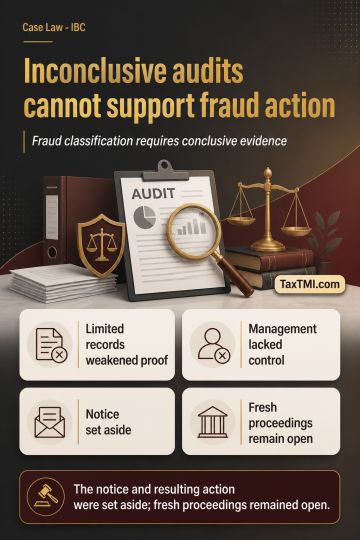
Fraud classification show-cause notices founded on inconclusive forensic audit material cannot sustain action, permitting fresh proceedings on conclus...
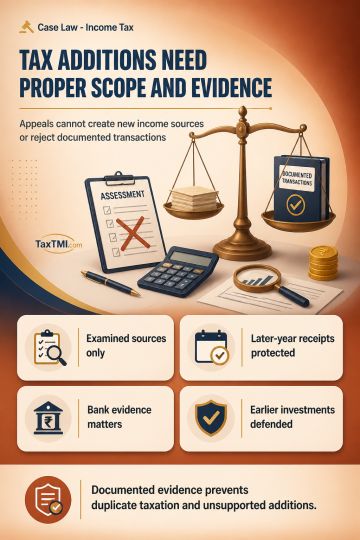
Appellate enhancement limits protect against new income sources, while documented credits and prior-year investments resist unexplained-income additio...
Page of 4870
Press 'Enter' after typing page number.
21 to 40 of 97383 Results
❮
❯
❯❯
0 / 200
Expand Note
Add to Folder
No Folders have been created
+
Are you sure you want to delete "My most important" ?
The HC ruled that the Assessee's purchase of shares in BARC, a Section 25 company (non-profit), did not constitute an "investment" under Sections 11(5) and 13(1)(d) of the Income Tax Act. The Court determined that an essential feature of "investment" is the intention to earn financial returns or profits. Since BARC was legally prohibited from distributing dividends or profits to shareholders, and its surplus upon liquidation would transfer to another charitable entity, the Assessee's fund deployment was not intended to yield income. Rather, it was made to fulfill statutory and regulatory obligations advancing charitable objectives. Consequently, the Court affirmed the CIT(A) and ITAT decisions allowing exemption under Sections 11 and 12, ruling against revenue.
The HC ruled that the Assessee's purchase of shares in BARC, a Section 25 company (non-profit), did not constitute an "investment" under Sections 11(5) and 13(1)(d) of the Income Tax Act. The Court determined that an essential feature of "investment" is the intention to earn financial returns or profits. Since BARC was legally prohibited from distributing dividends or profits to shareholders, and its surplus upon liquidation would transfer to another charitable entity, the Assessee's fund deployment was not intended to yield income. Rather, it was made to fulfill statutory and regulatory obligations advancing charitable objectives. Consequently, the Court affirmed the CIT(A) and ITAT decisions allowing exemption under Sections 11 and 12, ruling against revenue.
Note: It is a system-generated summary and is for quick reference only.
 TaxTMI
  TaxTMI
 of 4870