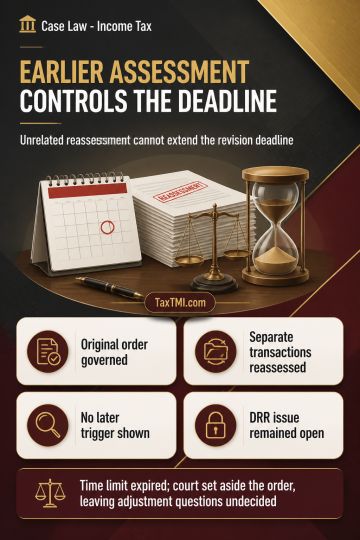
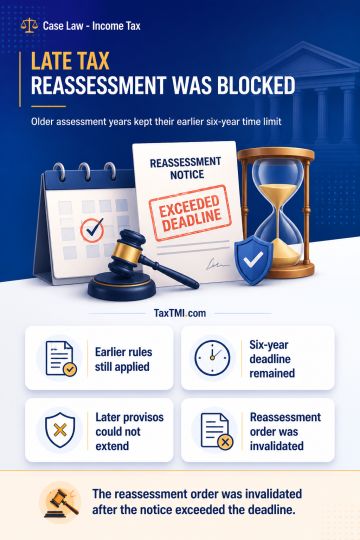
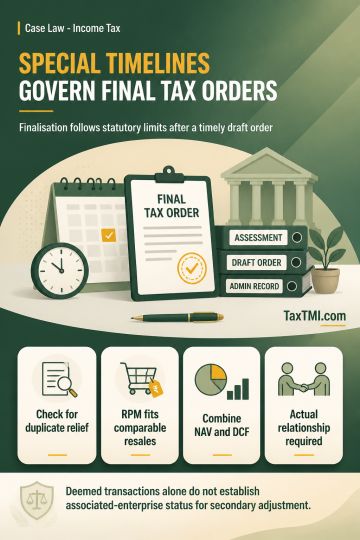
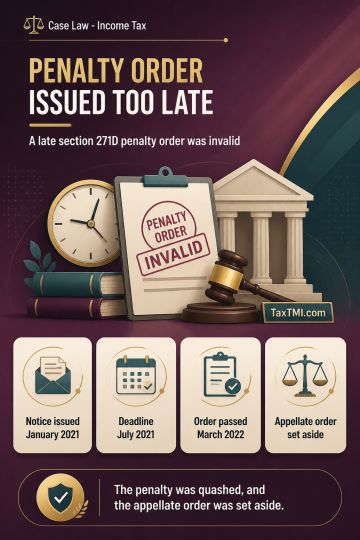
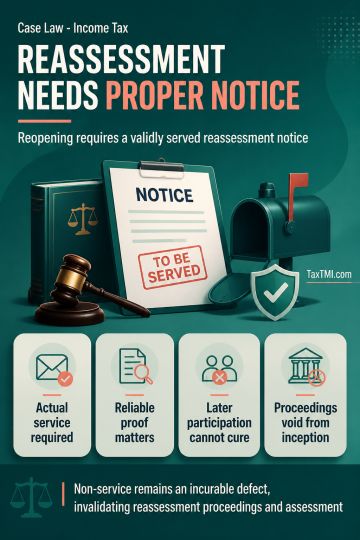
Pre-amendment reassessment limitation bars late notices under the preserved regime, invalidating consequential reassessment for affected earlier asses...
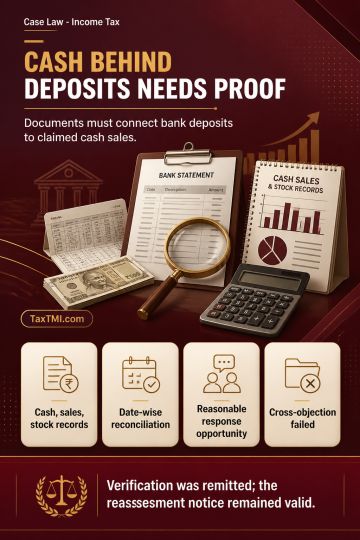
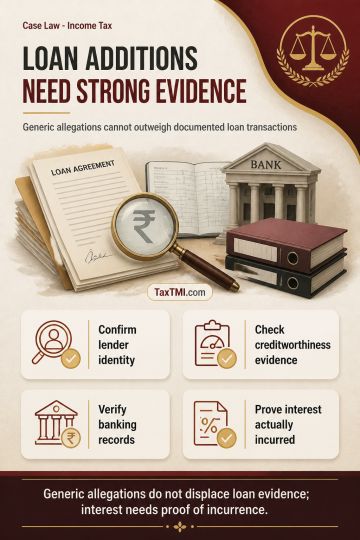
Cash-sales explanations for bank deposits require documentary reconciliation; reassessment notice survived where effective response time was available...
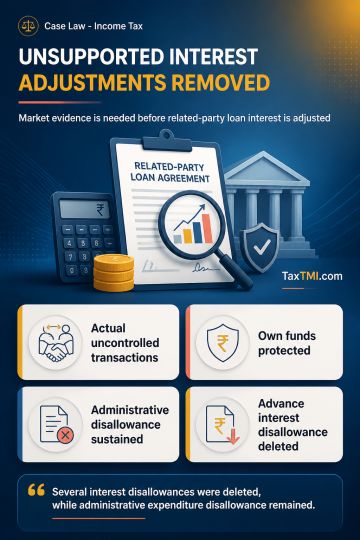
Functional comparability in transfer pricing prevents ad hoc arm's length adjustments where functions, assets, risks and reliable comparables are unes...
CESTAT ruled against Micromax's refund claims of Rs. 18.38 Cr and Rs. 35.89 Cr for Additional Duty of Customs paid on imported mobile phones. The Tribunal held that re-assessment of Bills of Entry under Sec. 17 was mandatory before filing refund applications, as established in Supreme Court precedents (Priya Blue Industries, Flock India, and ITC). Micromax's attempt to utilize Sec. 149 for amendments was rejected as inappropriate for claiming notification benefits. Additionally, the principle of unjust enrichment applied since the duty burden had been passed to consumers through MRP-based pricing. The Tribunal concluded that having missed prescribed timelines for re-assessment, Micromax was ineligible for the claimed refunds. Revenue's appeal was dismissed.
CESTAT ruled against Micromax's refund claims of Rs. 18.38 Cr and Rs. 35.89 Cr for Additional Duty of Customs paid on imported mobile phones. The Tribunal held that re-assessment of Bills of Entry under Sec. 17 was mandatory before filing refund applications, as established in Supreme Court precedents (Priya Blue Industries, Flock India, and ITC). Micromax's attempt to utilize Sec. 149 for amendments was rejected as inappropriate for claiming notification benefits. Additionally, the principle of unjust enrichment applied since the duty burden had been passed to consumers through MRP-based pricing. The Tribunal concluded that having missed prescribed timelines for re-assessment, Micromax was ineligible for the claimed refunds. Revenue's appeal was dismissed.
Note: It is a system-generated summary and is for quick reference only.
 TaxTMI
  TaxTMI
 of 4918