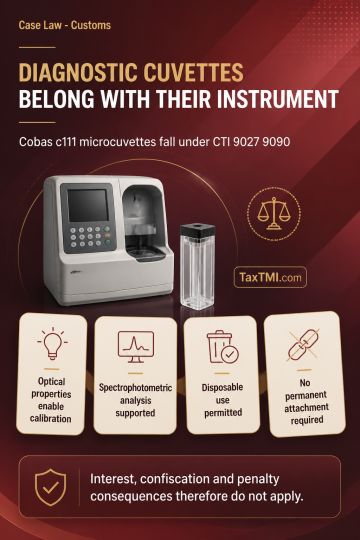
Diagnostic microcuvette classification follows sole-use analytical function, placing specialised disposable cuvettes with their analyser rather than g...
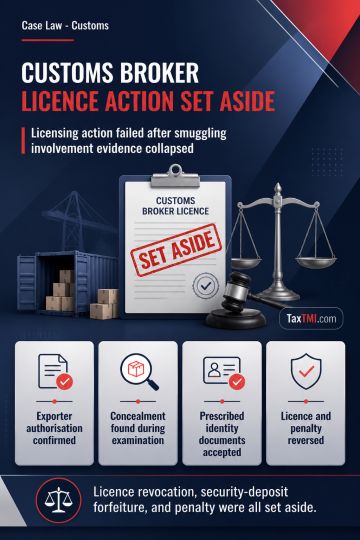
Customs Broker licensing proceedings fail when their offence-report foundation collapses and authorisation, advisory, and KYC duties remain unbreached...
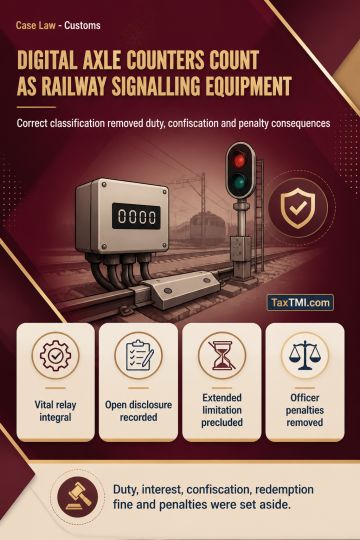
Tariff classification of Digital Axle Counters affirmed as electro-mechanical railway signalling equipment, eliminating duty, confiscation and penalty...
The NCLAT dismissed an appeal challenging a Scheme of Arrangement between ICICI Bank Ltd and ICICI Securities Ltd. The Tribunal held that appellants lacked standing to object as they did not meet the shareholding threshold under s.230(4) of Companies Act, 2013. The NCLAT found no conflict between s.230 and Regulation 37 of SEBI Delisting Regulations, ruling that no separate meeting of public shareholders was required as the scheme uniformly affected all equity shareholders. The scheme had received approval from 93.82% of equity shareholders and 71.89% of public shareholders. The appellants' minimal 0.08% shareholding was insufficient to maintain the appeal as "aggrieved persons," with the Tribunal noting that their objections were impeding shareholder democracy.
The NCLAT dismissed an appeal challenging a Scheme of Arrangement between ICICI Bank Ltd and ICICI Securities Ltd. The Tribunal held that appellants lacked standing to object as they did not meet the shareholding threshold under s.230(4) of Companies Act, 2013. The NCLAT found no conflict between s.230 and Regulation 37 of SEBI Delisting Regulations, ruling that no separate meeting of public shareholders was required as the scheme uniformly affected all equity shareholders. The scheme had received approval from 93.82% of equity shareholders and 71.89% of public shareholders. The appellants' minimal 0.08% shareholding was insufficient to maintain the appeal as "aggrieved persons," with the Tribunal noting that their objections were impeding shareholder democracy.
Note: It is a system-generated summary and is for quick reference only.
 TaxTMI
  TaxTMI
 of 4894