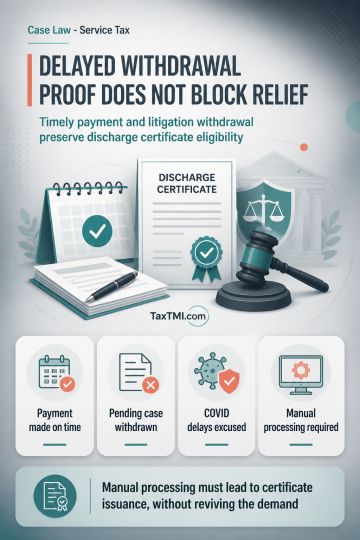
CESTAT held that service tax demand based solely on Form 26AS and ITR data without corroborative evidence linking income to taxable services was legally unsustainable. The Tribunal found multiple errors in the adjudicating authority's assessment: failure to grant exemption for pre-March 2015 contracts, incorrect computation of taxable value for 2017-18 by considering receipts beyond the relevant period (April-June 2017), and unjustified invocation of the extended limitation period. The Tribunal relied on M/s Piyush Sharma precedent, emphasizing that service tax demands cannot be raised solely on Income Tax Department data without proper investigation establishing taxability. Appeal allowed with direction to reassess liability considering these findings.
CESTAT held that service tax demand based solely on Form 26AS and ITR data without corroborative evidence linking income to taxable services was legally unsustainable. The Tribunal found multiple errors in the adjudicating authority's assessment: failure to grant exemption for pre-March 2015 contracts, incorrect computation of taxable value for 2017-18 by considering receipts beyond the relevant period (April-June 2017), and unjustified invocation of the extended limitation period. The Tribunal relied on M/s Piyush Sharma precedent, emphasizing that service tax demands cannot be raised solely on Income Tax Department data without proper investigation establishing taxability. Appeal allowed with direction to reassess liability considering these findings.
Note: It is a system-generated summary and is for quick reference only.
 TaxTMI
  TaxTMI
 of 4888