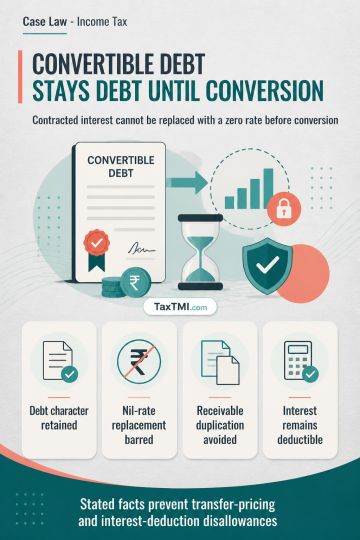
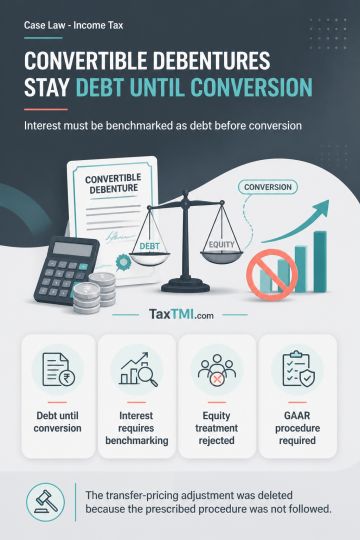
Compulsorily convertible debentures remain debt before conversion, preventing transfer-pricing and interest-deduction disallowances on the stated fact...
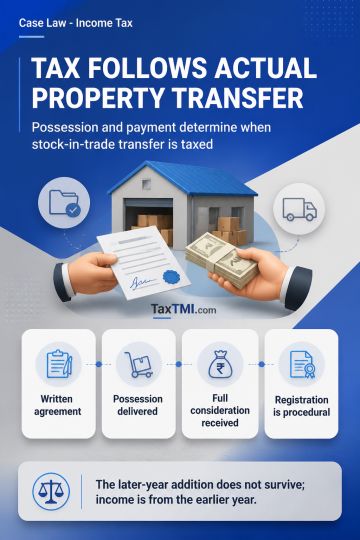
Stock-in-trade transfer taxability follows possession and consideration, not later conveyance registration, limiting deemed-value provisions to the ac...
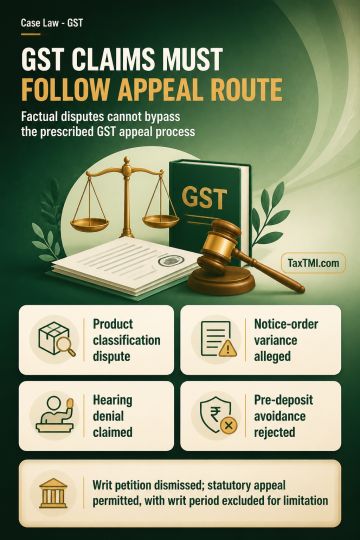
Alternative statutory remedy under GST bars writ challenge where classification, notice variance, and hearing disputes require factual appellate revie...
Central GST authorities issued summons following a search operation, despite ongoing State GST proceedings. The HC held that statutory prohibition against parallel proceedings under Sections 73 and 74 specifically pertains to assessment proceedings, not investigative actions. Search-based summons are distinct from assessment proceedings as they aim to gather information potentially unavailable during original assessment. The Court distinguished between assessment proceedings and investigative measures, noting that Section 6(2)(b) applies to interrelated events in a particular chain. Since the search occurred after previous assessments, it constitutes a separate proceeding. The summons were deemed valid as investigative tools that may lead to future proceedings. Petition challenging the validity of CGST summons dismissed.
Central GST authorities issued summons following a search operation, despite ongoing State GST proceedings. The HC held that statutory prohibition against parallel proceedings under Sections 73 and 74 specifically pertains to assessment proceedings, not investigative actions. Search-based summons are distinct from assessment proceedings as they aim to gather information potentially unavailable during original assessment. The Court distinguished between assessment proceedings and investigative measures, noting that Section 6(2)(b) applies to interrelated events in a particular chain. Since the search occurred after previous assessments, it constitutes a separate proceeding. The summons were deemed valid as investigative tools that may lead to future proceedings. Petition challenging the validity of CGST summons dismissed.
Note: It is a system-generated summary and is for quick reference only.
 TaxTMI
  TaxTMI
 of 4888