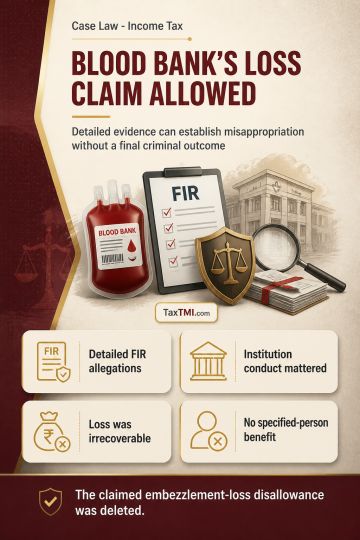
Embezzlement losses in charitable institutions remain allowable when misappropriation is established, irrecoverable, and not a specified-person benefi...
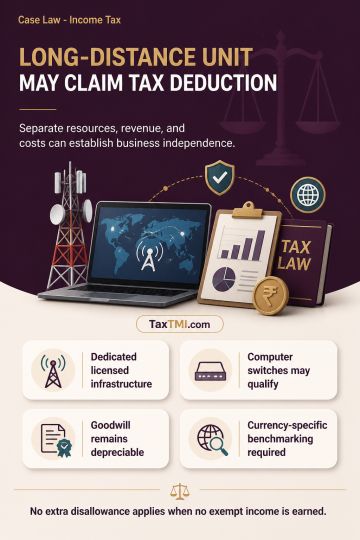
National long-distance undertaking status supports deduction where separately licensed infrastructure, resources, revenue, and expenditure establish c...
Agency reimbursement income follows contractual deposit-liability computation, while pending deposit collections do not constitute deemed-dividend loa...
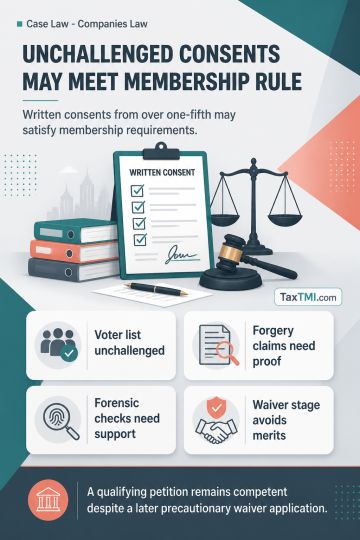
Membership-consent thresholds for oppression petitions are satisfied by unchallenged voter-list consents, while unsupported forgery claims require pro...
HC ruled that GST show-cause notices and final orders lacking physical or digital signatures of the Proper Officer are legally invalid. The court emphasized that Rule 142 of GST Rules mandates prescribed Forms requiring signatures, making it a statutory requirement rather than optional. The presence of signature fields in DRC-01 and DRC-07 forms establishes this as a mandatory element. Section 160 of GST Act regarding procedural defects does not protect unsigned notices. The court aligned with precedents from other High Courts and IT Act provisions requiring proper authentication of electronic records. Consequently, the impugned notices and orders without Proper Officer signatures were held invalid and the petition was allowed.
HC ruled that GST show-cause notices and final orders lacking physical or digital signatures of the Proper Officer are legally invalid. The court emphasized that Rule 142 of GST Rules mandates prescribed Forms requiring signatures, making it a statutory requirement rather than optional. The presence of signature fields in DRC-01 and DRC-07 forms establishes this as a mandatory element. Section 160 of GST Act regarding procedural defects does not protect unsigned notices. The court aligned with precedents from other High Courts and IT Act provisions requiring proper authentication of electronic records. Consequently, the impugned notices and orders without Proper Officer signatures were held invalid and the petition was allowed.
Note: It is a system-generated summary and is for quick reference only.
 TaxTMI
  TaxTMI
 of 4881