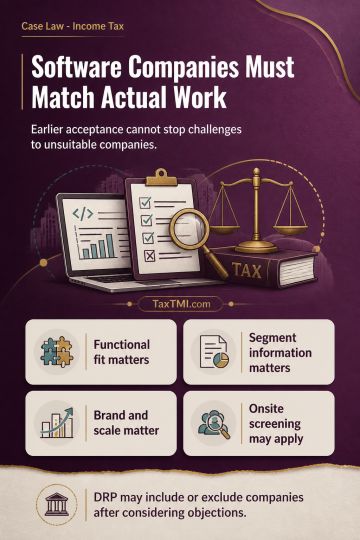
Transfer-pricing comparability permits fresh objections and filters where software service comparables are functionally unsuitable for arm's-length pr...
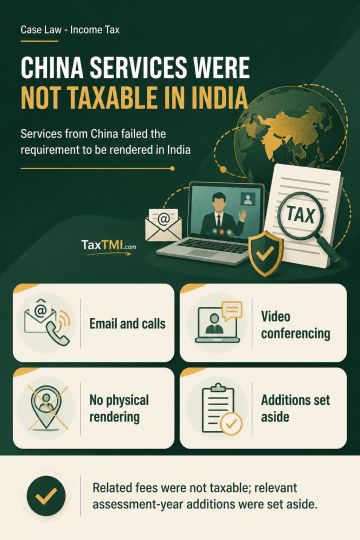
Territorial rendering requirement excludes China-based management and consultancy services from fees for technical services under the India-China DTAA...
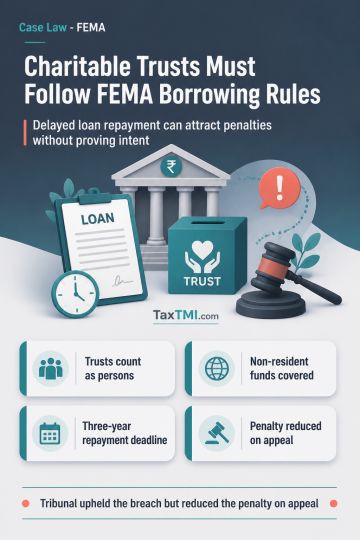
FEMA borrowing restrictions bind charitable trusts, and civil penalties apply without proving intent for delayed repayment of non-resident rupee loans...
The provisions govern taxation of capital assets or stock-in-trade transfers during entity dissolution or reconstitution. Under both Sec 9B of IT Act 1961 and Cl 8 of IT Bill 2025, such transfers are deemed taxable events with fair market value as consideration. Cl 8 introduces refinements including a two-year limitation for guidelines issuance, 30-day parliamentary review, and modified terminology from "previous year" to "tax year." The framework requires specified entities to recognize deemed transfers in distribution year, compute gains on FMV basis, and subjects proceeds to business income or capital gains tax. Specified persons must document received assets and consider FMV implications. While core principles remain unchanged, Cl 8 enhances administrative procedures and oversight mechanisms for implementation effectiveness.
The provisions govern taxation of capital assets or stock-in-trade transfers during entity dissolution or reconstitution. Under both Sec 9B of IT Act 1961 and Cl 8 of IT Bill 2025, such transfers are deemed taxable events with fair market value as consideration. Cl 8 introduces refinements including a two-year limitation for guidelines issuance, 30-day parliamentary review, and modified terminology from "previous year" to "tax year." The framework requires specified entities to recognize deemed transfers in distribution year, compute gains on FMV basis, and subjects proceeds to business income or capital gains tax. Specified persons must document received assets and consider FMV implications. While core principles remain unchanged, Cl 8 enhances administrative procedures and oversight mechanisms for implementation effectiveness.
Note: It is a system-generated summary and is for quick reference only.
 TaxTMI
  TaxTMI
 of 4891