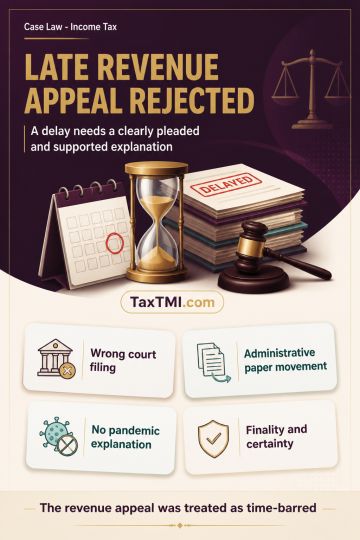
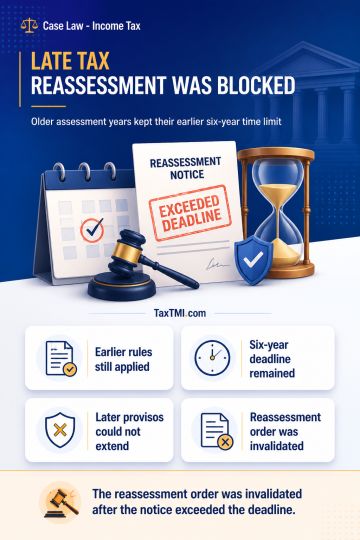
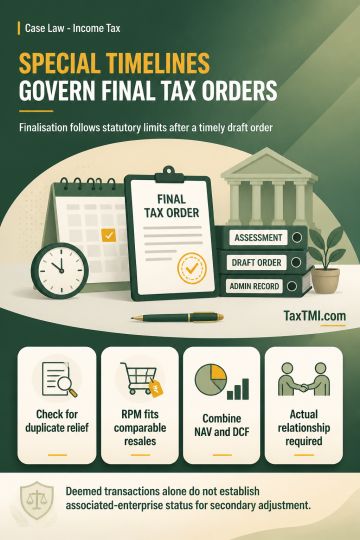
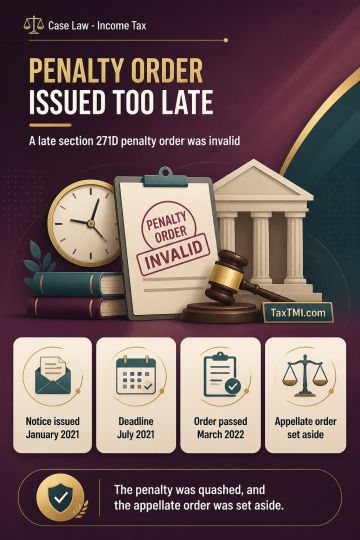
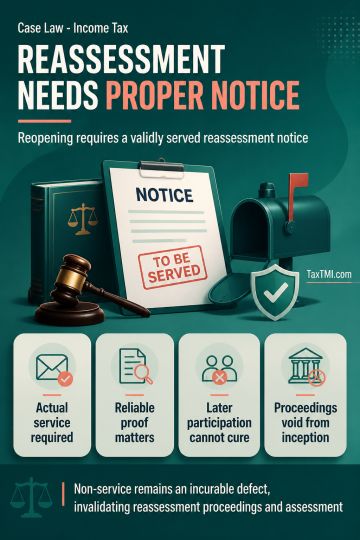
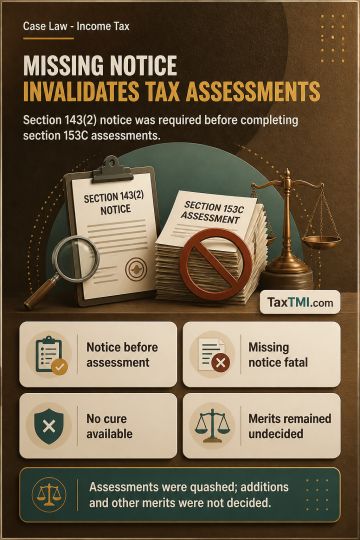
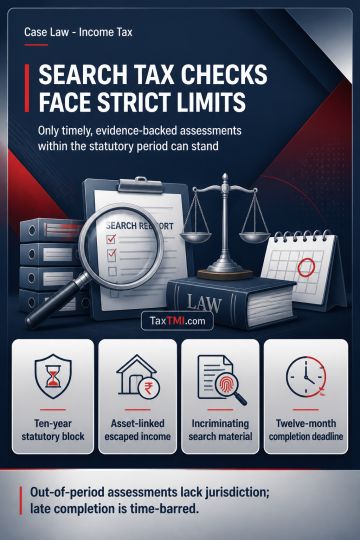
Pre-amendment reassessment limitation bars late notices under the preserved regime, invalidating consequential reassessment for affected earlier asses...
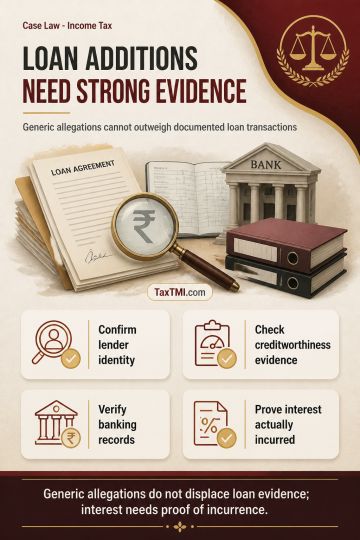
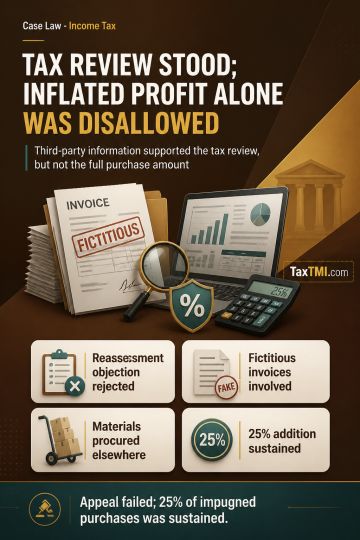
Cash-sales explanations for bank deposits require documentary reconciliation; reassessment notice survived where effective response time was available...
Functional comparability in transfer pricing prevents ad hoc arm's length adjustments where functions, assets, risks and reliable comparables are unes...
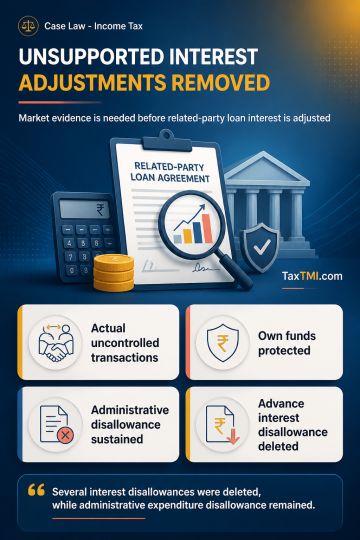
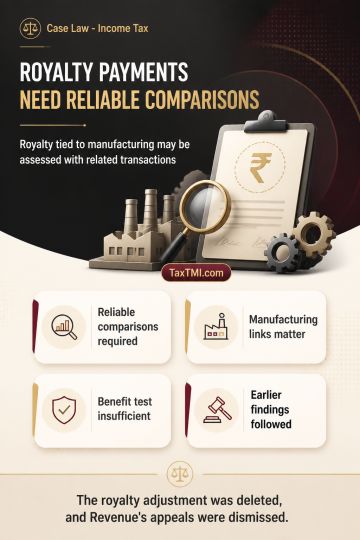
Contingency expenses, exempt-income disallowance, and royalty benchmarking: unsupported adjustments were deleted under consistent accounting and trans...
Page of 4921
Press 'Enter' after typing page number.
81 to 100 of 98414 Results
❮
❯
❯❯
0 / 200
Expand Note
Add to Folder
No Folders have been created
+
Are you sure you want to delete "My most important" ?
The Income Tax Bill, 2025 introduces enhanced regulatory framework for commercial activities by non-profit organizations through Clause 346, building upon Section 2(15) of Income-tax Act, 1961. The provision maintains the 20% revenue threshold for commercial activities while introducing stricter compliance requirements. Key modifications include mandatory separate accounting for commercial ventures, explicit definition of activities directly related to charitable objectives, and enhanced monitoring mechanisms. The framework applies specifically to registered non-profits, compared to the broader application under the 1961 Act. The provision aims to balance legitimate revenue generation with charitable purposes while preventing misuse through commercial operations. This structured approach provides clearer operational guidelines for organizations and regulators, though implementation challenges remain regarding activity classification and compliance monitoring.
The Income Tax Bill, 2025 introduces enhanced regulatory framework for commercial activities by non-profit organizations through Clause 346, building upon Section 2(15) of Income-tax Act, 1961. The provision maintains the 20% revenue threshold for commercial activities while introducing stricter compliance requirements. Key modifications include mandatory separate accounting for commercial ventures, explicit definition of activities directly related to charitable objectives, and enhanced monitoring mechanisms. The framework applies specifically to registered non-profits, compared to the broader application under the 1961 Act. The provision aims to balance legitimate revenue generation with charitable purposes while preventing misuse through commercial operations. This structured approach provides clearer operational guidelines for organizations and regulators, though implementation challenges remain regarding activity classification and compliance monitoring.
Note: It is a system-generated summary and is for quick reference only.
 TaxTMI
 TaxTMI

 of 4921