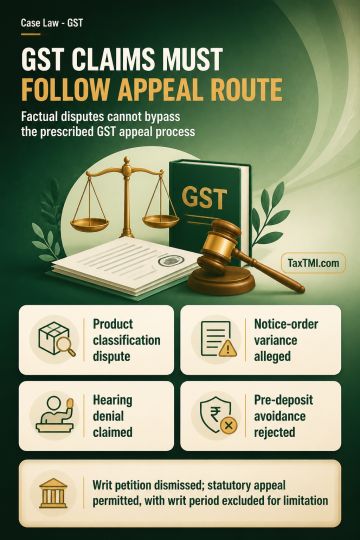
Alternative statutory remedy under GST bars writ challenge where classification, notice variance, and hearing disputes require factual appellate revie...
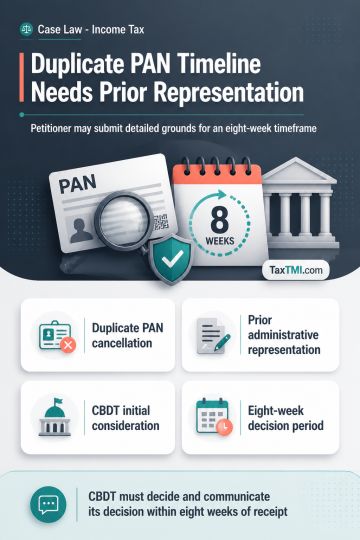
Duplicate PAN cancellation timeframe requires prior administrative representation before judicial intervention, ensuring a time-bound decision on the ...
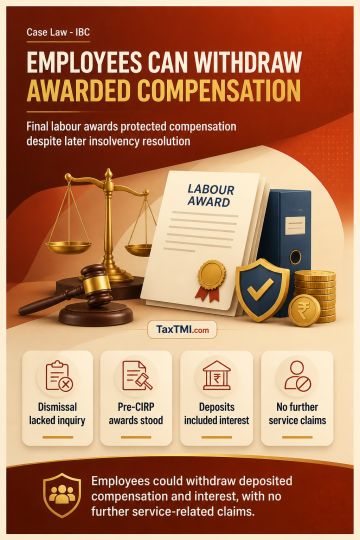
Natural justice and pre-CIRP labour awards protect termination compensation, permitting withdrawal of court deposits despite later insolvency resoluti...
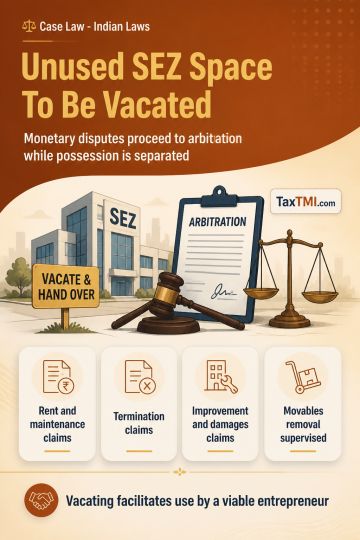
Arbitration of SEZ sub-lease monetary claims preserves rent, maintenance, termination, improvements and damages disputes while unused premises are vac...
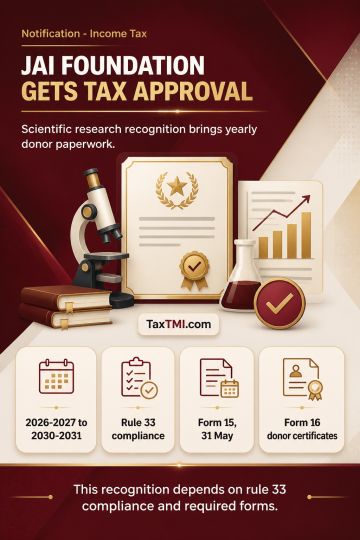
Scientific research approval grants a research association tax recognition, subject to annual donor reporting, certification, and regulatory complianc...
Page of 4891
Press 'Enter' after typing page number.
141 to 160 of 97820 Results
❮
❯
❯❯
0 / 200
Expand Note
Add to Folder
No Folders have been created
+
Are you sure you want to delete "My most important" ?
HC upheld revision under s.263 regarding treatment of provision for doubtful debts in computing book profits under s.115-JB. AO's acceptance of assessee's claim was mechanical, without examining why provision for doubtful assets was claimed as deduction despite not being debited to provision account. Amount was merely shown as reduction from trade receivables for disclosure, not as written-off debts. Assessee maintained recovery hopes. PCIT's jurisdiction exercise directing re-examination was justified. Tribunal correctly analyzed legal position, finding no illegality in CIT's order. HC found no jurisdictional infirmity, ruling against assessee's appeal.
HC upheld revision under s.263 regarding treatment of provision for doubtful debts in computing book profits under s.115-JB. AO's acceptance of assessee's claim was mechanical, without examining why provision for doubtful assets was claimed as deduction despite not being debited to provision account. Amount was merely shown as reduction from trade receivables for disclosure, not as written-off debts. Assessee maintained recovery hopes. PCIT's jurisdiction exercise directing re-examination was justified. Tribunal correctly analyzed legal position, finding no illegality in CIT's order. HC found no jurisdictional infirmity, ruling against assessee's appeal.
Note: It is a system-generated summary and is for quick reference only.
 TaxTMI
  TaxTMI
 of 4891