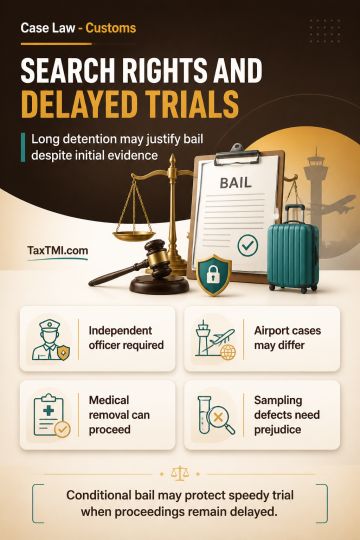
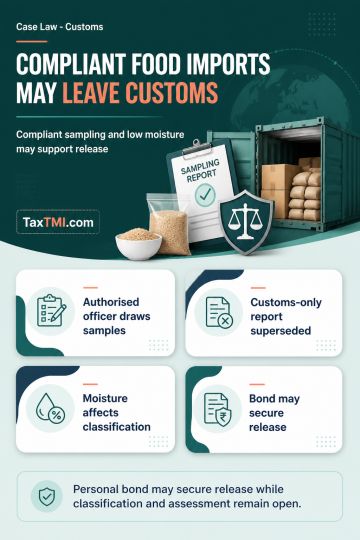
Food import sampling requirements support provisional release where unseized consignments conform to standards and raw areca classification is unestab...
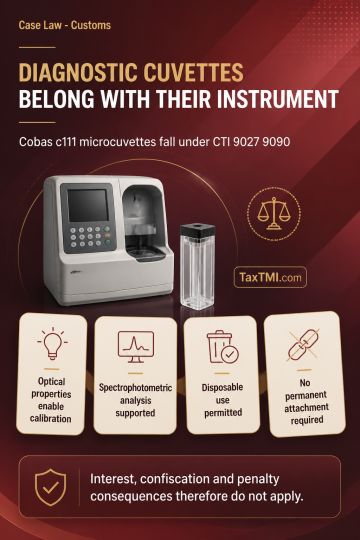
Diagnostic microcuvette classification follows sole-use analytical function, placing specialised disposable cuvettes with their analyser rather than g...
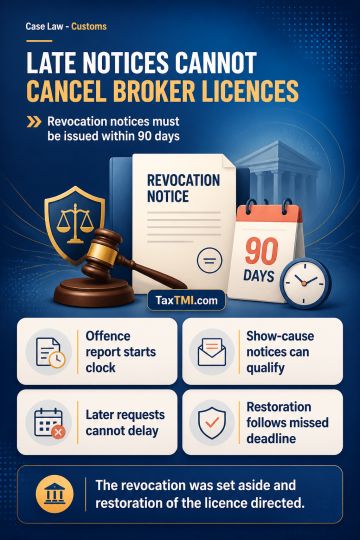
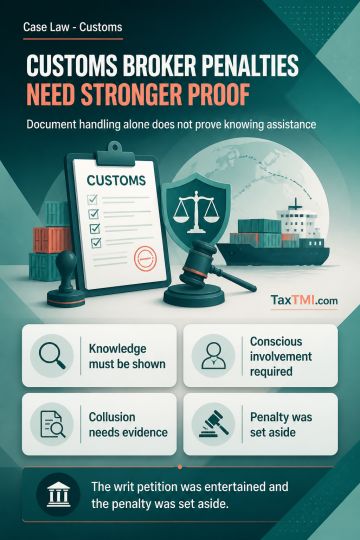
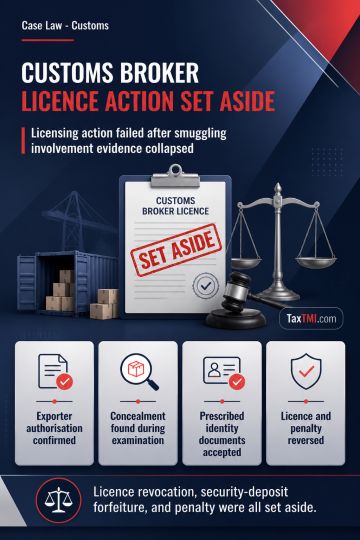
Customs Broker licensing proceedings fail when their offence-report foundation collapses and authorisation, advisory, and KYC duties remain unbreached...
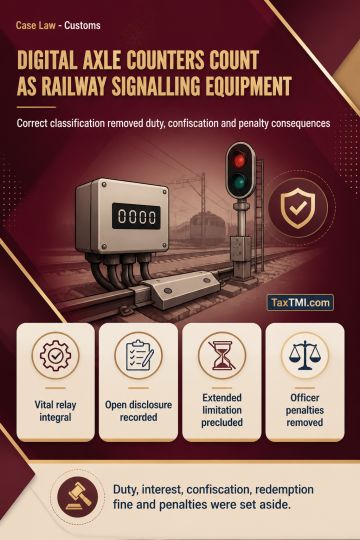
Tariff classification of Digital Axle Counters affirmed as electro-mechanical railway signalling equipment, eliminating duty, confiscation and penalty...
HC allowed petition challenging appellate order under Section 107 of 2017 Act, finding that Appellate Authority failed to judiciously exercise discretionary power regarding delay condonation. Petitioner demonstrated sufficient cause for 3-day delay in filing appeal, citing Managing Director's travel. The delay fell within condonable period under Section 107(4). Authority erred by not examining whether delay was condonable and if sufficient cause existed. HC condoned delay, noting it was within prescribed statutory period and backed by reasonable justification. Matter remanded to Appellate Authority for consideration on merits.
HC allowed petition challenging appellate order under Section 107 of 2017 Act, finding that Appellate Authority failed to judiciously exercise discretionary power regarding delay condonation. Petitioner demonstrated sufficient cause for 3-day delay in filing appeal, citing Managing Director's travel. The delay fell within condonable period under Section 107(4). Authority erred by not examining whether delay was condonable and if sufficient cause existed. HC condoned delay, noting it was within prescribed statutory period and backed by reasonable justification. Matter remanded to Appellate Authority for consideration on merits.
Note: It is a system-generated summary and is for quick reference only.
 TaxTMI
  TaxTMI
 of 4886