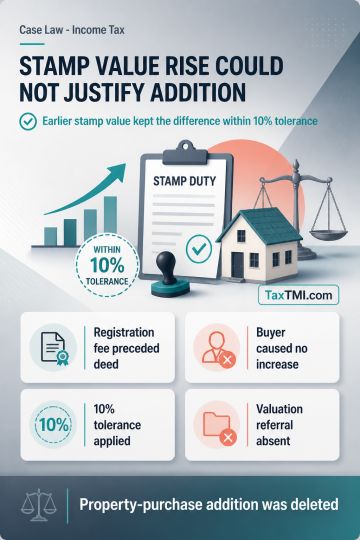
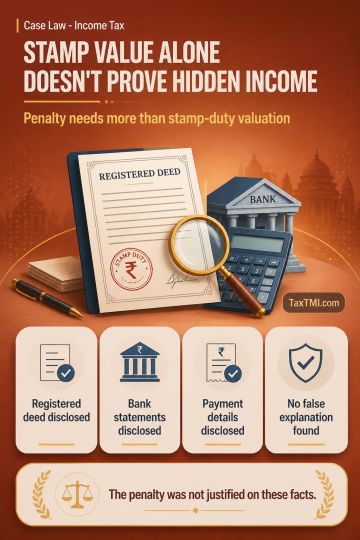
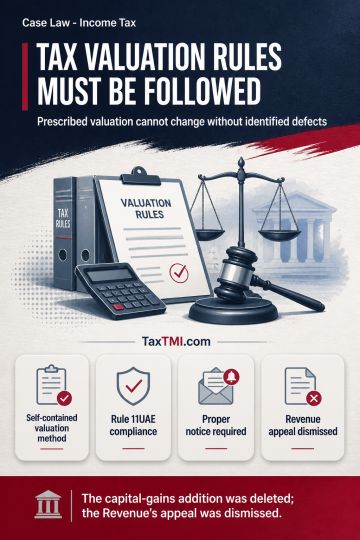
Stamp valuation increases after registration-fee payment led to deletion of property-purchase addition within tolerance and without valuation referral...
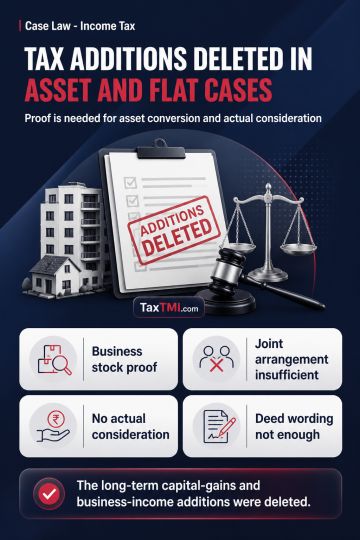
Capital Asset Conversion Requires Proven Business Stock Treatment; Paper Consideration in Spousal Flat Transfers Does Not Create Taxable Business Inco...
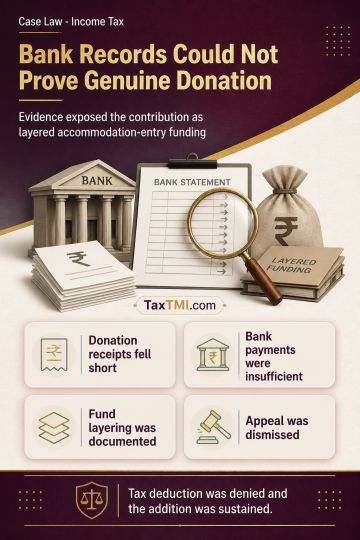
Human-probability test defeats political donation deduction where banking records mask accommodation-entry fund layering and evidence shows non-genuin...
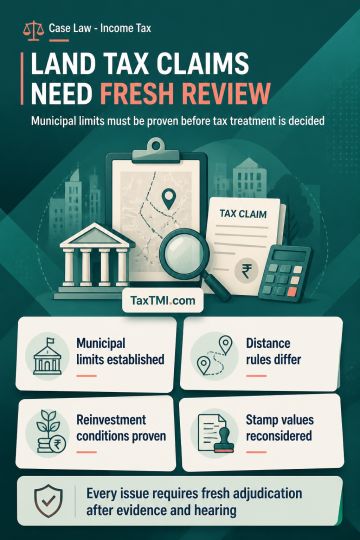
Commercial property status protects capital-gains exemption when residential-house ownership limits are tested, while agricultural-land character gove...
CESTAT upheld rejection of a customs duty refund claim filed on 09.01.2024 relating to payments made via challans between March-December 2017 under EPCG scheme. The appellant's claim was time-barred under Section 27 of Customs Act, 1962, as it exceeded the one-year limitation period from duty payment date. The Tribunal noted that no statutory relaxations under Section 27(1B) were applicable. Following precedent from IFGL Refractories case, CESTAT found no grounds to interfere with the original order rejecting the refund claim due to clear statutory time-bar. The appeal was dismissed on merits, affirming that limitation periods under Customs Act must be strictly observed.
CESTAT upheld rejection of a customs duty refund claim filed on 09.01.2024 relating to payments made via challans between March-December 2017 under EPCG scheme. The appellant's claim was time-barred under Section 27 of Customs Act, 1962, as it exceeded the one-year limitation period from duty payment date. The Tribunal noted that no statutory relaxations under Section 27(1B) were applicable. Following precedent from IFGL Refractories case, CESTAT found no grounds to interfere with the original order rejecting the refund claim due to clear statutory time-bar. The appeal was dismissed on merits, affirming that limitation periods under Customs Act must be strictly observed.
Note: It is a system-generated summary and is for quick reference only.
 TaxTMI
  TaxTMI
 of 4888