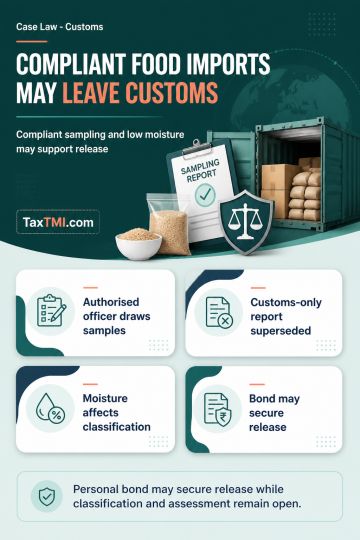
Food import sampling requirements support provisional release where unseized consignments conform to standards and raw areca classification is unestab...
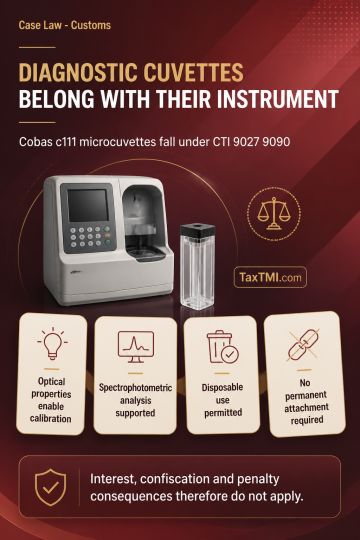
Diagnostic microcuvette classification follows sole-use analytical function, placing specialised disposable cuvettes with their analyser rather than g...
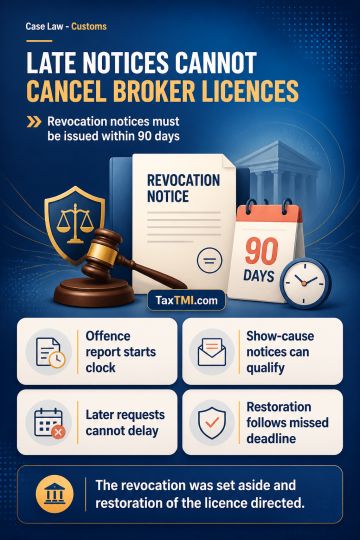
Customs Broker licensing proceedings fail when their offence-report foundation collapses and authorisation, advisory, and KYC duties remain unbreached...
CESTAT upheld rejection of a customs duty refund claim filed on 09.01.2024 relating to payments made via challans between March-December 2017 under EPCG scheme. The appellant's claim was time-barred under Section 27 of Customs Act, 1962, as it exceeded the one-year limitation period from duty payment date. The Tribunal noted that no statutory relaxations under Section 27(1B) were applicable. Following precedent from IFGL Refractories case, CESTAT found no grounds to interfere with the original order rejecting the refund claim due to clear statutory time-bar. The appeal was dismissed on merits, affirming that limitation periods under Customs Act must be strictly observed.
CESTAT upheld rejection of a customs duty refund claim filed on 09.01.2024 relating to payments made via challans between March-December 2017 under EPCG scheme. The appellant's claim was time-barred under Section 27 of Customs Act, 1962, as it exceeded the one-year limitation period from duty payment date. The Tribunal noted that no statutory relaxations under Section 27(1B) were applicable. Following precedent from IFGL Refractories case, CESTAT found no grounds to interfere with the original order rejecting the refund claim due to clear statutory time-bar. The appeal was dismissed on merits, affirming that limitation periods under Customs Act must be strictly observed.
Note: It is a system-generated summary and is for quick reference only.
 TaxTMI
  TaxTMI
 of 4881