Loading...

⚠ ✕
❮ Top
☎ Help
☰
×

By creating an account you can:

Logo TaxTMI
Call Us / Help / Feedback✕

Contact Us At :

✉ E-mail: [email protected]

✆ Call / WhatsApp at: +91 99117 96707

For more information, Check Contact Us

FAQs :

To know Frequently Asked Questions, Check FAQs

Most Asked Video Tutorials :

For more tutorials, Check Video Tutorials

Submit Feedback/Suggestion :

Email :
Please provide your email address so we can follow up on your feedback.
Category :
Description :
Min 15 characters 0/2000
Make Most of Text Search ✕
  1. Checkout this video tutorial: How to search effectively on TaxTMI.
  2. Put words in double quotes for exact word search, eg: "income tax"
  3. Avoid noise words such as : 'and, of, the, a'
  4. Sort by Relevance to get the most relevant document.
  5. Press Enter to add multiple terms/multiple phrases, and then click on Search to Search.
  6. Text Search
  7. The system will try to fetch results that contains ALL your words.
  8. Once you add keywords, you'll see a new 'Search In' filter that makes your results even more precise.
  9. Text Search
╳
Add to...
You have not created any category. Kindly create one to bookmark this item!
✕
Create New Category
Hide
Title :
Description :
❮❮ Hide
❮ Default View
Expand ❯❯
Close ✕
🔎 Filters / Advanced Search ❯
TEXT

Press 'Enter' to add multiple search terms. Rules for Better Search

Search In
Main Text + AI Text ❯
  • Main Text
  • Main Text + AI Text
  • AI Text
Law:
---- All Laws---- ❯
  • ---- All Laws----
  • Income Tax
  • Direct Taxes
  • Benami Property
  • Central GST Laws
  • SGST - State GST Laws
  • Customs
  • FTP - Foreign Trade Policy
  • SEZ - Special Economic Zone
  • FEMA - Foreign Exchange Management
  • Companies Law
  • SEBI - Securities & Exchange Board of India
  • IBC - Insolvency and Bankruptcy
  • Law of Competition
  • PMLA - Money-Laundering
  • Indian Laws
  • Bill / Finance Bills
  • Wealth Tax
  • Service Tax
  • Central Excise
  • VAT / Sales Tax
Month:
---- All Months ---- ❯
  • ---- All Months ----
  • January
  • February
  • March
  • April
  • May
  • June
  • July
  • August
  • September
  • October
  • November
  • December
Year:
---- All Years ---- ❯
  • ---- All Years ----
  • 2026
  • 2025
  • 2024
  • 2023
  • 2022
  • 2021
  • 2020
  • 2019
  • 2018
  • 2017
  • 2016
  • 2015
  • 2014
  • 2013
  • 2012
  • 2011
Sort By: ?
In Sort By 'Default', exact matches for text search are shown at the top, followed by the remaining results in their regular order.
Relevance Default Date
☰   Show Results ❯
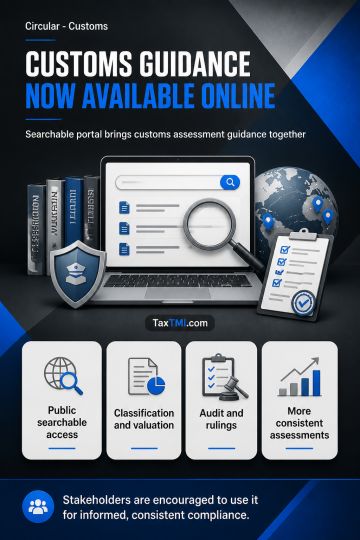
    Customs Assessment Portal centralises classification and valuation guidance to support consistent, transparent and informed compliance across stakehol...
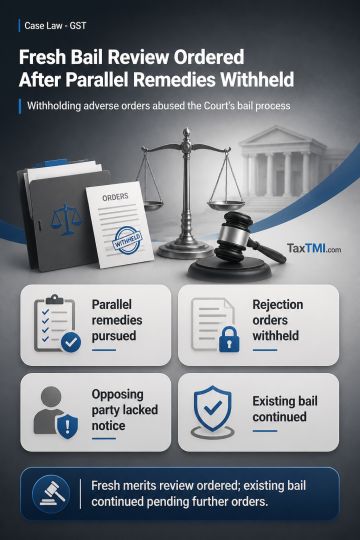
    Forum shopping in bail proceedings led to fresh merits consideration after parallel remedies and adverse orders were withheld.
    Condonation of delay in GST appeals restored merits review after illness and death disrupted the firm's affairs.
    Input tax credit limitation and effective notice requirements require quashing barred credit denial and remanding remaining GST issues.
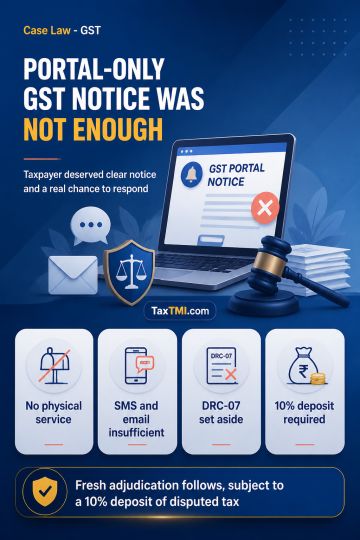
    Effective GST notice service requires meaningful delivery, with defective portal-only notice leading to fresh adjudication after hearing.
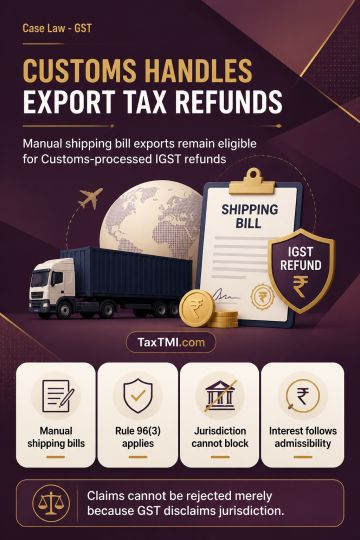
    IGST refunds for exports under manual shipping bills fall within Customs processing jurisdiction, requiring consideration under Rule 96(3).
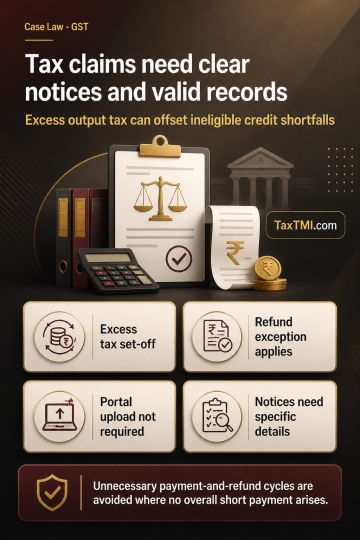
    Excess output tax set-off can negate a tax shortfall, while vague notices and portal-based rejections breach natural justice.
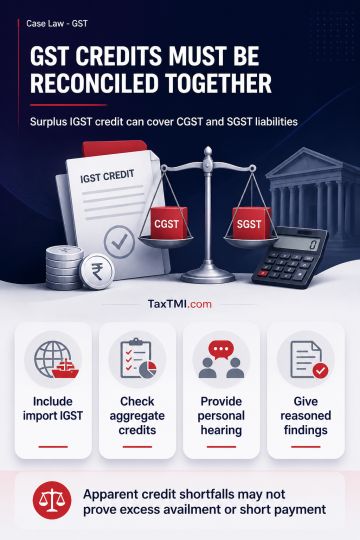
    IGST Credit Set-Off: Aggregate reconciliation can eliminate alleged CGST and SGST input tax credit excesses.
    Fraud threshold for extended tax limitation curbs unsupported penalties, while consolidated notices across financial years remain permissible.
    Show-cause notice limits prevent input tax credit disallowance on an unalleged supplier tax-payment ground during adjudication.
    GST refunds for cancelled air tickets remain available when passenger reimbursements defeat unjust enrichment and credit-note adjustment is unavailabl...
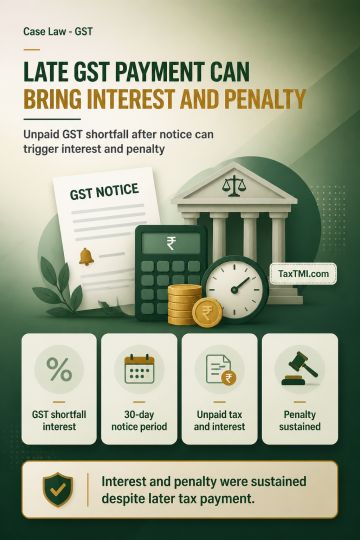
    GST short-payment interest and penalty apply when tax and interest remain unpaid within the show-cause notice period.
    Input tax credit verification governs GSTR-2A mismatches, while unutilised reversals and sales-return credit notes avoid additional tax consequences.
    GST refund limitation exclusions preserve unregistered purchasers' claims after cancelled flat bookings, with no unjust-enrichment bar.
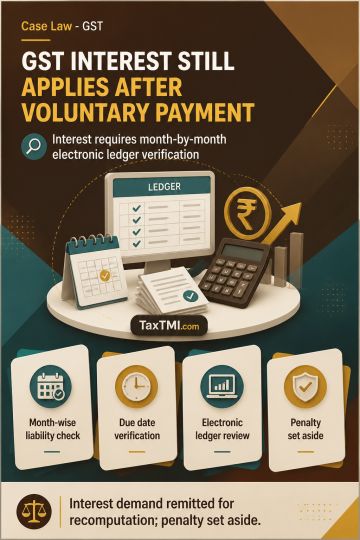
    GST interest computation requires month-wise ledger verification, while pre-notice voluntary payment protects against penalty for inadvertent turnover...
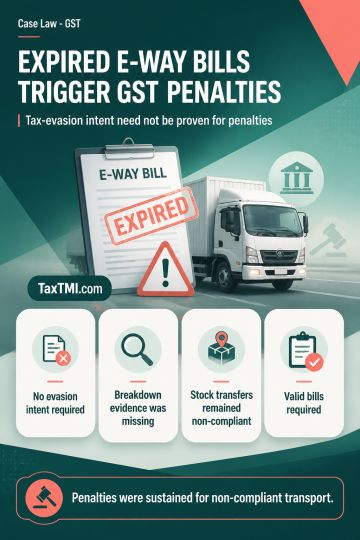
    Expired e-way bills trigger GST detention penalties without proving tax-evasion intent when no timely extension or evidence supports delay.
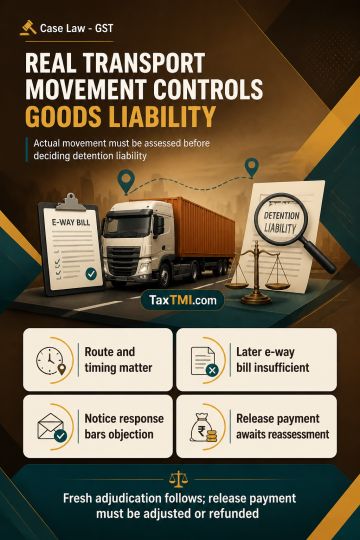
    Actual transport movement determines goods-detention liability; acknowledged notice service stands, while release payments await fresh adjudication.
    Post-interception transport documents require credible linkage to goods; unsupported transit claims cannot defeat undeclared-goods penalties.
    E-way bill accuracy in diverted transit sales determines Section 129 penalties despite no independent proof of tax evasion.
    Expired e-way bill transport attracts GST detention penalties without proof of any tax-evasion intent being required.
❮
❯
❯❯
Maximize Maximize Maximize
0 / 200
Expand Note
Add to Folder

No Folders have been created

+

Are you sure you want to delete "My most important" ?

NOTE:

Highlights
Showing Results for :
Reset Filters
Results Found:
Show All Summaries Hide All Summaries

Highlights

Back

All Highlights

Showing Results for :
Reset Filters
No Records Found

Highlights

Back

All Highlights

The NCLAT held that there was a breach of fiduciary duties and...

NCLAT Removes IRP in Sequel Buildcon Insolvency Case for Breaching Fiduciary Duties and Conflict of Interest.

Contents
Summary
Note

Note

-

Bookmark

Print

Print

IBC January 10, 2025 Case Laws AT
The NCLAT held that there was a breach of fiduciary duties and conflict of interest by the Interim Resolution Professional (IRP) in the appointment of consultants during the Corporate Insolvency Resolution Process of Sequel Buildcon Private Limited. The IRP failed to disclose relevant information regarding credentials and manner of appointment of consultants to the applicant, a key financier. The IRP's non-disclosure of past associations with the consultants violated the Code of Conduct under the Insolvency and Bankruptcy Code. To safeguard the interests of stakeholders, especially homebuyers, the NCLAT directed the immediate removal of the IRP and the consultants appointed by them.

Topics

Acts Income Tax