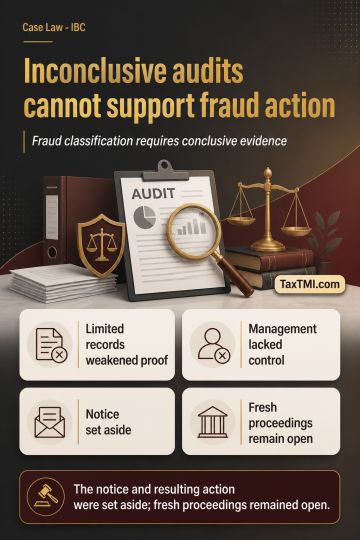
Fraud classification show-cause notices founded on inconclusive forensic audit material cannot sustain action, permitting fresh proceedings on conclus...
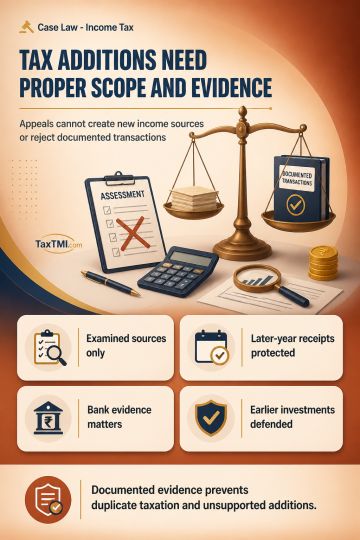
Appellate enhancement limits protect against new income sources, while documented credits and prior-year investments resist unexplained-income additio...
ITAT held that the allotment of shares at a lesser price than to a third party cannot be taxed u/s 28(iv) of the Income Tax Act, 1961. The receipt of property without consideration or for lesser consideration is taxable only u/s 56(2)(x)(c). In the absence of a charging provision, such a transaction of acquiring shares at par value compared to premium paid by a third party cannot be taxed. Furthermore, the transaction of acquiring shares is a capital field transaction, not a revenue field transaction. If the benefit does not arise from business or profession, it cannot be taxed u/s 28(iv). Since the income from sale of shares is taxable as capital gains, the acquisition cannot be treated as a revenue transaction. The decision was in favor of the assessee.
ITAT held that the allotment of shares at a lesser price than to a third party cannot be taxed u/s 28(iv) of the Income Tax Act, 1961. The receipt of property without consideration or for lesser consideration is taxable only u/s 56(2)(x)(c). In the absence of a charging provision, such a transaction of acquiring shares at par value compared to premium paid by a third party cannot be taxed. Furthermore, the transaction of acquiring shares is a capital field transaction, not a revenue field transaction. If the benefit does not arise from business or profession, it cannot be taxed u/s 28(iv). Since the income from sale of shares is taxable as capital gains, the acquisition cannot be treated as a revenue transaction. The decision was in favor of the assessee.
Note: It is a system-generated summary and is for quick reference only.
 TaxTMI
  TaxTMI
 of 4881