Customs-controlled cargo movement now includes GDL, subject to EXIM prioritisation, segregation, verification, reconciliation and enforcement safeguar...
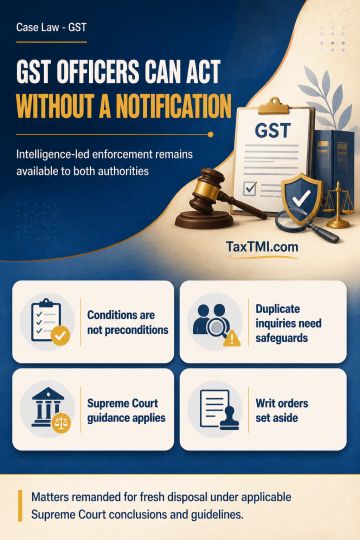
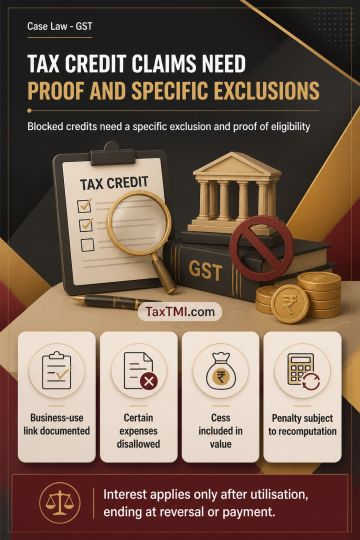
GST cross-empowerment remains effective without conditional notification, while duplicate proceedings require established safeguards against overlappi...
The ITAT dismissed the revenue's appeal against the CIT(A)'s order deleting the addition made u/s 28(iv) for assets received free of cost from the assessee's associated enterprise (AE). The assets were used by the assessee for providing services to its AE on a cost-plus basis, with depreciation on these assets included in the cost base per the Advance Pricing Agreement. As the assessee received remuneration from its AE after mark-up on this cost base, the ITAT held that no benefit arose to the assessee from using these assets provided by the AE. The ITAT also dismissed the other grounds raised by the revenue regarding reimbursement to seconded employees and the low tax effect, upholding the CIT(A)'s order.
The ITAT dismissed the revenue's appeal against the CIT(A)'s order deleting the addition made u/s 28(iv) for assets received free of cost from the assessee's associated enterprise (AE). The assets were used by the assessee for providing services to its AE on a cost-plus basis, with depreciation on these assets included in the cost base per the Advance Pricing Agreement. As the assessee received remuneration from its AE after mark-up on this cost base, the ITAT held that no benefit arose to the assessee from using these assets provided by the AE. The ITAT also dismissed the other grounds raised by the revenue regarding reimbursement to seconded employees and the low tax effect, upholding the CIT(A)'s order.
Note: It is a system-generated summary and is for quick reference only.
 TaxTMI
  TaxTMI
 of 4879