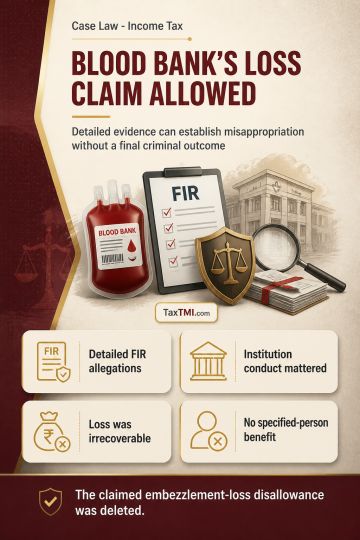
Embezzlement losses in charitable institutions remain allowable when misappropriation is established, irrecoverable, and not a specified-person benefi...
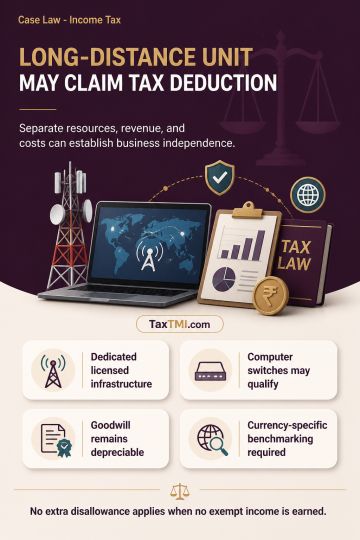
National long-distance undertaking status supports deduction where separately licensed infrastructure, resources, revenue, and expenditure establish c...
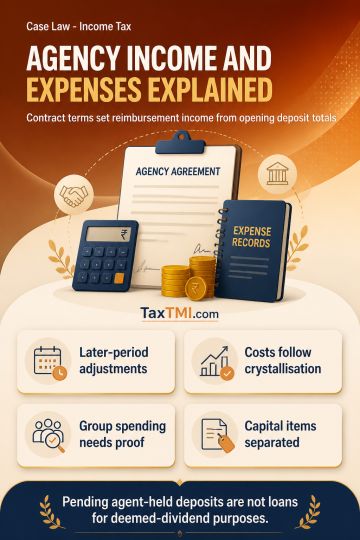
Agency reimbursement income follows contractual deposit-liability computation, while pending deposit collections do not constitute deemed-dividend loa...
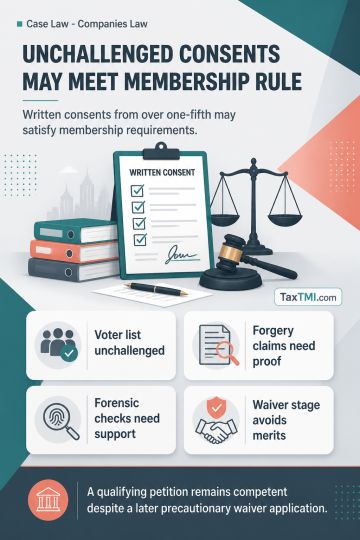
Membership-consent thresholds for oppression petitions are satisfied by unchallenged voter-list consents, while unsupported forgery claims require pro...
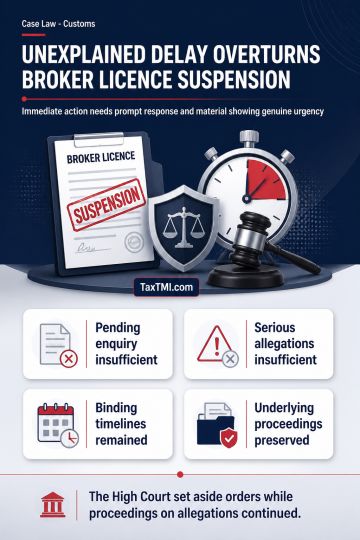
The Customs, Excise and Service Tax Appellate Tribunal (CESTAT) allowed the appeal and set aside the impugned order revoking the customs broker's license, forfeiting the security deposit, and imposing penalty. The Tribunal held that the alleged breaches of regulations 10(d), 10(e), 10(f), and 10(n) of the Customs Brokers Licensing Regulations, 2018, were not established. The allegations pertained to the export of overvalued goods to claim ineligible drawback, supported by fake bills from purported buyers instead of actual suppliers. However, the Tribunal ruled that the customs broker's actions before filing the shipping bill did not fall within the purview of the licensed activities. Additionally, there was no evidence of providing incorrect information leading to the exporter's breach or failure to verify the client's credentials as alleged.
The Customs, Excise and Service Tax Appellate Tribunal (CESTAT) allowed the appeal and set aside the impugned order revoking the customs broker's license, forfeiting the security deposit, and imposing penalty. The Tribunal held that the alleged breaches of regulations 10(d), 10(e), 10(f), and 10(n) of the Customs Brokers Licensing Regulations, 2018, were not established. The allegations pertained to the export of overvalued goods to claim ineligible drawback, supported by fake bills from purported buyers instead of actual suppliers. However, the Tribunal ruled that the customs broker's actions before filing the shipping bill did not fall within the purview of the licensed activities. Additionally, there was no evidence of providing incorrect information leading to the exporter's breach or failure to verify the client's credentials as alleged.
Note: It is a system-generated summary and is for quick reference only.
 TaxTMI
  TaxTMI
 of 4881