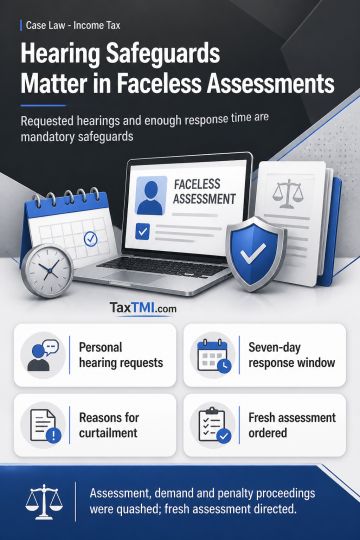
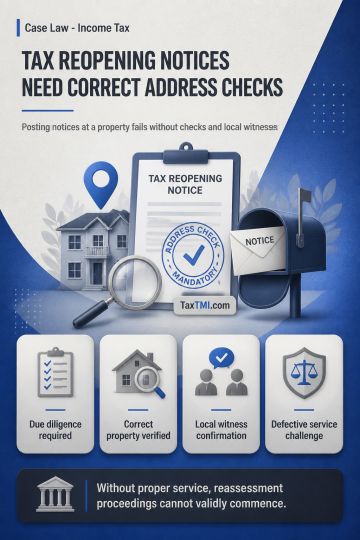
Faceless assessment safeguards require requested personal hearings and adequate final show-cause response time, failing which reassessment is required...
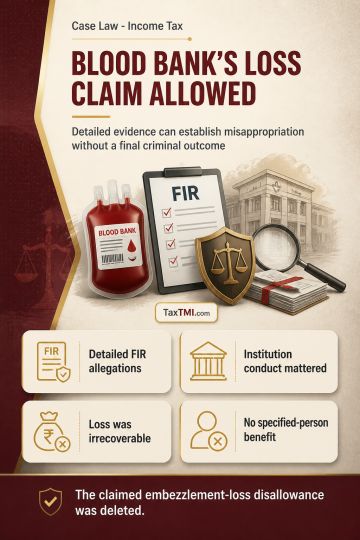
Embezzlement losses in charitable institutions remain allowable when misappropriation is established, irrecoverable, and not a specified-person benefi...
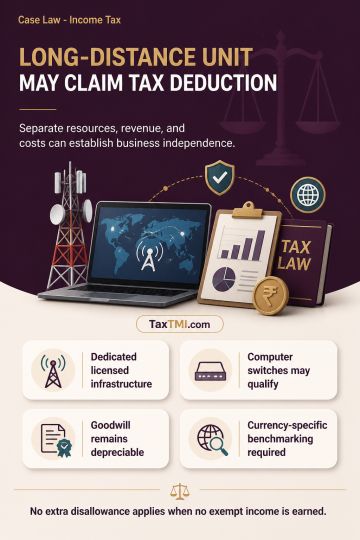
National long-distance undertaking status supports deduction where separately licensed infrastructure, resources, revenue, and expenditure establish c...
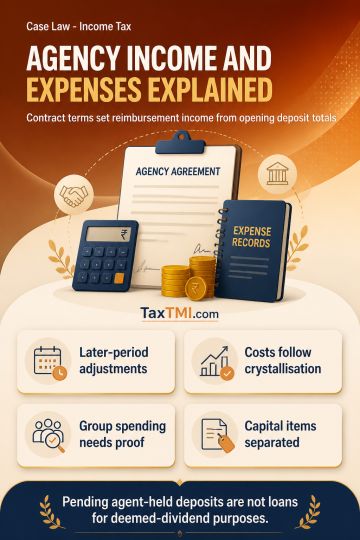
Agency reimbursement income follows contractual deposit-liability computation, while pending deposit collections do not constitute deemed-dividend loa...
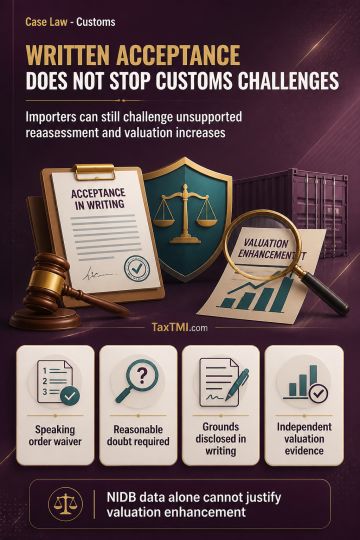
The Customs, Excise and Service Tax Appellate Tribunal (CESTAT) allowed the appeals by remanding the matter back to the original authority. The Tribunal held that the assessing officer's insistence on the importer conforming to the classification proposed by the investigating agency was inappropriate and contrary to the self-assessment procedure u/ss 17, 36, and 48 of the Customs Act, 1962. The Tribunal observed that enforced conformity was evident from the immediate challenge to the assessment by the importer. The Tribunal found the lack of a 'speaking order' as required u/s 17(5) of the Act vitiated the impugned orders with illegality. Consequently, the Tribunal set aside the orders and remanded the bills of entry to the original authority for compliance with the statutory procedure, particularly Section 17(5).
The Customs, Excise and Service Tax Appellate Tribunal (CESTAT) allowed the appeals by remanding the matter back to the original authority. The Tribunal held that the assessing officer's insistence on the importer conforming to the classification proposed by the investigating agency was inappropriate and contrary to the self-assessment procedure u/ss 17, 36, and 48 of the Customs Act, 1962. The Tribunal observed that enforced conformity was evident from the immediate challenge to the assessment by the importer. The Tribunal found the lack of a 'speaking order' as required u/s 17(5) of the Act vitiated the impugned orders with illegality. Consequently, the Tribunal set aside the orders and remanded the bills of entry to the original authority for compliance with the statutory procedure, particularly Section 17(5).
Note: It is a system-generated summary and is for quick reference only.
 TaxTMI
  TaxTMI
 of 4884