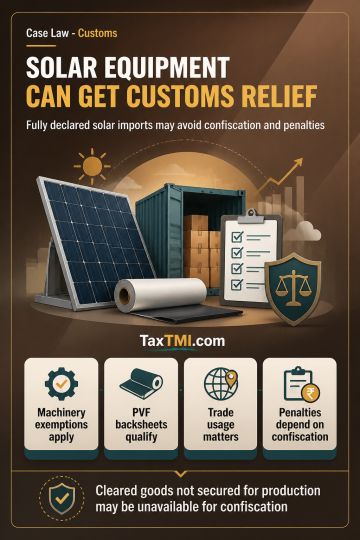
Customs exemptions cover photovoltaic assembly machinery and PVF backsheets, while fully declared cleared imports may avoid confiscation and penalties...
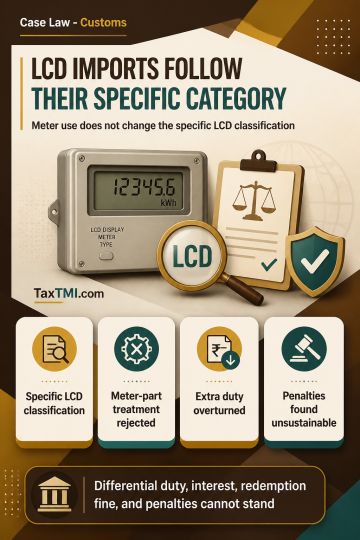
Specific tariff classification for LCD devices overrides treatment as electricity-meter parts, defeating differential duty, extended limitation, and p...
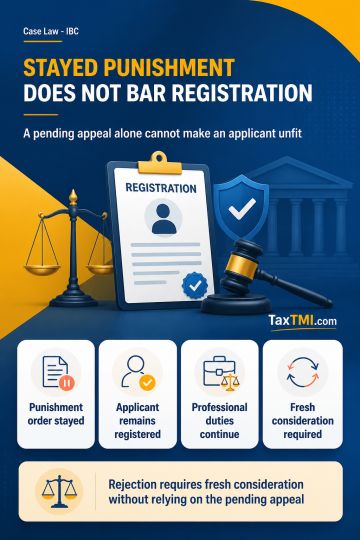
Stayed disciplinary punishment does not establish unfitness for insolvency professional registration; reconsideration must disregard mere pendency of ...
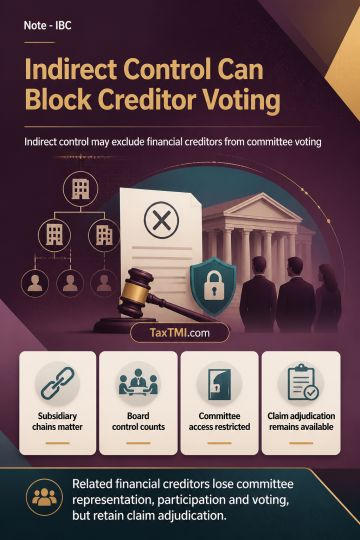
Indirect corporate control can create related-party status, excluding financial creditors from Committee of Creditors representation, participation an...
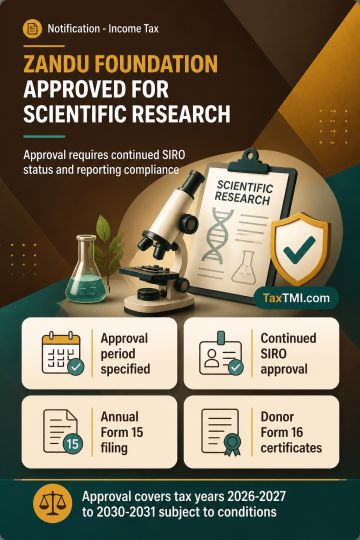
Scientific research association approval requires continuing SIRO status, annual donation reporting, and donor certificates for the approved foundatio...
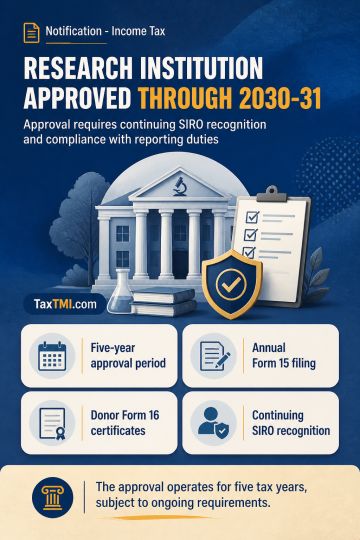
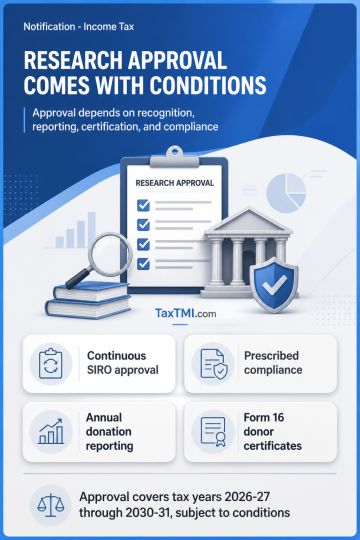
Scientific research institution approval is conditional on SIRO recognition, annual donation reporting, donor certification, and prescribed compliance...
The Customs, Excise and Service Tax Appellate Tribunal (CESTAT) set aside the impugned order and allowed the appeal. The Tribunal held that the imported goods, declared as 'penetrating oil' by the importer, were incorrectly reclassified as 'diesel oil' by the lower authorities based solely on the test reports indicating petroleum oil content above 70%. The Tribunal found flaws in the classification exercise and held that the test reports lacked clarity on the source and basic constituents of the oil. The Tribunal ruled that the goods were correctly declared, and the reclassification, re-determination of value, re-assessment of duty liability, and confiscation u/ss 111(d) and 111(m) of the Customs Act, 1962, were not in accordance with law.
The Customs, Excise and Service Tax Appellate Tribunal (CESTAT) set aside the impugned order and allowed the appeal. The Tribunal held that the imported goods, declared as 'penetrating oil' by the importer, were incorrectly reclassified as 'diesel oil' by the lower authorities based solely on the test reports indicating petroleum oil content above 70%. The Tribunal found flaws in the classification exercise and held that the test reports lacked clarity on the source and basic constituents of the oil. The Tribunal ruled that the goods were correctly declared, and the reclassification, re-determination of value, re-assessment of duty liability, and confiscation u/ss 111(d) and 111(m) of the Customs Act, 1962, were not in accordance with law.
Note: It is a system-generated summary and is for quick reference only.
 TaxTMI
  TaxTMI
 of 4894