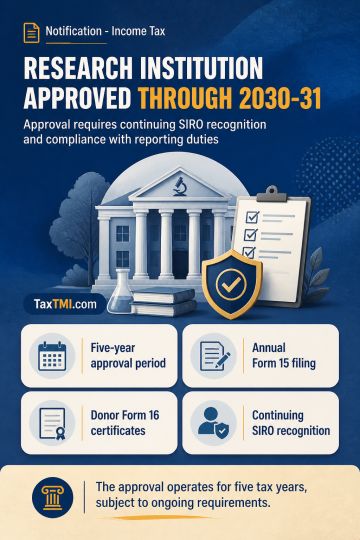
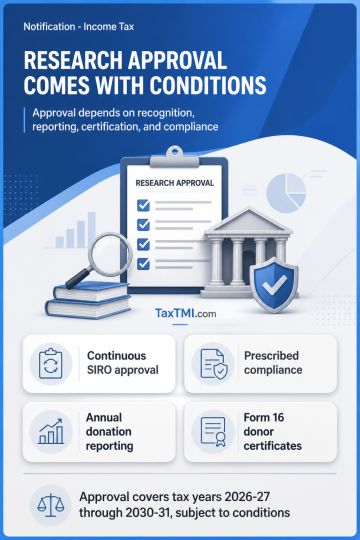
Scientific research institution approval is conditional on SIRO recognition, annual donation reporting, donor certification, and prescribed compliance...
The Customs, Excise and Service Tax Appellate Tribunal (CESTAT) set aside the impugned order and allowed the appeal. The Tribunal held that the imported goods, declared as 'penetrating oil' by the importer, were incorrectly reclassified as 'diesel oil' by the lower authorities based solely on the test reports indicating petroleum oil content above 70%. The Tribunal found flaws in the classification exercise and held that the test reports lacked clarity on the source and basic constituents of the oil. The Tribunal ruled that the goods were correctly declared, and the reclassification, re-determination of value, re-assessment of duty liability, and confiscation u/ss 111(d) and 111(m) of the Customs Act, 1962, were not in accordance with law.
The Customs, Excise and Service Tax Appellate Tribunal (CESTAT) set aside the impugned order and allowed the appeal. The Tribunal held that the imported goods, declared as 'penetrating oil' by the importer, were incorrectly reclassified as 'diesel oil' by the lower authorities based solely on the test reports indicating petroleum oil content above 70%. The Tribunal found flaws in the classification exercise and held that the test reports lacked clarity on the source and basic constituents of the oil. The Tribunal ruled that the goods were correctly declared, and the reclassification, re-determination of value, re-assessment of duty liability, and confiscation u/ss 111(d) and 111(m) of the Customs Act, 1962, were not in accordance with law.
Note: It is a system-generated summary and is for quick reference only.
 TaxTMI
  TaxTMI
 of 4888