Infrastructure-development deduction remains available to EPC contractors when substantive statutory conditions outweigh contractor labels in agreemen...
Explained Investment Sources: documented gifts and traceable salary savings supported deletion of additions for property and mutual-fund SIP investmen...
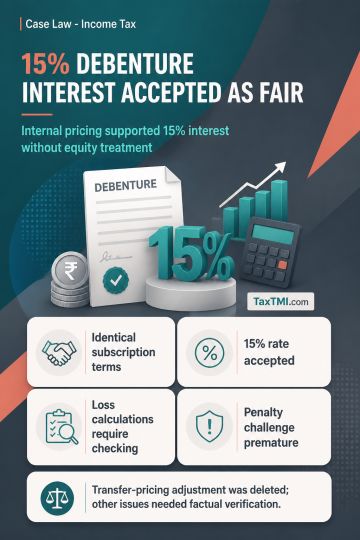
Internal comparable pricing supports arm's-length interest on compulsorily convertible debentures, preventing their recharacterisation as equity for t...
Nominee director protection shields independent financial-institution appointees from criminal liability where they lack involvement in deposit defaul...
Page of 4883
Press 'Enter' after typing page number.
241 to 260 of 97656 Results
❮
❯
❯❯
0 / 200
Expand Note
Add to Folder
No Folders have been created
+
Are you sure you want to delete "My most important" ?
The High Court held that the order passed by NCLT approving the Resolution Plan u/s 31(1) of the Insolvency and Bankruptcy Code, 2016 is an appealable order u/s 61, with a limitation period of 30 days + 15 days to file an appeal before NCLAT. As the respondents failed to challenge the NCLT order within the prescribed time, they cannot take a stand contrary to the approved Resolution Plan. Consequently, the writ petition was allowed.
The High Court held that the order passed by NCLT approving the Resolution Plan u/s 31(1) of the Insolvency and Bankruptcy Code, 2016 is an appealable order u/s 61, with a limitation period of 30 days + 15 days to file an appeal before NCLAT. As the respondents failed to challenge the NCLT order within the prescribed time, they cannot take a stand contrary to the approved Resolution Plan. Consequently, the writ petition was allowed.
Note: It is a system-generated summary and is for quick reference only.
 TaxTMI
  TaxTMI
 of 4883