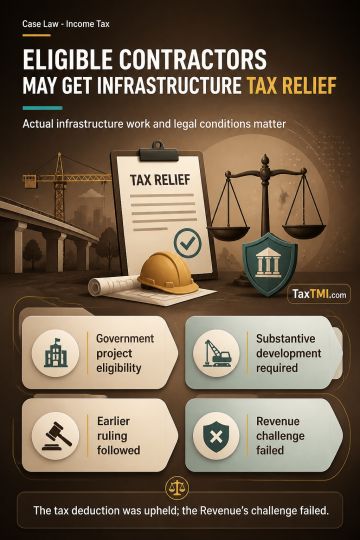
Infrastructure-development deduction remains available to EPC contractors when substantive statutory conditions outweigh contractor labels in agreemen...
Explained Investment Sources: documented gifts and traceable salary savings supported deletion of additions for property and mutual-fund SIP investmen...
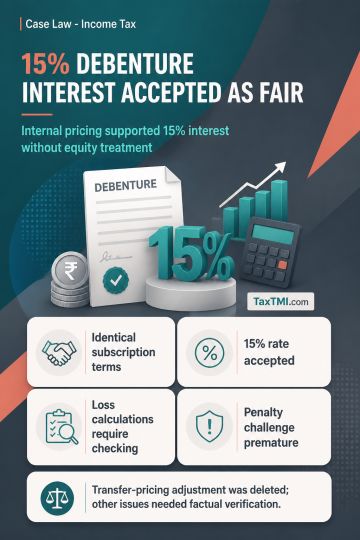
Internal comparable pricing supports arm's-length interest on compulsorily convertible debentures, preventing their recharacterisation as equity for t...
Nominee director protection shields independent financial-institution appointees from criminal liability where they lack involvement in deposit defaul...
The appellant, a decree holder, qualifies as a "Financial Creditor" under the Insolvency and Bankruptcy Code (IBC). The settlement agreement recognized the appellant's financial claim, and the decree formalized the respondent's obligation to pay, not altering the underlying financial debt's character. The petition filed by the appellant u/s 7 of the IBC is within the limitation period. The respondent's acknowledgments of debt before the High Court extended the limitation period u/s 18 of the Limitation Act, 1963. The NCLT order dismissing the petition on the ground of limitation is erroneous and liable to be set aside. The appeal is allowed.
The appellant, a decree holder, qualifies as a "Financial Creditor" under the Insolvency and Bankruptcy Code (IBC). The settlement agreement recognized the appellant's financial claim, and the decree formalized the respondent's obligation to pay, not altering the underlying financial debt's character. The petition filed by the appellant u/s 7 of the IBC is within the limitation period. The respondent's acknowledgments of debt before the High Court extended the limitation period u/s 18 of the Limitation Act, 1963. The NCLT order dismissing the petition on the ground of limitation is erroneous and liable to be set aside. The appeal is allowed.
Note: It is a system-generated summary and is for quick reference only.
 TaxTMI
  TaxTMI
 of 4881