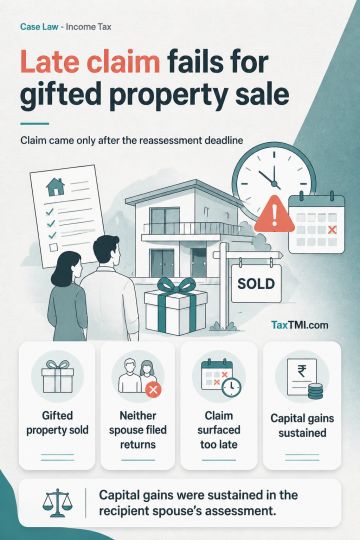
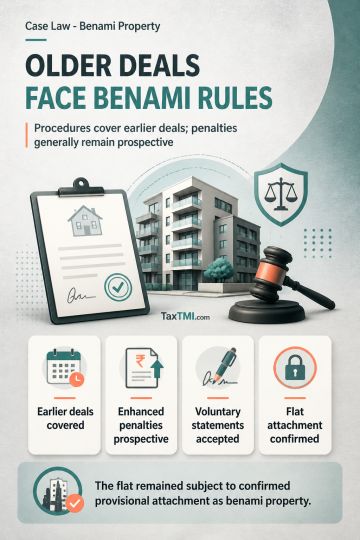
Clubbing of income from gifted property failed where the claim surfaced after reassessment limitation, sustaining capital-gains assessment in spouse's...
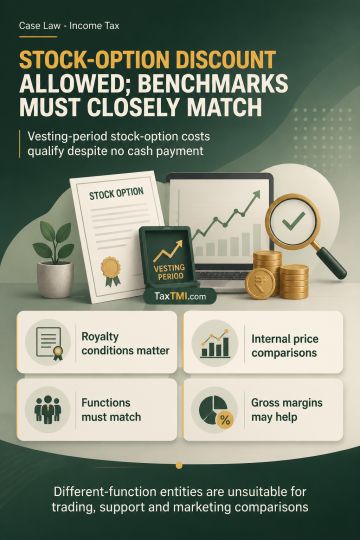
Employee stock-option discount qualifies as revenue expenditure, while royalty and service comparables require reliable functional and transactional b...
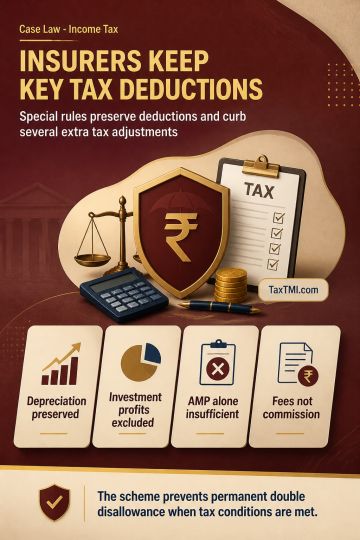
Special insurance income computation preserves statutory deductions while limiting transfer-pricing, withholding and disallowance adjustments for gene...
The ITAT held that once the corporate guarantee given by the assessee for the benefit of its associated enterprise (AE) was invoked by the EXIM Bank, the transaction between the assessee and the EXIM Bank did not constitute an international transaction u/s 92B(2) of the Income Tax Act. The vital constituent of an international transaction is that it should be between associated enterprises. After the surety (assessee) paid the guaranteed debt, it was subrogated to the rights of the creditor (EXIM Bank) against the principal debtor (AE). However, this subrogation did not create a new debt in the books of the guarantor. Therefore, the tax authorities erred in treating the invoked guarantee as a loan to the AE and charging arm's length interest on the same.
The ITAT held that once the corporate guarantee given by the assessee for the benefit of its associated enterprise (AE) was invoked by the EXIM Bank, the transaction between the assessee and the EXIM Bank did not constitute an international transaction u/s 92B(2) of the Income Tax Act. The vital constituent of an international transaction is that it should be between associated enterprises. After the surety (assessee) paid the guaranteed debt, it was subrogated to the rights of the creditor (EXIM Bank) against the principal debtor (AE). However, this subrogation did not create a new debt in the books of the guarantor. Therefore, the tax authorities erred in treating the invoked guarantee as a loan to the AE and charging arm's length interest on the same.
Note: It is a system-generated summary and is for quick reference only.
 TaxTMI
  TaxTMI
 of 4896