Road restoration charges constitute taxable services when requested for commercial pipeline activity, requiring reverse-charge GST from the business r...
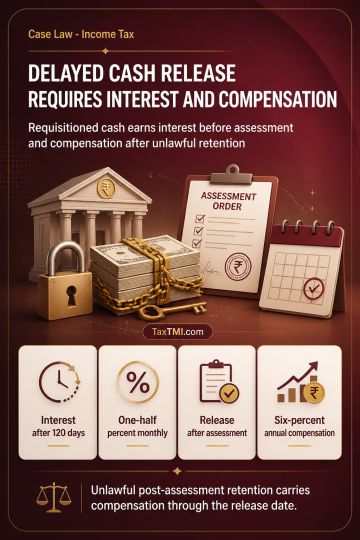
Interest on delayed release of requisitioned cash includes statutory pre-assessment interest and restitutionary compensation for unlawful post-assessm...
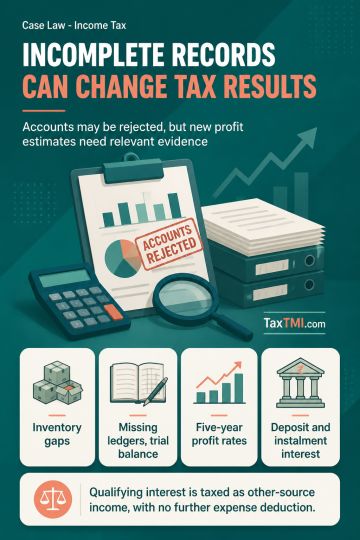
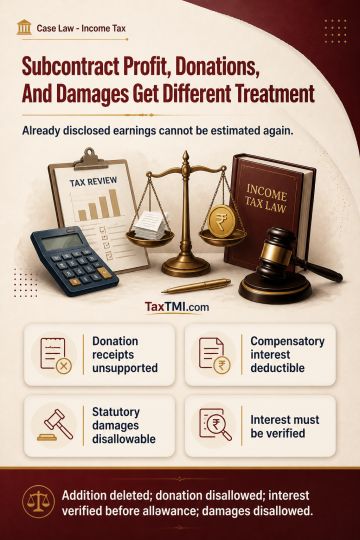
Incomplete inventory records justify rejecting accounts, while profit estimation requires relevant comparable material and interest falls under other ...
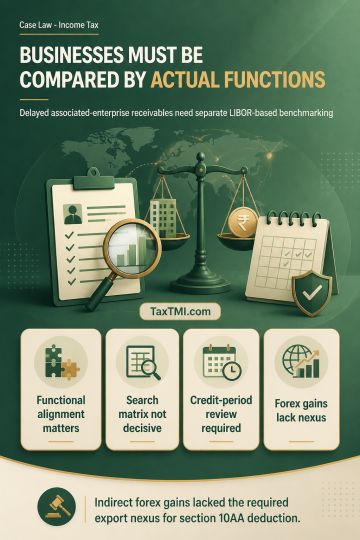
Transfer-pricing comparability requires functional alignment; delayed associated-enterprise receivables need separate LIBOR-based benchmarking, while ...
Extended reassessment limitation in search cases requires asset-linked escaped income, invalidating additions based only on unexplained money or expen...
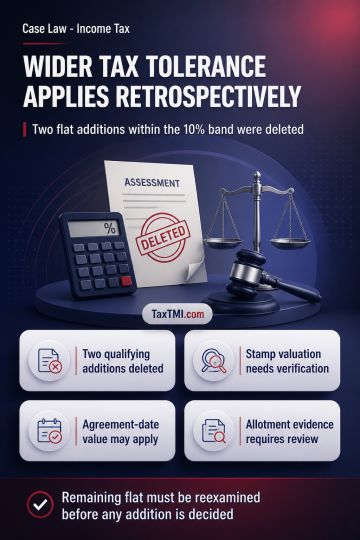
Enhanced tolerance band under section 43CA applies retrospectively, deleting qualifying deemed-sale additions while disputed stamp valuation requires ...
The assessee, a foreign-based company, initially failed to comply with the notice u/s 92D(3) within the statutory period of 60 days, responding on 25.03.2019 after a delay of 38 days. However, the Income Tax Appellate Tribunal (ITAT) considered the delay as minuscule and the reasons for non-compliance as bona fide and unintentional, given the peculiar circumstances of the assessee being a foreign entity and in the process of appointing a new authorized representative. The ITAT held that the penalty u/s 271G for non-compliance should be deleted, accepting the assessee's reasons for the inadvertent delay as reasonable. Consequently, the assessee's appeal against the penalty was allowed.
The assessee, a foreign-based company, initially failed to comply with the notice u/s 92D(3) within the statutory period of 60 days, responding on 25.03.2019 after a delay of 38 days. However, the Income Tax Appellate Tribunal (ITAT) considered the delay as minuscule and the reasons for non-compliance as bona fide and unintentional, given the peculiar circumstances of the assessee being a foreign entity and in the process of appointing a new authorized representative. The ITAT held that the penalty u/s 271G for non-compliance should be deleted, accepting the assessee's reasons for the inadvertent delay as reasonable. Consequently, the assessee's appeal against the penalty was allowed.
Note: It is a system-generated summary and is for quick reference only.
 TaxTMI
 TaxTMI

 of 4920