Form 26AS evidence requires successor-entity accounting verification after business transfer, while invoice-supported related-party advertising expend...
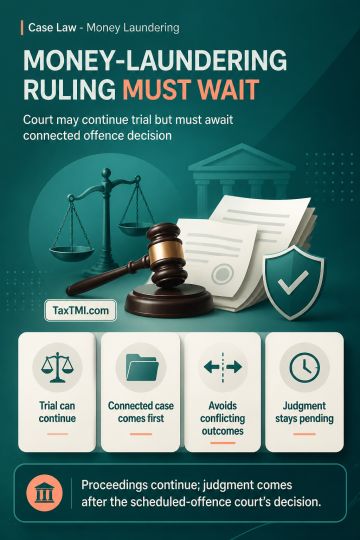
Money-laundering judgment timing requires awaiting the scheduled-offence decision despite continuation of the underlying trial where outcomes directly...
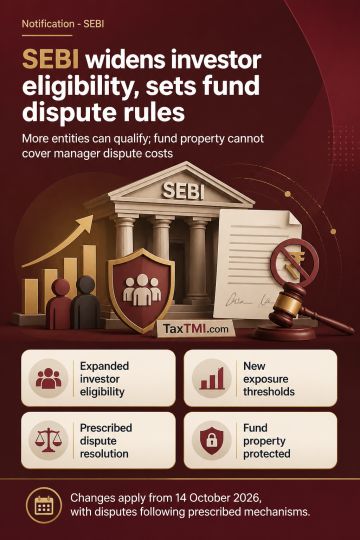
Accredited investor eligibility expands through securities-market exposure, while alternative investment fund disputes require prescribed resolution a...
The High Court dismissed the appeal and upheld the CESTAT order in M/s Bright Clearing [2022 (11) TMI 935 - CESTAT NEW DELHI]. The court held that under Regulation 10(n) of CBLR, 2018, the customs broker is not required to physically verify the address of the exporter/importer. The burden on the customs broker is liberal, and the potential misuse cannot be attributed to them. The customs broker's responsibility ends with fulfilling the obligation under Regulation 10. In this case, the exporters/importers had produced valid GSTIN and IEC certificates issued by the competent authorities, and the department had not doubted their identities. Therefore, the customs broker cannot be faulted for processing the export papers based on the documents provided.
The High Court dismissed the appeal and upheld the CESTAT order in M/s Bright Clearing [2022 (11) TMI 935 - CESTAT NEW DELHI]. The court held that under Regulation 10(n) of CBLR, 2018, the customs broker is not required to physically verify the address of the exporter/importer. The burden on the customs broker is liberal, and the potential misuse cannot be attributed to them. The customs broker's responsibility ends with fulfilling the obligation under Regulation 10. In this case, the exporters/importers had produced valid GSTIN and IEC certificates issued by the competent authorities, and the department had not doubted their identities. Therefore, the customs broker cannot be faulted for processing the export papers based on the documents provided.
Note: It is a system-generated summary and is for quick reference only.
 TaxTMI
  TaxTMI
 of 4915