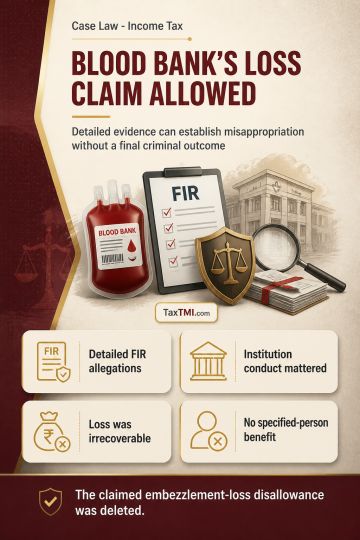
Embezzlement losses in charitable institutions remain allowable when misappropriation is established, irrecoverable, and not a specified-person benefi...
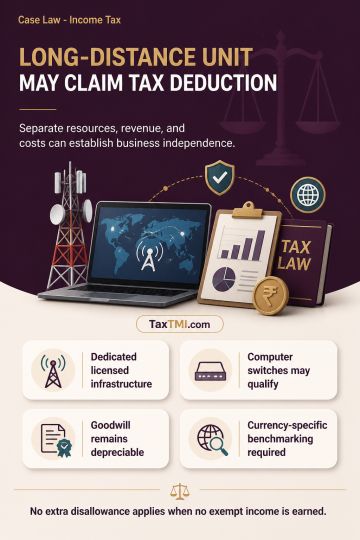
National long-distance undertaking status supports deduction where separately licensed infrastructure, resources, revenue, and expenditure establish c...
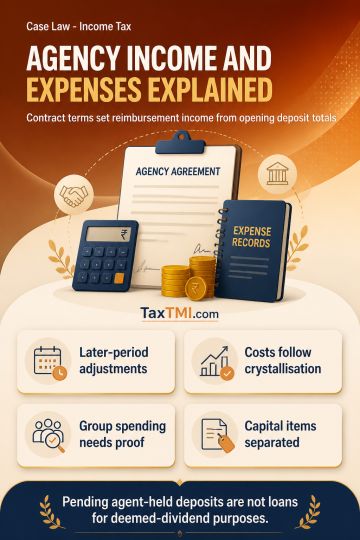
Agency reimbursement income follows contractual deposit-liability computation, while pending deposit collections do not constitute deemed-dividend loa...
Membership-consent thresholds for oppression petitions are satisfied by unchallenged voter-list consents, while unsupported forgery claims require pro...
The High Court held that the amendment introducing the words "or assessable" in Section 50C of the Income Tax Act, effective from October 1, 2009, cannot be applied retrospectively. Prior to the amendment, Section 50C was applicable only to transfers where the value was adopted or assessed by the stamp valuation authority. The inclusion of the phrase "or assessable" brought transfers where the value is assessable by the stamp valuation authority within the ambit of Section 50C. This introduction of a new class of transactions can only have prospective application and cannot be applied to transfers made before the amendment. Consequently, the assessee's transfer, which occurred before the amendment, cannot be subjected to Section 50C. The decision was in favor of the assessee.
The High Court held that the amendment introducing the words "or assessable" in Section 50C of the Income Tax Act, effective from October 1, 2009, cannot be applied retrospectively. Prior to the amendment, Section 50C was applicable only to transfers where the value was adopted or assessed by the stamp valuation authority. The inclusion of the phrase "or assessable" brought transfers where the value is assessable by the stamp valuation authority within the ambit of Section 50C. This introduction of a new class of transactions can only have prospective application and cannot be applied to transfers made before the amendment. Consequently, the assessee's transfer, which occurred before the amendment, cannot be subjected to Section 50C. The decision was in favor of the assessee.
Note: It is a system-generated summary and is for quick reference only.
 TaxTMI
  TaxTMI
 of 4888