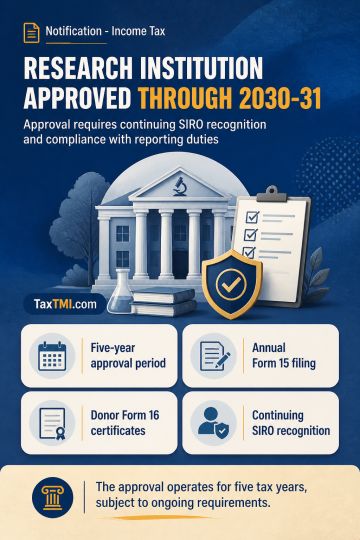
Scientific research association approval requires continuing SIRO status, annual donation reporting, and donor certificates for the approved foundatio...
Scientific research institution approval is conditional on SIRO recognition, annual donation reporting, donor certification, and prescribed compliance...
The High Court dismissed the criminal revision petition filed by the petitioners challenging the order rejecting their discharge petition in a money laundering case. The court held that there were prima facie materials showing illicit mining and generation of proceeds of crime valued at Rs. 261.89 crores. It observed that u/s 3 of the Prevention of Money Laundering Act, concealment of the proceeds of crime itself constitutes the offence of money laundering. The prosecution need not demonstrate the money trail or identify the proceeds of crime if they have been concealed. The court invoked the presumption u/s 24(b) of the Act against the petitioners, considering the quantum of money involved and the nature of allegations. The petitioners have to rebut the presumption during the trial. The High Court found no grounds to interfere with the well-reasoned order of the lower court rejecting the discharge petition.
The High Court dismissed the criminal revision petition filed by the petitioners challenging the order rejecting their discharge petition in a money laundering case. The court held that there were prima facie materials showing illicit mining and generation of proceeds of crime valued at Rs. 261.89 crores. It observed that u/s 3 of the Prevention of Money Laundering Act, concealment of the proceeds of crime itself constitutes the offence of money laundering. The prosecution need not demonstrate the money trail or identify the proceeds of crime if they have been concealed. The court invoked the presumption u/s 24(b) of the Act against the petitioners, considering the quantum of money involved and the nature of allegations. The petitioners have to rebut the presumption during the trial. The High Court found no grounds to interfere with the well-reasoned order of the lower court rejecting the discharge petition.
Note: It is a system-generated summary and is for quick reference only.
 TaxTMI
  TaxTMI
 of 4881