Mandatory textile export qualifiers distinguish flame-retardant fabrics from other listed fabrics for automated identification under the textiles ince...
Personal liberty safeguards restrict arrest after court-directed GST appearance, requiring interim release where authorities overreach pending proceed...
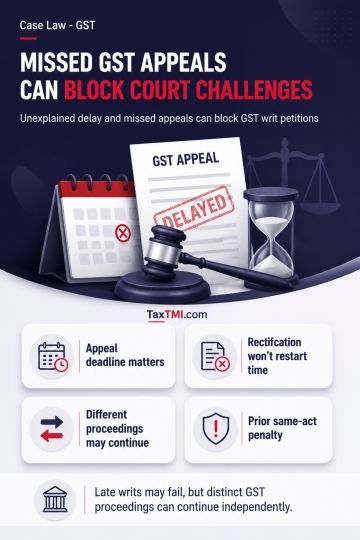
Alternative statutory remedy and delay bar GST writ challenges despite pending rectification, while distinct subject matter permits parallel proceedin...
The Appellate Tribunal allowed the appeal and set aside the impugned order. The Tribunal held that the Show Cause Notice did not discuss the unavailability of CENVAT credit to the appellants, nor did it propose to deny the availment of CENVAT credit. The Show Cause Notice focused on recovering duty paid on finished goods utilizing CENVAT credit, but it did not refer to Rule 14 of the CENVAT Credit Rules or allege that the credit was wrongly taken or inadmissible. Since duty was not payable on the final products cleared by the appellants, it was immaterial whether such duty was paid through cash or CENVAT credit. The Tribunal concluded that the impugned order exceeded the scope of the Show Cause Notice.
The Appellate Tribunal allowed the appeal and set aside the impugned order. The Tribunal held that the Show Cause Notice did not discuss the unavailability of CENVAT credit to the appellants, nor did it propose to deny the availment of CENVAT credit. The Show Cause Notice focused on recovering duty paid on finished goods utilizing CENVAT credit, but it did not refer to Rule 14 of the CENVAT Credit Rules or allege that the credit was wrongly taken or inadmissible. Since duty was not payable on the final products cleared by the appellants, it was immaterial whether such duty was paid through cash or CENVAT credit. The Tribunal concluded that the impugned order exceeded the scope of the Show Cause Notice.
Note: It is a system-generated summary and is for quick reference only.
 TaxTMI
  TaxTMI
 of 4881