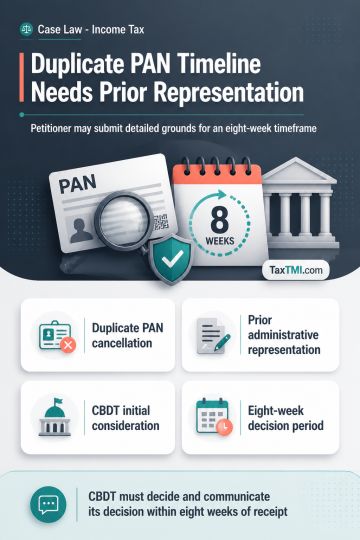
Duplicate PAN cancellation timeframe requires prior administrative representation before judicial intervention, ensuring a time-bound decision on the ...
Natural justice and pre-CIRP labour awards protect termination compensation, permitting withdrawal of court deposits despite later insolvency resoluti...
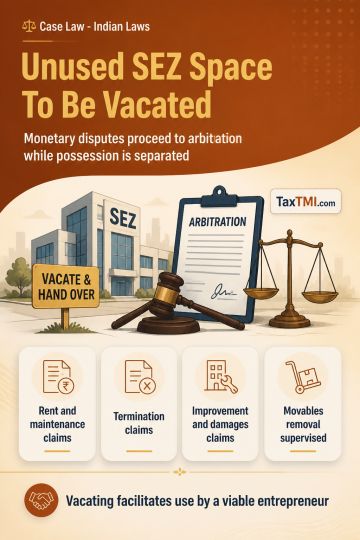
Arbitration of SEZ sub-lease monetary claims preserves rent, maintenance, termination, improvements and damages disputes while unused premises are vac...
Scientific research approval grants a research association tax recognition, subject to annual donor reporting, certification, and regulatory complianc...
The ITAT held that the order passed by the Principal Commissioner of Income Tax u/s 263 of the Income Tax Act for disallowance u/s 40A(3) and addition on account of unexplained cash credit u/s 68 was not sustainable. The Tribunal observed that merely not mentioning the annexures or not asking for details does not render the order prejudicial or erroneous. The assessee's submissions regarding jurisdiction were not dealt with by the revenue. The Principal Commissioner did not invoke Explanation 2 to Section 263 to substantiate her view that the order was erroneous or prejudicial to the interests of the revenue. Therefore, the Tribunal disagreed with the Principal Commissioner's view without establishing how the order was erroneous or prejudicial.
The ITAT held that the order passed by the Principal Commissioner of Income Tax u/s 263 of the Income Tax Act for disallowance u/s 40A(3) and addition on account of unexplained cash credit u/s 68 was not sustainable. The Tribunal observed that merely not mentioning the annexures or not asking for details does not render the order prejudicial or erroneous. The assessee's submissions regarding jurisdiction were not dealt with by the revenue. The Principal Commissioner did not invoke Explanation 2 to Section 263 to substantiate her view that the order was erroneous or prejudicial to the interests of the revenue. Therefore, the Tribunal disagreed with the Principal Commissioner's view without establishing how the order was erroneous or prejudicial.
Note: It is a system-generated summary and is for quick reference only.
 TaxTMI
  TaxTMI
 of 4891