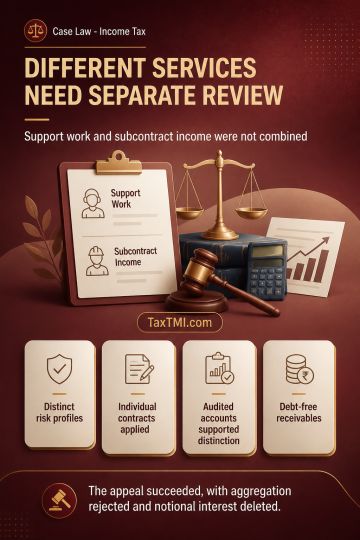
Transfer-pricing aggregation of distinct support-service and subcontract transactions was rejected, while debt-free receivables attracted no notional ...
Customs exemptions cover photovoltaic assembly machinery and PVF backsheets, while fully declared cleared imports may avoid confiscation and penalties...
Specific tariff classification for LCD devices overrides treatment as electricity-meter parts, defeating differential duty, extended limitation, and p...
Stayed disciplinary punishment does not establish unfitness for insolvency professional registration; reconsideration must disregard mere pendency of ...
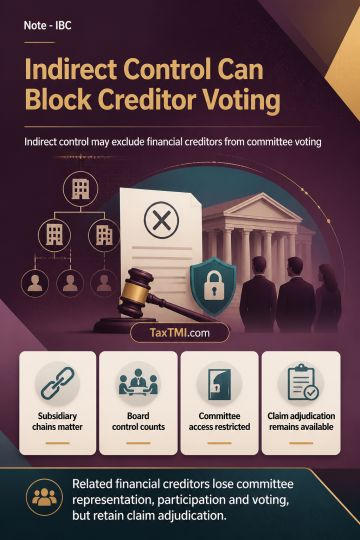
Indirect corporate control can create related-party status, excluding financial creditors from Committee of Creditors representation, participation an...
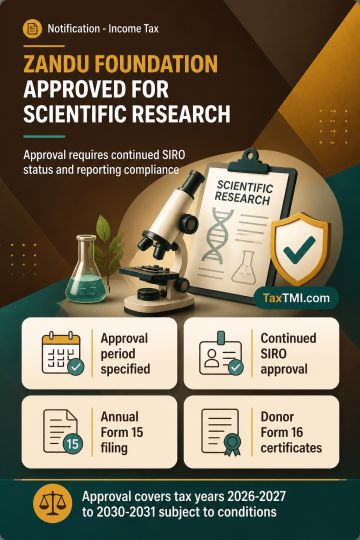
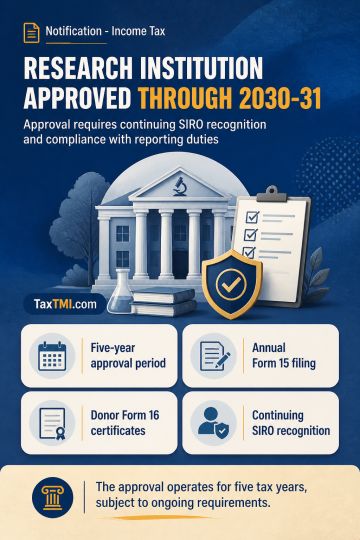
Scientific research association approval requires continuing SIRO status, annual donation reporting, and donor certificates for the approved foundatio...
The Appellate Tribunal held that the Assessing Officer (AO) did not satisfy the condition precedent before issuing a notice u/s 153C of the Income Tax Act against the appellant, who was a third party not subjected to search. The satisfaction note prepared by the AO did not meet the legal requirements as the seized material did not pertain to or contain anything incriminating against the appellant. Consequently, the assumption of jurisdiction u/s 153C for the assessment years 2014-15 and 2016-17 was held to be bad in law, rendering the consequent assessment orders null and void. Regarding additions made in the unabated assessment years, the Tribunal relied on Supreme Court decisions to hold that in unabated assessments u/s 153C, additions are permissible only if based on incriminating material found during the search. Since no such material existed against the appellant, the additions made u/s 56(2)(vii)(b) were directed to be deleted for the assessment years 2014-15 and 2016-17.
The Appellate Tribunal held that the Assessing Officer (AO) did not satisfy the condition precedent before issuing a notice u/s 153C of the Income Tax Act against the appellant, who was a third party not subjected to search. The satisfaction note prepared by the AO did not meet the legal requirements as the seized material did not pertain to or contain anything incriminating against the appellant. Consequently, the assumption of jurisdiction u/s 153C for the assessment years 2014-15 and 2016-17 was held to be bad in law, rendering the consequent assessment orders null and void. Regarding additions made in the unabated assessment years, the Tribunal relied on Supreme Court decisions to hold that in unabated assessments u/s 153C, additions are permissible only if based on incriminating material found during the search. Since no such material existed against the appellant, the additions made u/s 56(2)(vii)(b) were directed to be deleted for the assessment years 2014-15 and 2016-17.
Note: It is a system-generated summary and is for quick reference only.
 TaxTMI
  TaxTMI
 of 4886