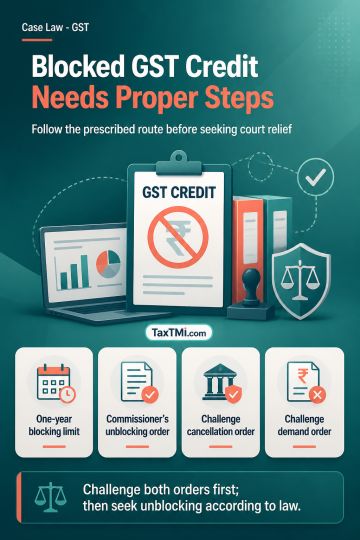
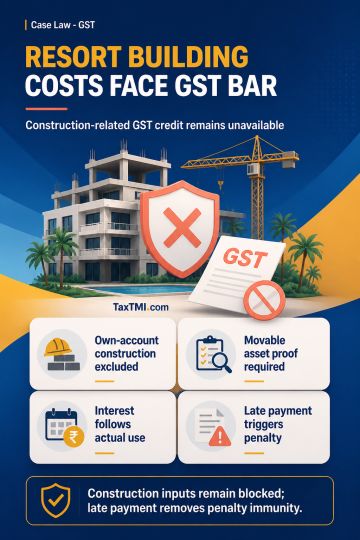
Blocked input tax credit for resort construction remains unavailable; interest follows actual utilisation, while delayed payment attracts statutory pe...
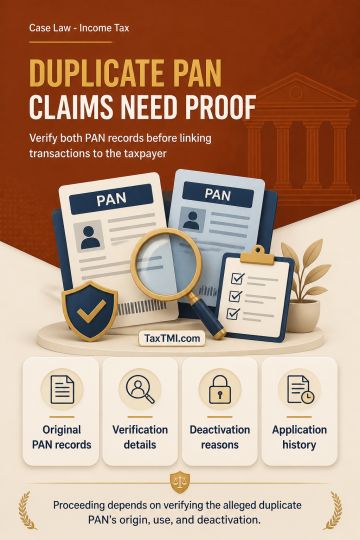
Duplicate PAN allocation requires record verification and deactivation reasons before assessment-related transactions can be attributed to an assessee...
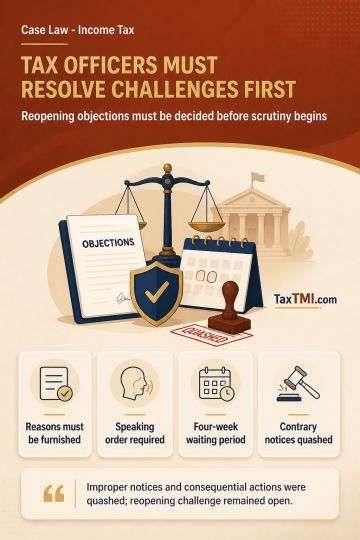
Faceless assessment safeguards require requested personal hearings and adequate final show-cause response time, failing which reassessment is required...
Confiscation of smuggled gold bars/biscuits u/ss 111(b), 111(d), and 111(f) of the Customs Act, 1962. The appellants failed to establish the licit procurement of the foreign-marked gold with 99.90% purity, a notified item u/s 123, thereby not discharging their burden of proving ownership. While the gold cannot be released due to unestablished ownership, the Tribunal reduced the penalties imposed on the appellants considering the roles played and the nature of the offense, deeming the initial penalties excessive compared to the gold's value. The penalty reductions were: Appellant 1 from Rs. 6,25,000 to Rs. 3,50,000, Appellant 2 from Rs. 6,50,000 to Rs. 4,00,000, and Appellant 3 from Rs. 5,80,000 to Rs. 2,00,000 u/s 112 of the Customs Act, 1962.
Confiscation of smuggled gold bars/biscuits u/ss 111(b), 111(d), and 111(f) of the Customs Act, 1962. The appellants failed to establish the licit procurement of the foreign-marked gold with 99.90% purity, a notified item u/s 123, thereby not discharging their burden of proving ownership. While the gold cannot be released due to unestablished ownership, the Tribunal reduced the penalties imposed on the appellants considering the roles played and the nature of the offense, deeming the initial penalties excessive compared to the gold's value. The penalty reductions were: Appellant 1 from Rs. 6,25,000 to Rs. 3,50,000, Appellant 2 from Rs. 6,50,000 to Rs. 4,00,000, and Appellant 3 from Rs. 5,80,000 to Rs. 2,00,000 u/s 112 of the Customs Act, 1962.
Note: It is a system-generated summary and is for quick reference only.
 TaxTMI
  TaxTMI
 of 4888