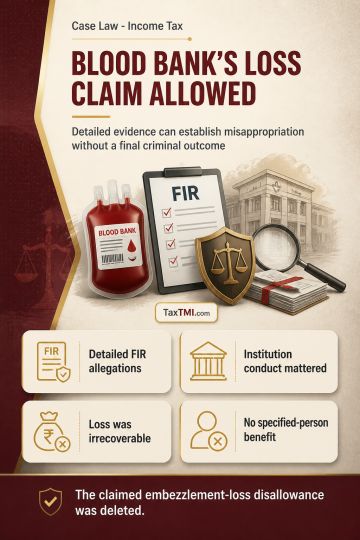
Embezzlement losses in charitable institutions remain allowable when misappropriation is established, irrecoverable, and not a specified-person benefi...
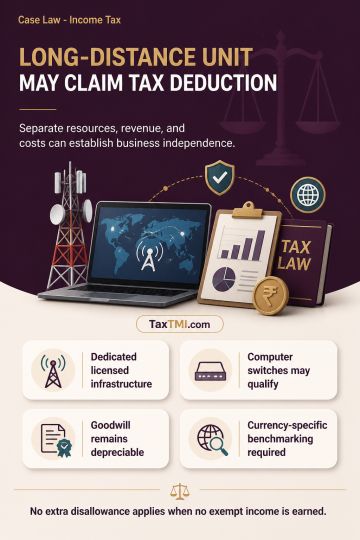
National long-distance undertaking status supports deduction where separately licensed infrastructure, resources, revenue, and expenditure establish c...
Agency reimbursement income follows contractual deposit-liability computation, while pending deposit collections do not constitute deemed-dividend loa...
The issue pertained to the inclusion of demurrage charges in the assessable value for payment of customs duty under the Customs Valuation (Determination of Value of Imported Goods) Rules, 2007. The Tribunal relied on the decision of the Orissa High Court in the case of Tata Steel Ltd. and Others v. Union of India and Others, wherein the High Court held that demurrage charges are not included as part of the cost envisaged by the legislation for determining the assessable value. Consequently, the Tribunal ruled that demurrage charges cannot be included in the assessable value for payment of customs duty.
The issue pertained to the inclusion of demurrage charges in the assessable value for payment of customs duty under the Customs Valuation (Determination of Value of Imported Goods) Rules, 2007. The Tribunal relied on the decision of the Orissa High Court in the case of Tata Steel Ltd. and Others v. Union of India and Others, wherein the High Court held that demurrage charges are not included as part of the cost envisaged by the legislation for determining the assessable value. Consequently, the Tribunal ruled that demurrage charges cannot be included in the assessable value for payment of customs duty.
Note: It is a system-generated summary and is for quick reference only.
 TaxTMI
  TaxTMI
 of 4891