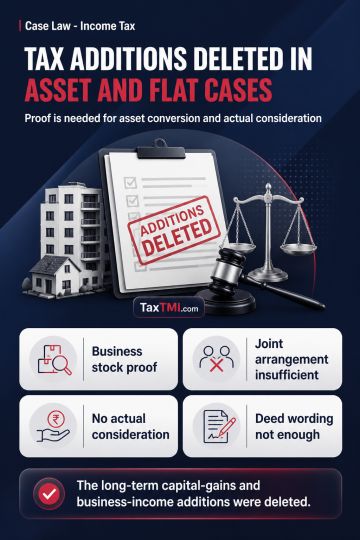
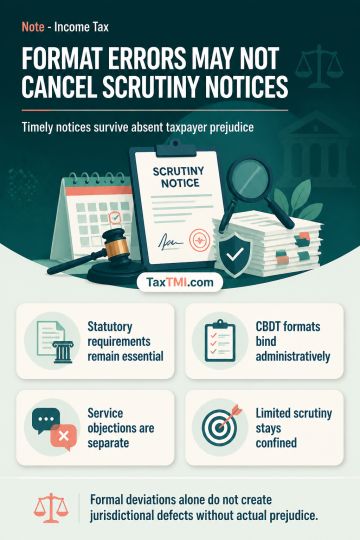
Capital Asset Conversion Requires Proven Business Stock Treatment; Paper Consideration in Spousal Flat Transfers Does Not Create Taxable Business Inco...
Human-probability test defeats political donation deduction where banking records mask accommodation-entry fund layering and evidence shows non-genuin...
Commercial property status protects capital-gains exemption when residential-house ownership limits are tested, while agricultural-land character gove...
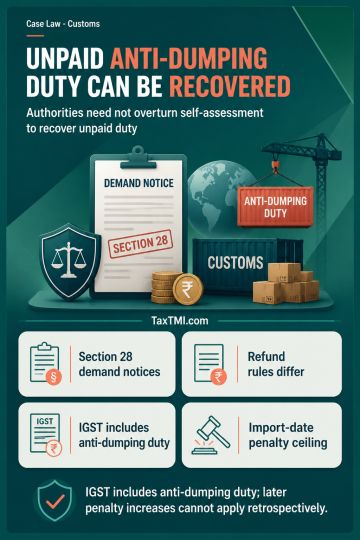
Investigation deposits refunded after failed customs demands fall outside the statutory appellate pre-deposit interest regime and may attract compensa...
Resolution plan finality extinguishes unquantified operational-creditor claims and pending proceedings unless the approved plan expressly preserves th...
The Income Tax Appellate Tribunal (ITAT) allowed the assessee's appeal and directed the penalty u/s 271(1)(c) of the Income Tax Act to be deleted. The Assessing Officer had initiated penalty proceedings for concealment of income, while the Commissioner of Income Tax (Appeals) [CIT(A)] passed the penalty order on the ground of furnishing inaccurate particulars of income without issuing a fresh show-cause notice. The ITAT held that since the penalty proceedings were initiated by the Assessing Officer on one ground (concealment) and the CIT(A) passed the order on another ground (inaccurate particulars) without commencing fresh proceedings, the penalty order was without jurisdiction and bad in law. The assessee's agreement to offer the income to buy peace and avoid litigation did not cure the jurisdictional defect in the penalty proceedings.
The Income Tax Appellate Tribunal (ITAT) allowed the assessee's appeal and directed the penalty u/s 271(1)(c) of the Income Tax Act to be deleted. The Assessing Officer had initiated penalty proceedings for concealment of income, while the Commissioner of Income Tax (Appeals) [CIT(A)] passed the penalty order on the ground of furnishing inaccurate particulars of income without issuing a fresh show-cause notice. The ITAT held that since the penalty proceedings were initiated by the Assessing Officer on one ground (concealment) and the CIT(A) passed the order on another ground (inaccurate particulars) without commencing fresh proceedings, the penalty order was without jurisdiction and bad in law. The assessee's agreement to offer the income to buy peace and avoid litigation did not cure the jurisdictional defect in the penalty proceedings.
Note: It is a system-generated summary and is for quick reference only.
 TaxTMI
  TaxTMI
 of 4891