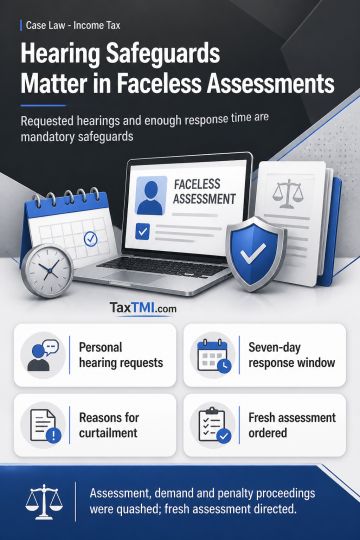
Faceless assessment safeguards require requested personal hearings and adequate final show-cause response time, failing which reassessment is required...
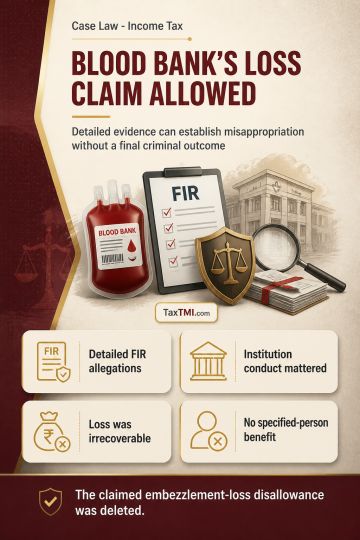
Embezzlement losses in charitable institutions remain allowable when misappropriation is established, irrecoverable, and not a specified-person benefi...
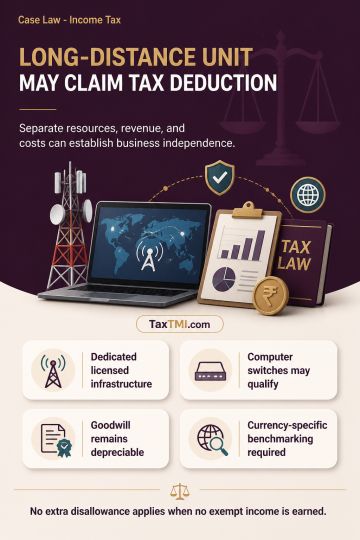
National long-distance undertaking status supports deduction where separately licensed infrastructure, resources, revenue, and expenditure establish c...
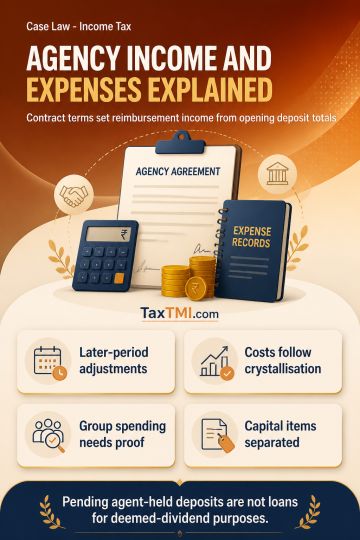
Agency reimbursement income follows contractual deposit-liability computation, while pending deposit collections do not constitute deemed-dividend loa...
This case deals with the classification of handcrafted stone articles like 'Chakla Belan' (rolling board and pin), mortar, pestle, etc. for export under the Merchandise Exports from India Scheme (MEIS). The key points are: Self-assessment procedure under Customs Act empowers authorities to verify valuation, classification, exemptions, etc. The exporters classified the goods under ITC(HS) 68159990, entitling 5-7% MEIS rewards. Authorities later objected, alleging misclassification to claim higher rewards. The HC examined the scope of assessment, audit, and recovery powers under Customs Act and Foreign Trade (Development & Regulation) Act/Rules. It held customs cannot question MEIS certificates issued by DGFT without DGFT's adjudication on validity. Section 28AAA requires collusion/misstatement for recovery, not mere classification dispute. The HC quashed the objections, stating classification fell under DGFT's purview as per FTP provisions. It directed refund of amounts deposited by exporters but left it open for DGFT to initiate proceedings on MEIS certificate validity if permissible. The ruling balanced customs' assessment powers with DGFT's authority over export promotion schemes.
This case deals with the classification of handcrafted stone articles like 'Chakla Belan' (rolling board and pin), mortar, pestle, etc. for export under the Merchandise Exports from India Scheme (MEIS). The key points are: Self-assessment procedure under Customs Act empowers authorities to verify valuation, classification, exemptions, etc. The exporters classified the goods under ITC(HS) 68159990, entitling 5-7% MEIS rewards. Authorities later objected, alleging misclassification to claim higher rewards. The HC examined the scope of assessment, audit, and recovery powers under Customs Act and Foreign Trade (Development & Regulation) Act/Rules. It held customs cannot question MEIS certificates issued by DGFT without DGFT's adjudication on validity. Section 28AAA requires collusion/misstatement for recovery, not mere classification dispute. The HC quashed the objections, stating classification fell under DGFT's purview as per FTP provisions. It directed refund of amounts deposited by exporters but left it open for DGFT to initiate proceedings on MEIS certificate validity if permissible. The ruling balanced customs' assessment powers with DGFT's authority over export promotion schemes.
Note: It is a system-generated summary and is for quick reference only.
 TaxTMI
  TaxTMI
 of 4884