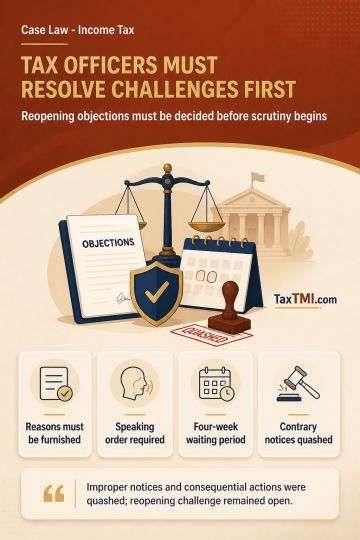
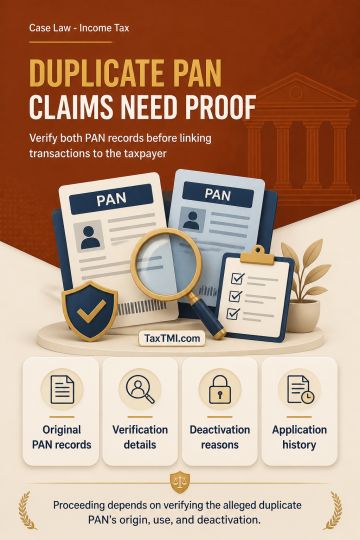
Duplicate PAN allocation requires record verification and deactivation reasons before assessment-related transactions can be attributed to an assessee...
Faceless assessment safeguards require requested personal hearings and adequate final show-cause response time, failing which reassessment is required...
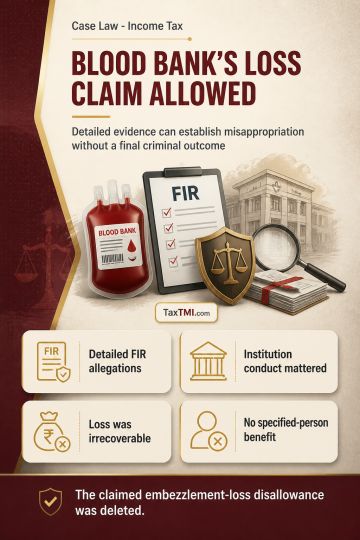
Embezzlement losses in charitable institutions remain allowable when misappropriation is established, irrecoverable, and not a specified-person benefi...
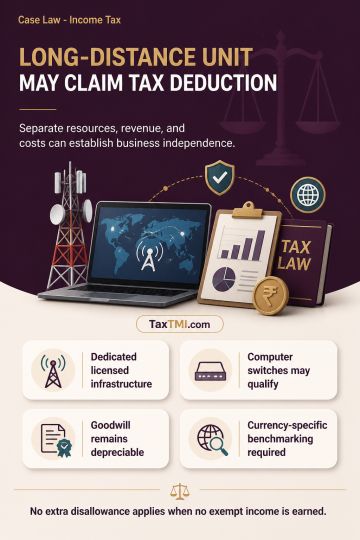
National long-distance undertaking status supports deduction where separately licensed infrastructure, resources, revenue, and expenditure establish c...
Agency reimbursement income follows contractual deposit-liability computation, while pending deposit collections do not constitute deemed-dividend loa...
Appellant financed an individual for smuggling gold from Dubai and selling it in India. Penalty was imposed u/s 112(b)(i) of the Customs Act, 1962. The Commissioner held that the appellant was concerned with selling, purchasing, and dealing with goods liable for confiscation, rendering them liable for penalty u/s 112(b)(i). Section 112(b) allows imposing a penalty when a person acquires possession of or is concerned in carrying, removing, depositing, harboring, keeping, concealing, selling, purchasing, or dealing with goods known or reasonably believed to be liable for confiscation u/s 111. However, the Revenue did not allege that the appellant was involved in such activities. The appellant did not acquire possession or concern themselves with importing gold, so the penalty u/s 112(b) should not have been imposed. The appellant did not fall within Section 112(b)'s ambit as they neither acquired possession nor dealt with goods known or reasonably believed to be liable for confiscation. The department failed to prove the appellant's knowledge of activities related to smuggled gold, lacking grounds for imposing a penalty. Mens rea is crucial for penalizing persons u/s 112(b), and the evidence did not suggest the appellant was aware the goods were smuggled into India. Therefore, the penalty imposed on the appellant cannot be sustained.
Appellant financed an individual for smuggling gold from Dubai and selling it in India. Penalty was imposed u/s 112(b)(i) of the Customs Act, 1962. The Commissioner held that the appellant was concerned with selling, purchasing, and dealing with goods liable for confiscation, rendering them liable for penalty u/s 112(b)(i). Section 112(b) allows imposing a penalty when a person acquires possession of or is concerned in carrying, removing, depositing, harboring, keeping, concealing, selling, purchasing, or dealing with goods known or reasonably believed to be liable for confiscation u/s 111. However, the Revenue did not allege that the appellant was involved in such activities. The appellant did not acquire possession or concern themselves with importing gold, so the penalty u/s 112(b) should not have been imposed. The appellant did not fall within Section 112(b)'s ambit as they neither acquired possession nor dealt with goods known or reasonably believed to be liable for confiscation. The department failed to prove the appellant's knowledge of activities related to smuggled gold, lacking grounds for imposing a penalty. Mens rea is crucial for penalizing persons u/s 112(b), and the evidence did not suggest the appellant was aware the goods were smuggled into India. Therefore, the penalty imposed on the appellant cannot be sustained.
Note: It is a system-generated summary and is for quick reference only.
 TaxTMI
  TaxTMI
 of 4894