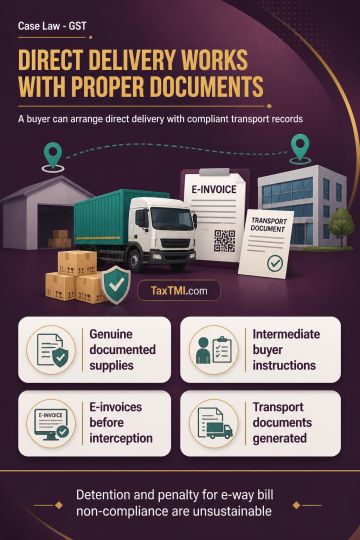
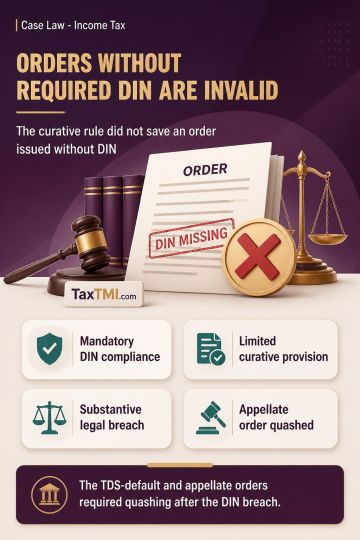
Document Identification Number compliance renders TDS-default orders invalid where mandatory DIN requirements are breached and curative provision does...
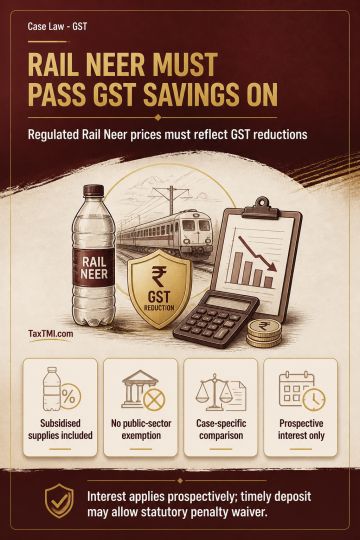
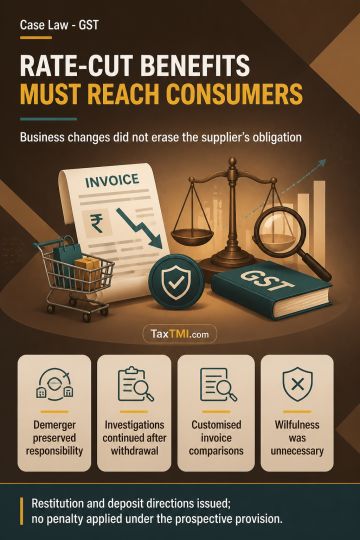
Anti-profiteering obligations survive business demerger, complaint withdrawal, and customized supply arrangements where rate-reduction benefits are no...
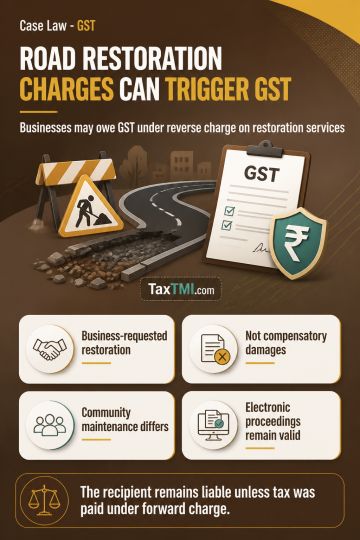
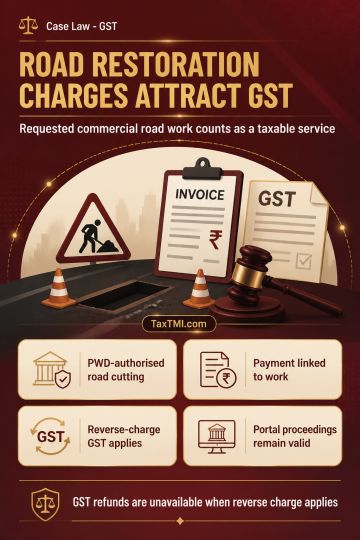
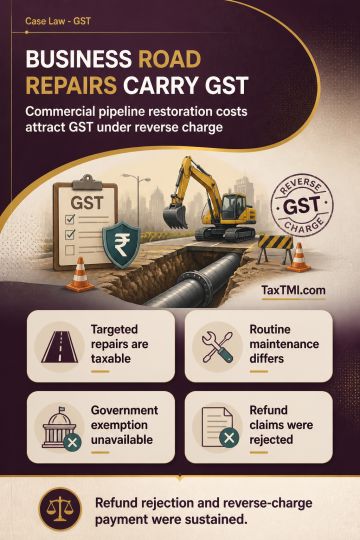
Road restoration charges constitute taxable services when requested for commercial pipeline activity, requiring reverse-charge GST from the business r...
Eligibility of claiming CENVAT credit for service tax paid on renting immovable property services. The lower authority denied the credit, considering it as a service related to setting up premises, which was removed from the definition of input service u/r 2(l) of CENVAT Credit Rules, 2004 with effect from 01.03.2011. However, the Tribunal held that renting immovable property service is directly used for providing the output service, and hence covered under the main clause of the input service definition. The exclusion of "setting up" from the inclusion clause does not impact this, as the inclusion clause is merely clarificatory. The Tribunal relied on the NAVIN FLOURINE case, which allowed CENVAT credit for such services, as they were used in relation to manufacturing the final product. Since renting immovable property service is not covered under the exclusion clause, even after 01.04.2011, it continued to be an admissible input service for availing CENVAT credit. Consequently, the demand for denying CENVAT credit was set aside, and the appeal was allowed.
Eligibility of claiming CENVAT credit for service tax paid on renting immovable property services. The lower authority denied the credit, considering it as a service related to setting up premises, which was removed from the definition of input service u/r 2(l) of CENVAT Credit Rules, 2004 with effect from 01.03.2011. However, the Tribunal held that renting immovable property service is directly used for providing the output service, and hence covered under the main clause of the input service definition. The exclusion of "setting up" from the inclusion clause does not impact this, as the inclusion clause is merely clarificatory. The Tribunal relied on the NAVIN FLOURINE case, which allowed CENVAT credit for such services, as they were used in relation to manufacturing the final product. Since renting immovable property service is not covered under the exclusion clause, even after 01.04.2011, it continued to be an admissible input service for availing CENVAT credit. Consequently, the demand for denying CENVAT credit was set aside, and the appeal was allowed.
Note: It is a system-generated summary and is for quick reference only.
 TaxTMI
  TaxTMI
 of 4913