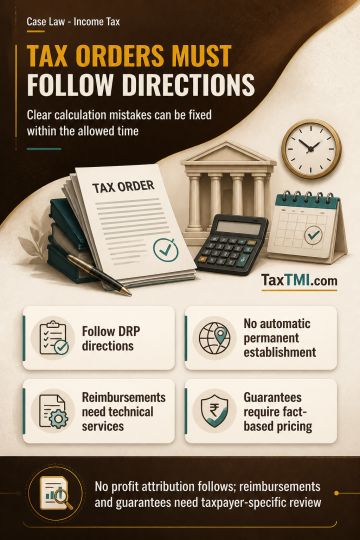
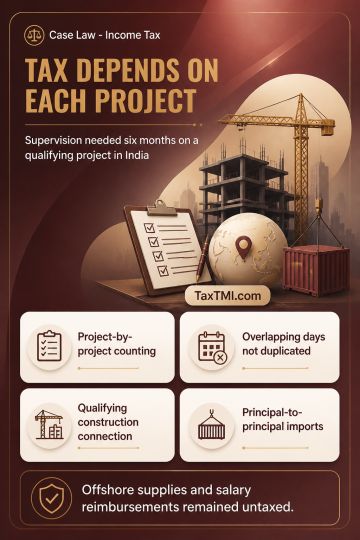
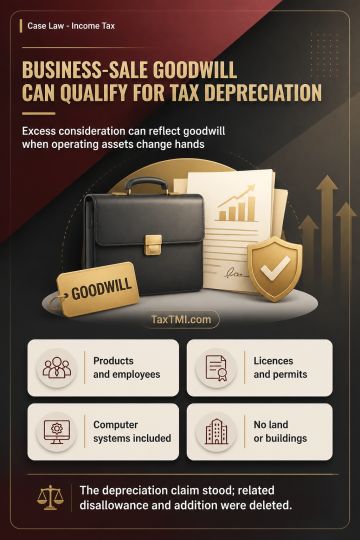
Supervisory permanent establishment requires project-wise duration and qualifying construction nexus; offshore supplies and salary reimbursements rema...
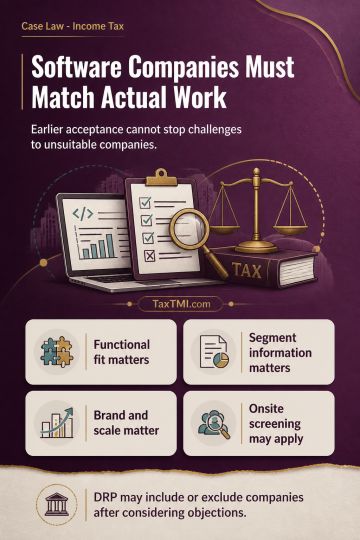
Transfer-pricing comparability permits fresh objections and filters where software service comparables are functionally unsuitable for arm's-length pr...
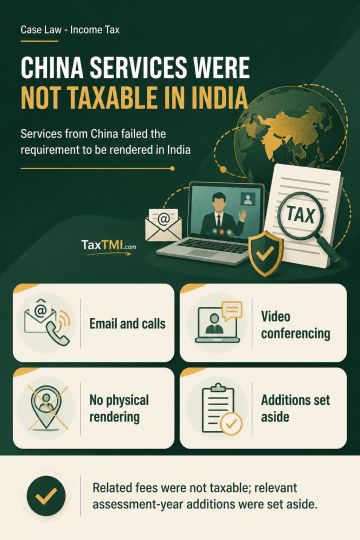
Territorial rendering requirement excludes China-based management and consultancy services from fees for technical services under the India-China DTAA...
Page of 4888
Press 'Enter' after typing page number.
281 to 300 of 97755 Results
❮
❯
❯❯
0 / 200
Expand Note
Add to Folder
No Folders have been created
+
Are you sure you want to delete "My most important" ?
The Supreme Court addressed two key issues: 1) Whether an application u/s 29A(4) of the Arbitration and Conciliation Act, 1996 for extension of the Arbitral Tribunal's mandate can be filed after the expiry of its mandate. The Court held that based on the wording of Section 29A(4) and its decision in Rohan Builders, an application for extension can be filed even after the termination of the Tribunal's mandate upon expiry of the statutory and extendable period. 2) Whether an extension should be granted in the present case. The Court held that considering the COVID-19 pandemic, the exclusion of the period from 15.03.2020 to 28.02.2023 from limitation periods, and the parties' agreement to seek extension, there was sufficient cause for granting extension. Accordingly, the High Court's order was set aside, and the civil appeal was allowed.
The Supreme Court addressed two key issues: 1) Whether an application u/s 29A(4) of the Arbitration and Conciliation Act, 1996 for extension of the Arbitral Tribunal's mandate can be filed after the expiry of its mandate. The Court held that based on the wording of Section 29A(4) and its decision in Rohan Builders, an application for extension can be filed even after the termination of the Tribunal's mandate upon expiry of the statutory and extendable period. 2) Whether an extension should be granted in the present case. The Court held that considering the COVID-19 pandemic, the exclusion of the period from 15.03.2020 to 28.02.2023 from limitation periods, and the parties' agreement to seek extension, there was sufficient cause for granting extension. Accordingly, the High Court's order was set aside, and the civil appeal was allowed.
Note: It is a system-generated summary and is for quick reference only.
 TaxTMI
  TaxTMI
 of 4888