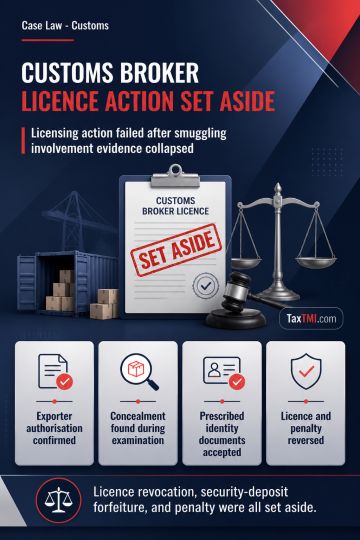
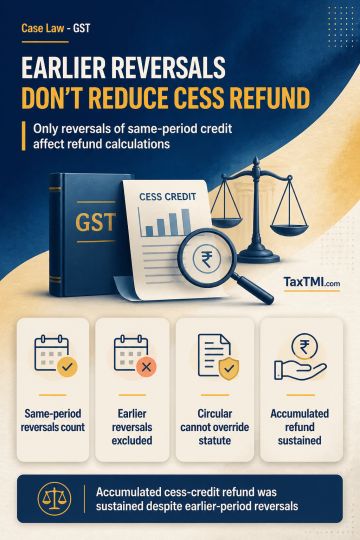
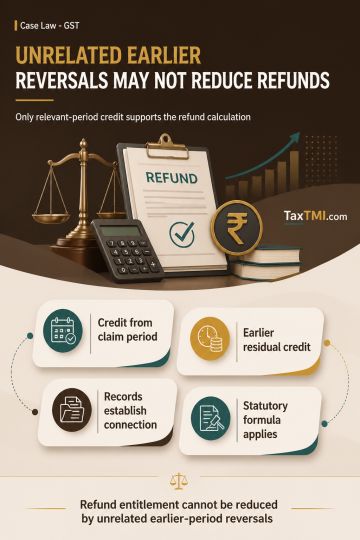
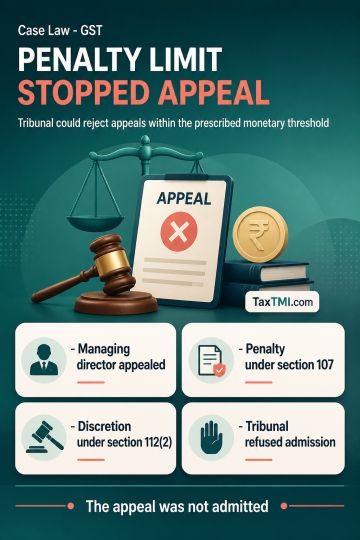
Customs Broker licensing proceedings fail when their offence-report foundation collapses and authorisation, advisory, and KYC duties remain unbreached...
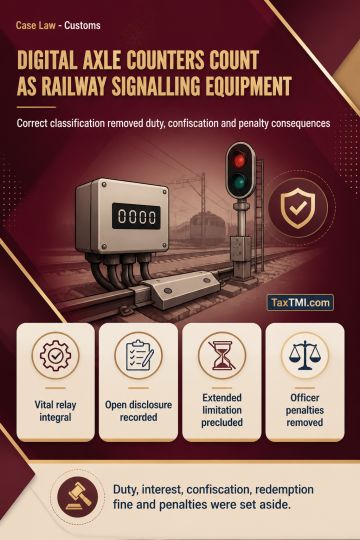
Tariff classification of Digital Axle Counters affirmed as electro-mechanical railway signalling equipment, eliminating duty, confiscation and penalty...
The High Court held that the Assessing Officer cannot disallow losses merely based on assumptions and surmises regarding the commercial expediency of transactions undertaken by the assessee. The transaction for sale and purchase of dies was a pure commercial transaction entered into by the assessee in its commercial wisdom, and the fact that the assessee incurred a loss in the said transaction was not disputed. There was no allegation of any undisclosed consideration or clandestine transaction to reverse the loss. The Assessing Officer made the addition solely based on their perception of what was commercially expedient, which is not within their purview. The assessee had justified its commercial decision by reflecting enhanced turnover and profits from its business, but even if profits were not earned, it would not make a difference, as the examination is limited to whether the transactions were genuine, not whether they were commercially expedient. The High Court found no material other than suspicion to justify the addition and decided in favor of the assessee.
The High Court held that the Assessing Officer cannot disallow losses merely based on assumptions and surmises regarding the commercial expediency of transactions undertaken by the assessee. The transaction for sale and purchase of dies was a pure commercial transaction entered into by the assessee in its commercial wisdom, and the fact that the assessee incurred a loss in the said transaction was not disputed. There was no allegation of any undisclosed consideration or clandestine transaction to reverse the loss. The Assessing Officer made the addition solely based on their perception of what was commercially expedient, which is not within their purview. The assessee had justified its commercial decision by reflecting enhanced turnover and profits from its business, but even if profits were not earned, it would not make a difference, as the examination is limited to whether the transactions were genuine, not whether they were commercially expedient. The High Court found no material other than suspicion to justify the addition and decided in favor of the assessee.
Note: It is a system-generated summary and is for quick reference only.
 TaxTMI
  TaxTMI
 of 4884